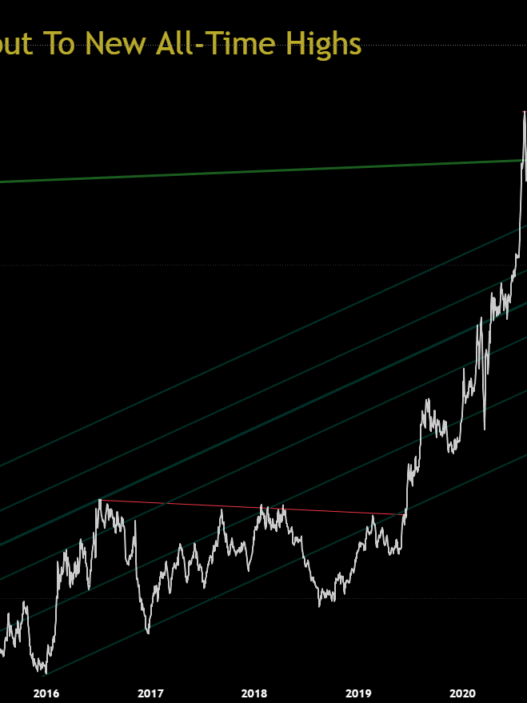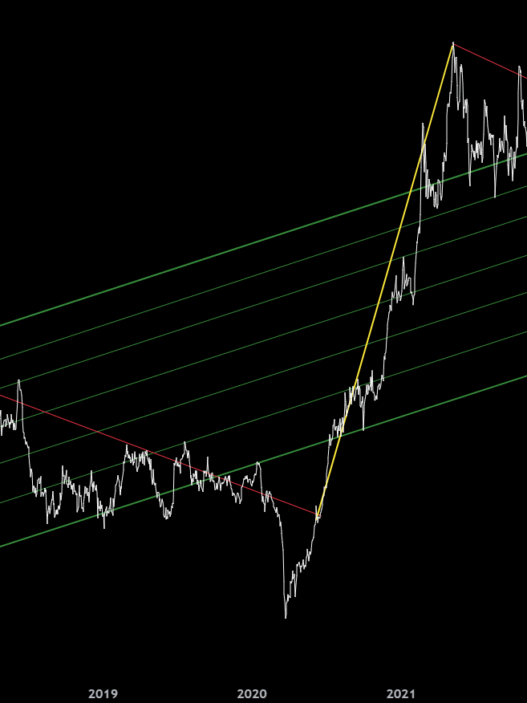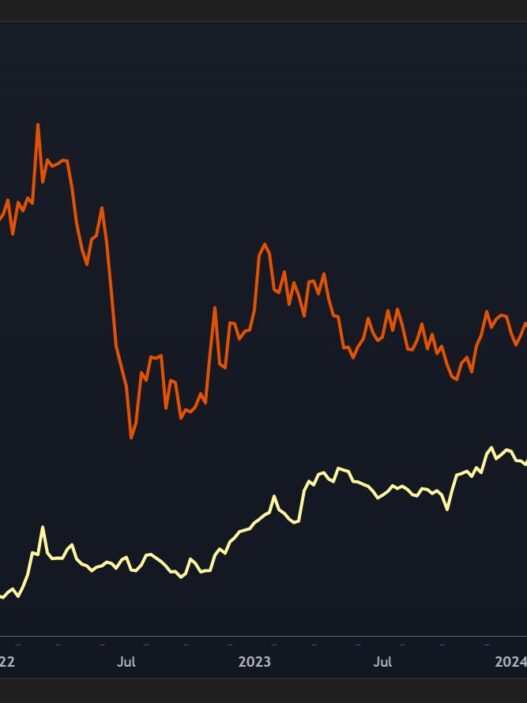


Supply and demand fundamentals, including the widespread adoption of EV and battery applications and new infrastructure spending, as well as rising inflation expectations indicate that a strong copper market is upon us and should persist for several years to come.
This growing demand, a continued development of emerging economies driven by the growth of the middle class, and the needed shift towards a greener and more sustainable option for further global growth all support the current copper price level as well as continued expansion.
Looking back at the last decade, the low prices of copper and base metals have been met with a lack of investment in new exploration and mine development. This has hampered the current supply of copper to the point where deficits are expected over the next years. Despite recent price increases, supply remains suppressed until new production is brought online.
The catch is that developing significant new copper mines can take many years. With warehouse stock levels hitting a new low recently, a continued tight market is expected, putting sustained upward pressure on the price of copper over the coming years.
An Essential Part of our Everyday Lives
Copper is present in almost all the materials we use in our daily lives. It plays an important role in our homes, transportation, infrastructure, even our cars and mobile phones. It delivers electricity, cleans our water and key to sustainable development. It does not rust, breakdown or require maintenance making it the ideal material in plumbing, electrical, construction and infrastructure. It’s ability to be easily restored also makes it a choice material in a decorative function for jewelry, fixtures, statues, roofs and other architectural items. Copper also plays an important role in our health as the metal is an antimicrobial trace element vital to the health of all living organisms. Copper enhances bone strength, red and white blood cell maturation, iron transport, cholesterol and glucose metabolism, heart muscle contraction, brain development and important during pregnancy and fetus development. There is no substitute metal, and recycling cannot fill the void.
It’s Critical for Greener Future
Copper is essential in the EV revolution. The metal is used in all aspects from the batteries, wiring, charging stations and even the cars themselves. There is 3-10 times as much copper in an EV that a regular vehicle! Copper also plays a large role in renewable energy generation as wind farms and solar farms require significant amounts of copper.

Building an EV (electric vehicle) requires 3 to 10 times more copper than a vehicle with ICE (internal combustion engine). That‘s about 83 kg of copper for each EV, which is a solid copper cube with sides of 21 cm. With EVs anticipated to make up half of all new vehicle sales by 2030, that‘s a substantial amount of copper needed! (Source)
“About 200 pounds [91 kg] of copper goes in each EV. There are 86 million passenger vehicles made each year. Assuming somehow all vehicles go EV that‘s an additional requirement of 17.2 billion pounds of copper per year. That´s 8.6 million tons. Or 47 million pounds of copper per day. Addtional demand. Meanwhile, in reality, Evs are just a fraction of total demand and global copper inventories are going to ZERO by August.“ (Source)
Copper is an essential material component of EVs. It is used in the electric motors, batteries, inverters, wiring and in charging stations because of its durability, malleability, reliability and superior electrical conductivity. (Source)

Each meter of underwater wind turbine cable contains over 50 kg of copper. In the next 20 years, we need to make enough cable to go all the way around the world 3 times. That‘s 10,000 km of underwater cable! (Source)
A 3 MW wind turbine can contain up to 4.7 t copper with 53% of that demand coming from the cable and wiring, 24% from the turbine/power generation components, 4% from transformers, and 19% from turbine transformers. Offshore wind installation uses 9.5 t copper per MW. The cabling of the offshore wind farms accounts for the bulk of the copper usage. Onshore wind farms use ~3.5 t copper per MW. (Source)


According to Trafigura‘s chief executive Jeremy Weir, copper metal inventories have drawn down to a “fairly critical stage“. Weir also warned that tight supplies could threaten the pace of the energy transition. (Source)
Goldman Sachs expects the world to run out of visible copper inventories by the third quarter of this year if demand in China continues to power ahead as strongly as it did in February. “The forward outlook is extraordinarily positive,” said Jeffrey Currie, global head of commodities research at Goldman Sachs. He added that “like oil in the 2000s, you’ve got to absolutely love copper in the 2020s”, referring to the 5% supply-demand gap that led Brent crude to rally from $20 to almost $150 a barrel versus an expected 15% deficit for copper this decade. (Source)

“Even after several new projects come online in 2023, we expect to see increasingly large supply deficits and for a tight market to become the new normal for copper.“ (Source)
“The supply / demand situation in copper is at one of it’s most critical junctures in global history. Due to the broad-based push toward decarbonization, demand is expected to double to 50 million metric tons per annum by 2035. At the same time, the number of new discoveries being made by copper miners continues to fall and the expectation is that we’ll witness a major shortfall which could be as large as 10 million tons within the next twelve years. Elsewhere, you probably saw the recent coverage from Harry Dempsey at the Financial Times reporting that global inventories have hit their lowest seasonal level since 2008. Goldman Sachs expects the world to run out of visible copper inventories by the third quarter of this year and analysts there are suggesting copper could breach $15,000 a ton by 2025 (from circa $8,964 today).“ (Source)
“If we want to reach net zero by 2050, we need to have two-thirds of energy from renewable sources by 2030. In that scenario, we need a 20% increase in production per annum of copper.“ (Source)

“Mining company executives‘ preference for safe, short-term returns has led to a massive underinvestment in new copper mines and exploration, jeopardizing the metal-intensive energy transition. The shift toward decarbonization will require vast amounts of copper to extend transmission lines, install new wire in renewable power sources, and electrify existing appliances and cars. Despite this nearly certain demand, the mining industry has spent the past decade moving much of its profits away from finding and developing major new copper projects… If supply is not there, demand destruction may ensue…“ (Source)

“I would highlight copper as the most critical metal globally given the shortage in the market. We only had 3.5 days of copper stock equivalent at the end of last year,” Trafigura’s Kostas Bintas told the FT Commodities Global Summit. The co-head of metals and minerals at the world’s biggest copper trader said on Monday the copper price could hit a new record high within the next 12 months owing to very tight stocks, even above $12,000 a tonne. Copper hit a record high $10,845 in March last year. (Mining.com on March 20, 2023)
“While Trafigura says it remains committed to building its presence in the fast-growing battery metals markets, it is also doubling down on base metals and sees copper and zinc as the commodities that could see the largest price spikes as inventories are low. Copper prices are likely to hit a record high in the next 12 months, Trafigura has forecast recently, citing the rebound in China‘s economy and short supply.“ (Oilprice.com on April 5, 2023)

“I think it‘s very likely in the next 12 months that we will see a new high,“ Kostas Bintas, global co-head of metals and minerals at Trafigura said at the FT Commodity Global Summit. “What‘s the price of something the whole world needs but we don‘t have any of?“ (Oilprice.com on April 5, 2023)

According to “The Largest Copper Mines in the World by Capacity”:
“North, South, and Central America collectively host 15 of the 20 largest copper mines. These three regions combine the capacity for nearly 36% of global copper production in 2020. The Escondida Mine in Chile is by far the world’s largest copper mine. Its annual capacity of 1.4 million tonnes means that it can produce more copper than the second and third-largest mines combined. Porphyry copper deposits are often characterized by lower grade ores and are mined in open pits. As a result, some of the top copper mines are also among the world’s largest open pits. Chuquicamata and Escondida are the second and third-deepest open pits, respectively (after Bingham Canyon in Utah). Overall, the top 20 mines have the capacity to produce nearly nine million tonnes of copper annually – representing 44% of global production in 2020. However, with demand for refined copper expected to rise 31% between 2020 and 2030, these existing sources of supply might not be enough.
Falling Grades, Rising Demand: New Mines on the Block? According to the International Energy Agency, average copper ore grades in Chile have declined by 30% in the last 15 years. Since Chile’s mines produce more than one-fourth of the world’s copper, these falling ore grades could be a cause for concern – especially with a deficit looming over the market for refined copper. New copper mining projects are becoming more valuable and it wouldn’t be surprising to see fresh names on the list of the largest copper mines.
Copper is one of the most-used metals in the world, for good reason. Global copper production has expanded with populations and economies, especially in China, which consumed 54% of the world’s refined copper in 2020. Copper’s demand comes from various industries, ranging from construction to renewable energy.
Copper is primarily sourced from porphyry deposits, which are concentrated in the Americas. Therefore, many of the world’s largest copper mines operate in this region.”

Stephan Bogner
Contact
Rockstone News & Research
Stephan Bogner (Dipl. Kfm., FH)
Müligässli 1, 8598 Bottighofen
Switzerland
Phone: +41-71-5896911
Email: info@rockstone-news.com
Disclaimer: This article is for informational purposes only and does not constitute investment advice or a recommendation to buy or sell commodities. The author holds physical gold and silver, stored in Central Switzerland through Elementum International AG. The author does not hold any direct interests or financial instruments related to other commodities or companies mentioned in this article. All views and forecasts reflect the state of knowledge at the time of publication and are subject to change. There is no guarantee that future developments will unfold as described. Investing in commodities involves risks. Consultation with a licensed financial advisor is strongly recommended. The cover picture has been obtained and licensed by Shutterstock.