

The Bingham Canyon Mine, an aerial photograph taken June 2018. (Wikipedia)
The Bingham Canyon Mine is an open-pit mining operation extracting a large porphyry copper deposit in Utah, USA. The mine is the largest man-made excavation and deepest open-pit mine in the world, which is considered to have produced more copper than any other mine in history – more than 19 million tons. The mine, owned by Rio Tinto Ltd., has been in production since 1903 and has resulted in the creation of a pit over 1.2 km deep and 4 km wide. (Source)
The Bingham Canyon Mine, also known as the Kennecott Mine, is located near Salt Lake City and is operated through Rio Tinto‘s subsidiary Kennecott Utah Copper. The Kennecott Mine, Copperton Concentrator and Garfield Smelter comprise one of the largest and most up-to-date integrated copper operations in the world, according to Mining Technology (July 2022). “Production from the mine stood at 159,400t of copper, 139,500oz of gold, 7,600t of molybdenum, and 2.22 million ounces (Moz) of silver in 2021… The Kennecott copper mine currently has a workforce of more than 2,000 workers.“
Proven & Probable Reserves (2021):
541 million t @ 0.44% copper, 0.17 g/t gold, 2.22 g/t silver, and 0.029% molybdenum, containing:
- 2.11 million t copper (in-situe value: $19 billion USD)
- 2.09 million ounces gold (in-situe value: $4.1 billion USD)
- 28.52 million ounces silver (in-situe value: $0.7 billion USD)
- 89,000 t molybdenum (in-situe value: $6.6 billion USD)
At today‘s market prices, the molybdenum reserves are the second-most valuable metal in the ground after copper.
According to Mining Technology (July 2022): “Molybdenum was regarded as a minor contributor to income at the Kennecott Copper Mine, but increased world demand for molybdenum made it very important. Income from moly sales was just $30m in 2002 but rose to $700m in 2005. The 2008 mine plan was modified to include areas of higher moly content, even at the expense of copper… A major molybdenum deposit was discovered in 2008. Additional porphyry mineralisation was identified beneath the southern wall of the pit.“

“The molybdenum grade of the ore mined from the Bingham Canyon porphyry Cu-Mo-Au deposit has historically been about 0.05% Mo. Recent drilling has provided a clearer picture of the distribution of molybdenum at depth. An inverted-cup shaped zone, or “shell”, of >0.09% Mo mineralization is present. The molybdenum shell overlapped part of the >0.35% Cu shell within the portion of the deposit that has already been mined.“ (Source)

“Because the pit has mined the top of the inverted-cup shaped shell, the remaining molybdenum-rich zone takes the form of a thin walled annular cylinder. Based on blast hole sampling, the >0.09% Mo zone is a maximum of 200 meters in width. At its outer edge molybdenum grade decreases abruptly from 0.2% to less than 0.05% Mo over a distance of about 35 meters. The conditions under which molybdenite precipitated are not yet well understood but the remarkably sharp outer boundary of the higher-grade molybdenum mineralization suggests that the molybdenum may have been transported by a plume of buoyant fluid that was ascending rapidly through significantly cooler fluids. That plume appears to have had a diameter of approximately 1.8 km, and been generally coincident with the boundaries of the composite Bingham Stock.“ (Source)
In September 2022, Rio Tinto approved a $55 million USD investment to start underground mining in 2023, initially focussing on an area known as the Lower Commercial Skarn (LCS) with a Resource of 7.5 million t @ 1.9% copper, 0.84 g/t gold, 11.26 g/t silver, and 0.015% molybdenum and a Probable Reserve of 1.7 million t @ 1.9% copper, 0.71 g/t gold, 10.07 g/t silver, and 0.044% molybdenum.
In September 2009, Rio Tinto announced this “massive molybdenum discovery beneath the floor of the open pit mine that could rival Colorado’s Climax and Henderson, two of the world’s biggest molybdenum deposits. The find is extraordinary because Bingham Canyon has been operating for more than a century and, while the main deposit still has legs, no one would have predicted that the world’s next big metal discovery would occur in such a mature environment. The other fascinating aspect of the news is that the discovery was actually made in 1970, but only became clear when Kennecott Utah Copper, a wholly-owned subsidiary of Rio Tinto, applied modern data processing and visualization techniques to historical drill logs… By 2004, molybdenum was becoming increasingly sought after for its ability to enhance the hardness, toughness, and corrosion resistance of metal alloys, particularly stainless steel. The price had increased 8-fold since the early 2000s to more than US$40 per pound and, as a result, Kennecott decided to revisit old drill logs that recorded molybdenum as part of a brownfields exploration program at Bingham Canyon.“
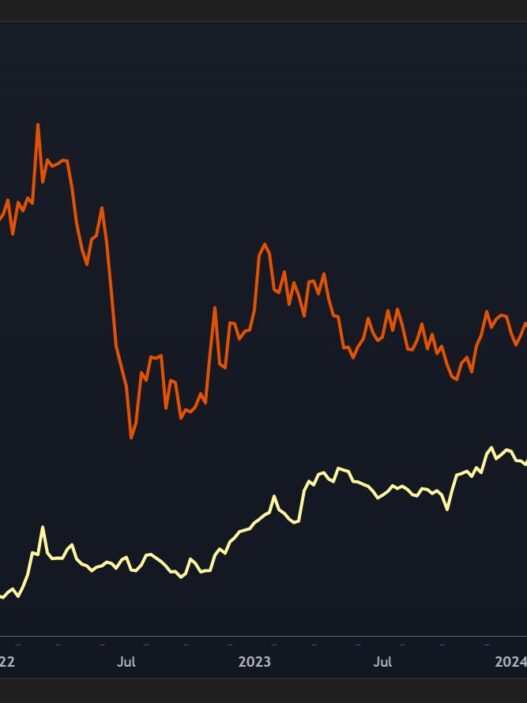
Today, the molybdenum price trades at $74 USD per kg ($34 USD per pound), down from $96 USD/kg in early March.
“The fresh rendering of the old drill data inspired the mine exploration team to launch a drill campaign below the floor of the pit, which is already more than kilometre deep and getting deeper everyday. Sixteen holes intersected high-grade molybdenum mineralization within a steeply dipping arcuate body that extends at least 1,000 metres below the pit floor. Based on the drilling so far, the deposit is estimated to contain in the order of 500-600 million tonnes grading 0.1-0.15% molybdenum. Hosted mainly by monzonite and occurring as quart-molybdenite veinlets and as molybdenite disseminations and fracture fillings, the mineralization remains open… Bingham Canyon, though primarily a copper deposit, has always been a significant gold and molybdenum producer… Bingahm Canyon is a classic copper porphyry with a fairly uniform distribution of sulphide mineralisation, mainly chalcopyrite. The existing pit will be worked out by 2019 but Kennecott is evaluating the feasibility of deepening the pit to add an extra 2.83 million tonnes of copper resources and extend the mine’s life from 2019 to 2036. The new discovery is considered a high-grade extension of the rich molybdenum zones with the main deposit. While the average grade of the molybdenum in the open pit reserve is 0.044% Mo, the grade within the new exploration target is up to 3.5 times richer. The mineralization appears to wrap around the barren core of the porphyry copper deposit in the northeast and southeast sectors of the deposit… Locally, the molybdenum mineralization reaches the surface on the eastern side of the pit bottom, where it has contributed to higher than average molybdenum head grades from 2004-2007. Batch flotation testing of composite samples indicated molybdenum recoveries of about 95% in rougher flotation… Companies never know what they might find when they pull out their dusty core logs and map sheets and start digitizing and visualizing the data in 3D. The Bingham Canyon molybdenum deposit may be the first major deposit to be found that way, but it is unlikely to be the last.“ (Source: “Discovery at the Bingham Canyon Mine“, 2009)
According to “Vectors to porphyry Cu-Au mineralization in carbonate wallrocks around the Bingham deposit“ (2021): “The Bingham Canyon porphyry Cu-Mo-Au occurrence (Utah, USA) is a highly productive mineral system with an extensive hydrothermal alteration halo. Such systems likely cause subtle, far-field alteration patterns which may be useful in vectoring toward the system center. This study presents initial results from our investigation into the effects of this hydrothermal system on two laterally extensive carbonate units, the Jordan and Commercial limestones… Bingham Canyon comprises a multi-phase sequence of Eocene-aged igneous rocks emplaced within a folded and thrusted Paleozoic carbonate and siliciclastic sequence, producing proximal Cu-Mo-Au porphyry-style mineralization and adjacent Cu-Au skarn deposits in carbonate host rocks, mainly in the Jordan and Commercial beds. Outboard from the porphyry-skarn zones (~0.5-2.5km) there are Pb-Zn-Ag vein and carbonate replacement orebodies, and even more distal (~7-9km) sediment-hosted Au deposits… Preliminary analysis reveals a decreasing trend in Fe, Mg, Ba, and several REEs from the Bingham Mine outboard to a distance of ~3-5km, while Mn and Zn display an increase to about 2km distance before dropping off to background levels ~4km outboard.“

“Many world-class ore deposits are hosted within giant hydrothermal systems containing significant proportions of carbonate rock. Examples include the Grasberg-Ertsberg District in Indonesia, where the endowment of the ore is roughly split between skarns develoed in carbonates and disseminated porphyry-style mineralization. On the other end of the spectrum is Peru‘s Antamina Mine, where metals are predominately concentrated in the skarns.“ (Source)


For more than a quarter century, the world‘s largest mining companies Rio Tinto Ltd. (ASX: RIO) and its 45%-minority joint-venture partner BHP Group Ltd. (ASX: BHP) have been holding hands in an effort to get permitted the Resolution Copper Project near Superior (Arizona, USA) to become one of the world‘s largest underground mines supplying about 25% of US copper demand with >60 years of mine-life. The project targets a deep-seated porphyry copper-molybdenum deposit (1600 million t @ 1.47% copper and 0.037% molybdenum) at depths exceeding 1,300 m.

Having spent $2 billion since 2004, without yet having produced any copper, both Rio Tinto and BHP are eager to spend another $6 billion to bring Resolution Copper into production. However, the permitting struggle continues, at least for the next little while, putting the Resolution Copper Project on hold once again: “It appears that the Biden administration is not going to pay attention to domestic mineral production for communities like Superior,“ said Mila Besich (Mayor of Superior) in May 2021. “The Resolution Copper deposit ranges from 5,000 to 7,000 ft (1,500 to 2,130 m) below the surface. Ore production from the operations will be approximately 132,000 tons (120,000 tonnes) per day after extensive construction and ramp-up periods. The mine is estimated to produce as much as 40 billion pounds of copper over 40 years.“ (Source)

Stephan Bogner
Contact
Rockstone News & Research
Stephan Bogner (Dipl. Kfm., FH)
Müligässli 1, 8598 Bottighofen
Switzerland
Phone: +41-71-5896911
Email: info@rockstone-news.com
Disclaimer: This article is for informational purposes only and does not constitute investment advice or a recommendation to buy or sell commodities. The author holds physical gold and silver, stored in Central Switzerland through Elementum International AG. The author does not hold any direct interests or financial instruments related to other commodities or companies mentioned in this article. All views and forecasts reflect the state of knowledge at the time of publication and are subject to change. There is no guarantee that future developments will unfold as described. Investing in commodities involves risks. Consultation with a licensed financial advisor is strongly recommended.