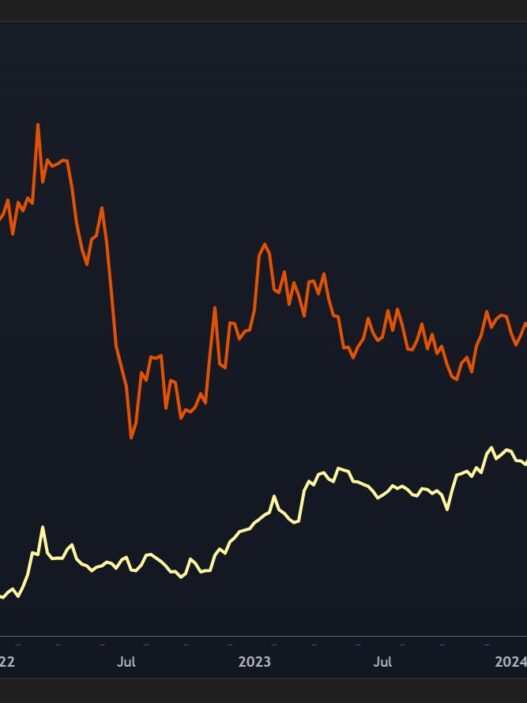


Last week, an alarming study was published on the supply risk of the global niobium industry chain, simulating the impact of supply disruptions under realistic scenarios. Among the revealing findings:
“China, Malaysia, Brazil, and the United States emerge as crucial risk sources, with their export restrictions potentially triggering a complete collapse of trade networks across all layers… Hidden risk sources include Asian countries like Japan and Korea… Even seemingly minor local shocks can potentially trigger widespread disruptions, increasing national vulnerabilities and deepening supply security concerns… The global surge in high-tech industries has intensified international competition for critical raw materials, including niobium.”
Global drilling activity targeting niobium has reached a record high this year, putting the high-tech metal back on investors‘ radar. Niobium‘s unique properties are driving technological advancements in lithium-ion batteries, with new breakthroughs now being commercialized, fueling growing interest in this critical metal.
Excerpts from the study “The supply risk of the global niobium industry chain: propagation path and impact analysis based on multi-layer network” (December 12, 2024):
“Niobium, an irreplaceable raw material in high-tech industries, boasts a complex global trade network across its industrial chain… Niobium plays a crucial role in various high-tech applications, such as superconductors, superalloys, and advanced manufacturing… Recognizing its strategic importance, many countries, including China, the United States and European Union have designated niobium as a critical mineral… However, despite growing demand, global niobium reserves are highly concentrated… This has resulted in a high import dependency for most countries, including a 100% reliance on net imports for China and the United States… Consequently, ensuring a stable and secure supply of niobium has become a pressing concern, especially given the increasing demand from emerging technologies and rising geopolitical tensions… Notably, increasing domestic production and reserves in countries involved in the final product trade is highly effective in preventing and mitigating large-scale avalanches caused by supply constraints. By boosting domestic production capacity, countries can reduce their reliance on imported products and exert greater control over their supply chains… With the global competition of high-tech industries heating up, the sustainable development of the niobium industrial chain has become a pursuit of countries worldwide… Enhancing a country’s capacity to withstand disruptions is essential for bolstering the resilience of the entire niobium supply chain. This can be achieved through various strategies, including augmenting domestic production and reserves, particularly for countries engaged in the downstream final product stage.”
Niobium Drilling Boom Fueled by Technology Commercialization
Although global drilling activity for most commodities has recently declined, with a significant drop since 2022, drill holes targeting niobium have reached a record high. According to S&P Global‘s report last week, two of the top three drill results globally in November were from niobium projects.


Earlier this year, Reuters noted:
“Amid an international rush to secure raw commodities deemed vital for modern technologies, there is growing scrutiny of the strategic and geopolitical facets to niobium – not least since production is concentrated in just a few places. The shiny grey metal is ranked the second-most “critical mineral” by the US Geological Survey, which estimates that 90 per cent of total output is from Brazil…
“Among Brazil’s abundant mineral riches – from iron ore and gold to precious stones and copper – is one niche metal that almost no other country can claim to produce at scale: niobium. The dominant producer, Companhia Brasileira de Metalurgia e Mineração (CBMM), is exploring new applications and believes the chemical element has a key role to play in electric batteries, for such vehicles as buses and trucks…
“Founded in the 1950s and controlled by the Moreira Salles business dynasty, CBMM’s other shareholders are a Japanese-Korean grouping and a consortium of Chinese steelmakers. Brazil’s other dedicated niobium mine was purchased by China’s CMOC in 2016. China is the main destination for Brazilian exports of the metal…
“A report by the Washington DC-based think-tank Center for Strategic and International Studies (CSIS) this year highlights this level of Chinese involvement, and the substance’s potential in military equipment, as reasons for US policymakers to be on alert. “In the grand chessboard of defence geopolitics, niobium has emerged as a piece of paramount importance,” write the researchers. With its usage long established in aerospace and astronautics – from the Nasa Apollo programme to SpaceX rockets – they described the metal as “indispensable” for critical components in hypersonic missiles. Capable of travelling five times the speed of sound, the weaponry is being developed by a number of nations, including the US and China. Henry Ziemer, one of CSIS report’s authors, says action is needed by US authorities to avert any future disruption to niobium supplies. “Niobium has flown under the radar,” he argues. “There hasn’t been a systematic effort from the US to secure the supply chain, align incentives and raise the alarm,” he adds, referring to the degree of Chinese ownership of niobium mines.“

September 2024: “Swiss battery developer Leclanché SA has introduced the XN50, the world’s first lithium-ion cell featuring niobium-based anode material XNO from Echion Technologies… Compared to conventional lithium-titanate-oxide technologies (LTO), the XN50 offers 50% higher energy density. It also boasts an exceptionally long lifecycle of more than 10,000 charge cycles. After 1,000 charge/discharge cycles at 45°C, the cell experiences less than 3% capacity loss, and its resistance increases by less than 15%. According to Leclanché, the XN50 could be a commercially viable solution to replace traditional LTO technologies in energy storage systems. Another key advantage of the XN50 cell is its environmentally friendly production. It uses a water-based cathode formulation that is PFAS-free, resulting in reduced environmental impact.“ (Source)
In September 2024, Leclanché launched XN50, the world’s first Li-ion commercial cell featuring Echion Technologies’ XNO niobium-based anode materials, stating: “Leclanché carried out stringent product development and verification to produce a cell that is ready for market adoption. Commercially available now, XN50 delivers the benefits expected from the new XNO® anode chemistry including 50% higher energy density vs. LTO technologies, fast charging and maintaining the highest cell safety and performance in extreme conditions.“
In June 2024, Toshiba Corp. and Sojitz Corp. of Japan, and Brazil’s CBMM, unveiled ultra-fast charging, next-generation lithium-ion batteries with Niobium Titanium Oxide (NTO) anodes: “They today held an opening ceremony and unveiled a prototype E-bus powered with the new battery, which realizes an ultra-fast charge time of around 10 minutes and delivers high energy density… The three companies will continue to work together to maximize the use of their respective technologies and knowledge, toward launching the next-generation lithium-ion battery with NTO anode in the global market in Spring 2025… The use of niobium oxide in the anode of lithium-ion batteries brings special characteristics for this component. As it hosts lithium at an inherently stable voltage, it provides safer and more efficient operation. In addition, due to its open crystalline structure, which facilitates the intercalation of lithium, it allows a full recharge in less than 10 minutes, without causing damage to the battery. Due to these unique characteristics, niobium-containing batteries are safer and have a much longer lifespan than traditional batteries… Sojitz, as one of CBMM‘s shareholders and CBMM‘s sole agent for the Japanese market, has been building a stable raw material supply system and cultivating applications… NTO battery brings the market a new solution for the electrification of the mobilities and other applications. Taking advantage of our global sales networks and an operational presence in a wide range of industries, we, Sojitz, will play major roles in the project with regards to supply chain management as well as accelerating business development including sales activities.“

In the anode (negative) end of a battery, niobium can replace graphite, enabling quicker charging while reducing the risk of overheating and explosions, CBMM says. “Compared to graphite, it is more expensive [...] But, as you have a longer battery life, if you can drive for a longer range, the final cost of ownership to the customer is better.” In the cathode (positive) end of nickel-based batteries, the company says small amounts of niobium can lessen the need for cobalt. Amnesty International reports that the mining of it in Africa has led to forced eviction of communities and other human rights abuses. Some electric carmakers have now pledged to reduce cobalt’s usage. “Cathodes could be quite a significant market over time for niobium,” says Andrew Matheson at metals consultancy CPM Group. “On the anode side, it’s still too early to say there’ll be mass adoption, but it’s a strong prospect. Mining trucks alone could eventually represent as much as the current amount going into steel.”
www.ft.com/content/486100f4-5016-4bc4-b5a8-cd4ef9a19181


Stephan Bogner
Contact
Rockstone News & Research
Stephan Bogner (Dipl. Kfm., FH)
Müligässli 1, 8598 Bottighofen
Switzerland
Phone: +41-71-5896911
Email: info@rockstone-news.com
Disclaimer: This article is for informational purposes only and does not constitute investment advice or a recommendation to buy or sell any commodities. The author holds no direct interests or financial instruments related to the mentioned commodities or companies. All views and forecasts reflect the state of knowledge at the time of publication and are subject to change. There is no guarantee that future developments will occur as described. Investing in commodities involves risks. Independent advice from a licensed financial advisor is strongly recommended. Source Cover Image: www.niobium.tech