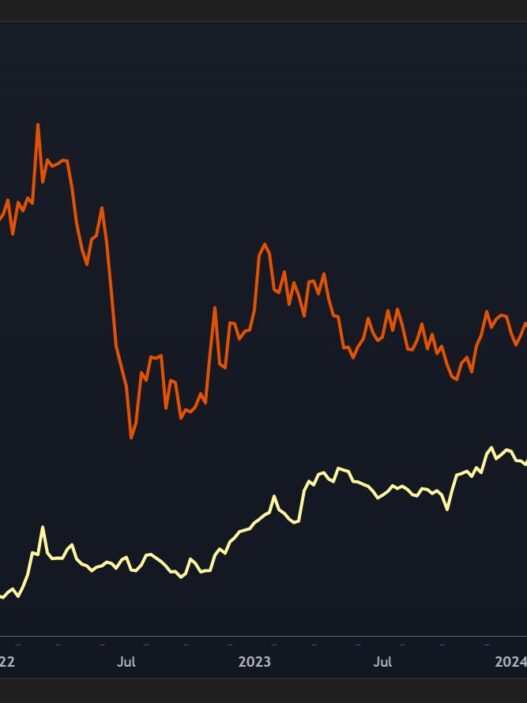

In recent years, the global shift toward wind and solar power has exposed a critical challenge: Their intermittent nature – coupled with the fact that reliable, scalable, and cost-effective energy storage remains out of reach – significantly limits their ability to provide consistent and dependable power.
As the demand for energy continues to surge, fueled by the rapid growth of energy-intensive industries such as artificial intelligence (AI) and the relentless need to power data centers around the clock, one solution rises above the rest: Nuclear power. As the Harvard Gazette, the official news outlet of Harvard University, recently observed: “The only source of clean power that’s been proven to work – day or night, season in, season out, in any geographic location, and successfully operating at large scale – that’s nuclear.“
With uranium in the global spotlight as the only viable solution to supply the vast amount of energy required to power an increasingly electrified world, its role in achieving a carbon-neutral and reliable energy future has never been more prominent.
STUDY RESULTS: Cumulative average deficit of 1 billion and 500 million lbs U3O8 between 2024 and 2040: The equivalent of 10 years of actual production. Avarage annual deficit between 70 and 130 million lbs U3O8 (high-growth scenario of nuclear demand).
Manifestations of the main issues in current production: Depressed uranium prices over the past 40 years. Cause: Chernobyl (1986) and Fukushima (2011). Resulting under-investment in mining and delays in restarting production. (Source)
Much Higher U3O8 Prices on the Horizon
According to John Quakes on January 11, 2025:
“It‘s important for Uranium investors to understand that the process for acquiring reactor fuel by Nuclear utilities involves 4 primary steps, 3 of which involve contracting for services and 1 for the purchase of the Uranium fuel being processed.
Generally speaking, the operators of reactors sign contracts for the fabrication of fuel rod bundles first, then negotiate contracts for the Enrichment service needed for the Uranium pellets that will be loaded into those fuel assemblies, then contracts for the Conversion service needed to produce the UF6 Uranium gas that gets enriched, then finally, once they have all those contracts in place and have a start date for processing their Conversion order, they secure the supply of mined drums of yellowcake U3O8 that is the actual Uranium fuel that feeds the whole processing & manufacturing cycle.
More details from John Quakes:
- First of all, Nuclear engineers analyze the operating characteristics of their reactors to determine the specifications for future loads of fuel rod bundles needed (in the case of brand new reactors, the 3X annual fuel requirements loaded at start-up). They notify their fuel buyers as to the fuel assemblies that must be ordered, the quantity of enriched Uranium (EUP) and the % level of enrichment required.
- Fuel buyers then negotiate contracts with companies that fabricate the fuel assemblies, usually ordered 2 to 3 years or more prior to when they will be loaded into reactors.
- With orders for fuel assemblies now in the factory queue, buyers negotiate contracts with companies that provide uranium enrichment services based on the unique specifications for each individual reactor. The enricher & fuel buyer decide on the tails assay that will be used in the enrichment contract, which determines the amount of SWU that will be charged and the quantity of unenriched UF6 that the fuel buyer must supply as part of the contract.
- Once buyers have their enrichment contracts in place they can proceed to order the required unenriched UF6 that must be obtained either by direct purchase from commercial inventories (hint: inventories are depleted) or by negotiating contracts with companies that provide Conversion services that convert mined yellow cake U3O8 into unenriched UF6. The conversion providers specify how much mined U3O8 the buyer must ship to the conversion plant that will be fed into the conversion process to fulfill the contract requirements.
- Finally, now that the reactor fuel buyers know the exact quantities of U3O8 that they must deliver to the conversion facility – for western fuel buyers that‘s Cameco in Canada, ConverDyn in the USA, Orano in France – they can now negotiate contracts with suppliers/miners or make spot purchases for the required U3O8 quantities, delivery date and location. This is the final step in the fuel cycle contracts chain, left to the last because the final quantities/dates/locations are decided at the Conversion stage before the necessary U3O8 supply contracts can be signed with suppliers.
According to John Quakes:
“Since February 2022, Nuclear fuel buyers have been focused on securing contracts for enrichment SWU and Conversion services, with SWU and Conversion both hitting all-time highs of $190/SWU and nearly $100/KgU at the end of December. In just 3 years, that‘s a 5X jump for enrichment SWU and a 6X spike for Conversion. But over the same period the price for mined U3O8 has only doubled, since the full demand for mined yellowcake hasn‘t yet been realized in the market. Fuel buyers have been delaying their purchases of U3O8 until its needed at the conversion facility, hence the low term and Spot market volumes over the past year that are far below the replacement rate needed to keep their reactors fueled.
As Cameco‘s Grant Isaac told a Goldman Sachs conference this week, enrichment SWU and Conversion prices are hitting all-time highs because contracting for those services is “already at replacement rate!“ Fuel buyers can delay procuring the U3O8 feed but eventually they MUST begin aggressively signing new supply contracts with producers at replacement-rate levels.
Uranium prices WILL go substantially higher when that 5-6X Enrichment & Conversion price and replacement-rate contracting wave finally arrives at mined U3O8!
But wait… there‘s more! The even better news is that Nuclear fuel demand is going to continue to drive Enrichment & Conversion prices higher, triggering multiple price waves that will cascade upstream to mined U3O8 for many years yet to come.
As Nuclear fuel consultants UxC have noted, there are still on the order of 2.1 Billion lbs U3O8 of reactor fuel needs out over the next 15 years that have not yet been ordered by fuel buyers. With mined Uranium production circa 150 Million lbs per year at present, while reactors are consuming over 180 Million lbs per year, there is already significant upward pressure on steadily rising term Uranium prices that are hovering near a 16-year high. Investors stepping into U mining stocks now are still early in what is setting up to be a long and protracted bull market.
With equipment, materials and labour costs rising, far higher prices are now needed in order to incentivize construction of new Uranium mines to fill that supply gap. A long-term contract price of circa $150/lb, a near double from today‘s $80 price, is what industry consultants are seeing as what‘s needed to bring on full production of that 2.1 Billion lbs of uncovered contract demand to 2040. Cameco just told us that new contracts they are negotiating are Spot market referenced with price ceilings of $130/lb or higher. NexGen recently announced 5M lbs in new supply contracts with $150/lb ceilings!
But, as we are reminded on an almost daily basis, Uranium mining is hard. Almost every attempt today at ramping up to full production is being met with supply chain disruptions, construction delays, financing difficulties, regulatory/stakeholder pushback and shortages of skilled workers.
For mine developers it can take a decade or more to bring new mines into operation. Some new mine projects are hoping to get construction permits this year and next, but even so it will take 3 to 5 years to build their mines & processing plants to get initial production flowing. Another 2+ years are needed to ramp up to full production. Given the shortages of skilled labour… those are best case estimates. Supply is extremely slow to respond to rising deamand.
With Nuclear fuel demand already soaring as we sit on the precipice of a massive AI data server expansion worldwide that hinges on the availability of 24/7 reliable, carbon-free Nuclear power️ there is no pathway today to achieving a Uranium market supply/demand balance this decade and well into the 2030‘s.
That‘s the opportunity on offer to those of U who do their research and invest accordingly, positioning their portfolios way ahead of the coming herd of generalist investors, institutional and hedge fund managers who don‘t yet understand the basic fundamental supply vs demand set-up or know how to interpret the early warning signals or even where to look. U can beat the pros!
IMHO, the market today is offering up an incredible gift to those of U looking to initiate or add to their positions in Uranium stocks.“
“We just don’t have enough conversion and enrichment in the west and that’s why the price has had this kind of move, and that price will only go higher...“
"Uranium prices hit record as thirsty AI data centres add to market squeeze", January 11, 2025
“At COP28, countries launch declaration to triple nuclear energy capacity by 2050, recognizing the key role of nuclear energy in reaching net zero.” (US Department of Energy)
“US unveils plan to triple nuclear power by 2050 as demand soars” (Bloomberg)
“Demand for uranium is booming” (The Economist)
“Hungry for energy, Amazon, Google and Microsoft turn to nuclear power” (The New York Times)
“Nuclear power is the most reliable energy source and it’s not even close.” (US Department of Energy)
Uranium Supply Crunch: An Investment Opportunity
The Western nuclear fuel market faces an escalating uranium supply crisis. Niger‘s recent nationalization of Orano‘s mining operations has further strained Western uranium supplies. Niger, which accounts for 5% of global uranium output and previously supplied 15-20% of France‘s uranium needs, has suspended exports, signaling a shift in control over its resources and a possible collaboration with non-Western nations like Russia and Turkey. This adds to the vulnerabilities of Western uranium markets, already heavily dependent on non-aligned countries such as Kazakhstan, Uzbekistan, and Russia.
In 2023, only 50% of U.S. and 30% of EU uranium requirements were sourced from Western-aligned suppliers. While Western supply is expected to increase over the next decade, it will most likely remain insufficient, as persistent deficits are projected, with the risk of severe shortages by the mid-2030s due to depletion of numerous uranium mines globally. Without significant investment in new mining projects and diversified supply chains, these deficits could jeopardize the long-term viability of nuclear energy expansion in the West.
The uranium supply chain for Western countries is alarmingly fragile, with overreliance on politically volatile or non-aligned nations. The situation in Niger exemplifies how geopolitical shifts can exacerbate these vulnerabilities, potentially leading to severe shortages. Immediate efforts to secure stable, Western-aligned uranium sources and substantial investment in domestic and allied production are critical to ensuring energy security and meeting nuclear energy goals. Failure to act decisively could undermine the West‘s energy transition and leave it at the mercy of geopolitical disruptions.
“Uranium shortage is a real concern this decade. In 2022, production met only about 75% of global demand. And now the top 2 miners, Kazatomprom and Cameco, are already struggling with production issues. Supply deficit will be a major tailwind for this asset class.“ (Source)
“With global power demand set to double by 2050 and the power demand for data centers alone to equal the annual power demand of Japan by 2026, 25 nations and 14 banks have stated their support to triple global nuclear energy capacity by 2050.“ (Source)
Not only uranium miners but also exploration companies with high-potential projects in Western nations are strategically positioned to play a pivotal role in addressing the critical uranium supply deficits which are expected to challenge the Western world in the coming years. Exploration firms with promising assets, particularly those in geopolitically stable regions with supportive regulatory environments, are uniquely equipped to contribute to the diversification and expansion of the supply chain.
Canada: “The Saudi Arabia of Uranium“
- 3 uranium basins in Canada: Athabasca, Thelon, and Hornby.
- Saskatchewan is currently the only province that produces uranium in Canada. Uranium was previously mined in Northwest Territories (NWT) and Ontario.
- Canada is the world’s second largest producer of uranium, accounting for ~15% of global production in 2022.
- ~85% of Canadian uranium production is exported (remaining 15% used to fuel reactors in Ontario and New Brunswick).
- The world’s largest uranium refinery (operated by Cameco) is located in Blind River, Ontario. Refined uranium is then shipped to conversion facilities for further manufacturing into fuel. (Source)
“Uranium is making a comeback thanks to a renewed focus on nuclear energy as a climate crisis solution. Canada, rich with high-grade deposits, could become a nuclear “superpower”… In 2011, the Fukushima nuclear plant disaster in Japan badly damaged the world‘s view of nuclear power, and the price for the heavy metal – a critical component for nuclear fuel – cratered. But the last five years has seen a reversal, with the global price of uranium spiking by more than 200%, becoming one of this year‘s top-performing commodities… With its rich resources, Canada’s mining companies see the country playing a major role in the future of nuclear energy, meeting a demand for uranium that is poised to rise after nearly two dozen countries committed in COP28 climate conference to tripling their nuclear energy output by 2050… Nuclear energy is often hailed for its low carbon emissions compared to other sources like natural gas or coal. The World Nuclear Association estimates that 10% of power generated worldwide comes from nuclear sources, while more than 50% is still generated by gas or coal. At this year‘s COP29, the focus has been on ramping up funding for nuclear projects… Canada’s role in supplying the commodity is made more urgent by Russia’s invasion of Ukraine, particularly for the US, which had relied heavily on Russian-supplied enriched uranium to fire up its commercial nuclear reactors.“ (“Why Canada could become the next nuclear energy superpower“; BBC in November 2024)
“Canada is racing to become the world’s biggest uranium producer as prices for the radioactive metal surge in response to soaring demand for emissions-free nuclear power and geopolitical tensions threaten supplies… Jonathan Wilkinson, Canada’s Energy and natural resources minister, said investment in the country’s uranium market was at a 20-year high, with spending on exploration and deposit appraisal “surging by 90 per cent to C$232mn [US$160mn) in 2022, and an additional 26 per cent in 2023 to C$300mn”.“ (“Canada aims to become world’s biggest uranium producer as demand soars“; Financial Times on January 5, 2025)
As demand for nuclear energy rises due to its importance in achieving global decarbonization goals, the need for reliable, Western-aligned uranium sources becomes ever more pressing.
These exploration companies are not only advancing new projects but are also revitalizing historical resources and leveraging cutting-edge technology to unlock untapped potential. Their efforts ensure that Western nations can reduce dependence on politically volatile or non-aligned suppliers while securing a sustainable path for the long-term growth of nuclear energy infrastructure.
To effectively mitigate the sharply widening uranium supply shortage anticipated in the 2030s, the urgency to make new discoveries and advance historical resources cannot be overstated. The groundwork for securing a stable and sustainable uranium supply chain must be laid now, as the lead time for exploration, development, and production of uranium projects often spans many years.
Investing in uranium exploration today ensures that untapped deposits are identified, historical resources are revitalized, and advanced projects are poised to meet future demand. This forward-thinking approach is critical, not only to close the projected supply gap but also to support the ambitious nuclear energy goals of nations striving to achieve net-zero emissions.
Delaying action risks exacerbating future shortages and increasing dependence on non-aligned or volatile sources. Proactively advancing uranium projects now positions the Western world to maintain energy security, stabilize uranium markets, and ensure the scalability of nuclear power, which is essential for a sustainable energy transition.
The decisions and investments made today will determine the ability to meet the challenges of tomorrow, especially in addressing the looming uranium supply shortages which threaten the energy security of Western nations.
For investors, these decisions are not just about supporting the vital expansion of the nuclear energy sector – they also represent an extraordinary opportunity to generate significant financial returns. By identifying the right company and exploration project at the earliest stages, investors can position themselves to capitalize on the entire discovery-to-development cycle. Each phase offers unique opportunities for substantial profits, making early entry into the right projects a highly strategic move.
In this context, exploration companies operating in geopolitically stable regions with large, prospective properties, present particularly compelling opportunities. These uranium projects, especially those with blue-sky potential in underexplored regions have the capacity to yield transformative discoveries and exceptional returns.
The key to success lies in acting decisively now – choosing the right investments today to not only meet the world‘s growing demand for uranium but also to secure a stake in the next generation of profitable, high-growth projects.
For forward-thinking investors, the potential to bank on this full spectrum of value creation is highly compelling and offers significant opportunities for substantial returns.
According to RBC Capital Markets (November 21, 2024):
“Datacenter build-out needs clean energy and nuclear could be a solution: We see growing datacenter capacity, and the need for more power to support computing and colocation may be a transformational growth vector for the power generation and transmission industry.. While estimates vary on exact power consumption growth, it is clear there is immense capital flowing to the sector while power availability is a key constraint. We think this presents upside potential vs. our current uranium demand and nuclear capacity forecasts as nuclear is well-positioned in our view to solve for the significant power demand increase.
Scalable, reliable, and carbon-free are the keys to the game: We see gaining momentum for nuclear as a potential solution for power demands brought on by the buildout of datacenters. Nuclear energy provides an attractive solution to datacenter power demand given consistent baseload electricity with a relatively small footprint that also meets decarbonization objectives of hyperscalers and datacenter owners. Nuclear can also be deployed as captive power, or a “behind-the-meter” solution, which can avoid the politics or potential intermittency of grid connections.
Hyperscalers, datacenter owners, and utilities starting to embrace the nuclear option: Given the ostensible power requirements of ramping up datacenter capacity and the challenge of sourcing both clean and reliable power at scale, technology companies, utilities, and datacenter operators are opening up to nuclear solutions which we are increasingly seeing in the headlines:
- October 2024: Google and Kairos Power partner to build a US fleet of advanced nuclear power projects (totaling 500MWe).
- Amazon lead anchor on $500M financing of X-Energy to support funding/development of Xe-100 SMR technology while committing to finance construction of several small nuclear reactors in Washington and Virginia.
- September 2024: Constellation Energy investing $1.6B to restart Three Mile Island (site of partial domestic nuclear meltdown in 1979) supported by Microsoft signing a 20Y PPA at $100/MWh.
- Oracle plans to build three SMRs to power a 1GW AI-focused datacenter.
- April 2024: Equinix (colocation datacenter REIT) agreement with Oklo for 500MWe of nuclear energy.
- March 2024: Amazon purchased 960MW datacenter campus powered by 2.5GWe nuclear power plant…
We think the recent financial and verbal commitments to nuclear energy from hyperscalers and datacenter operators are constructive for the underlying nuclear complex…
Nuclear currently represents ~10% of global electricity supply (~19% of US), but could be a significantly greater % of new incremental supply, both due to carbon-free targets and beneficial use-cases such as datacenters… “If significant regulatory and financial hurdles can be cleared, higher adoption of nuclear use in the datacenter energy mix represents a blue-sky scenario that demonstrates the magnitude of potential demand in an already tight uranium market. Additionally, while the upfront cost and risk of overruns in building nuclear power presents a sharp headwind to bringing capacity online, small advanced modular reactor technologies and unprecedented capex budgets being allocated by hyperscalers for the upcoming AI arms race could help ease these challenges.“
“The nuclear power industry is on the cusp of radical change with the advent of molten-salt small modular reactors (SMRs), a significant technological advancement that promises to boost both the energy efficiency and the perceived safety of nuclear fission... An SMR is not only a marvel of energy efficiency, but it also introduces advancements in operational safety – important to an industry haunted by its history... With a circulatory fluid boiling point far beyond the 600-degree Celsius range and a design that operates at atmospheric pressure, it sidesteps the Achilles’ heel of traditional water-cooled reactors – the risk of leaks and explosions related to high-pressure operating environments. The threat of radioactive water or vapor scattering into the air becomes essentially impossible with an SMR.“
“Uranium vs. Copper: Which one is the Better Long-Term Investment?“; Goehring & Rozencwajg in December 2024: www.gorozen.com/post/copper-and-uranium-the-coming-divergence
“Meta is joining Amazon, Google and other tech giants in turning to nuclear generation to fuel energy-thirsty AI data centers with zero-carbon electrons. The company just announced a “request for proposals“ that targets a large pipeline – one to four gigawatts – of new generation… Meta is open to cost-sharing early in the development cycle…“ (Source)
“Near-term deficit means upside price potential in next several years: We forecast the uranium market remaining in deficit through 2030 as supply takes time to respond to increased demand. We see this period as most vulnerable to a supply-side shock (geopolitical tensions, mine ramp-up delays), especially for Western markets, while demand is already set given a significant reactor base and long lead times needed to bring on new nuclear reactors.“ (RBC Capital Markets in November 2024)
“Western uranium S&D [Supply & Demand] in deficit, vulnerable to supply shocks: We see the Western uranium market in a significant deficit, with >50% of supply coming from non-aligned countries – we consider the Western nuclear fuel market as North America, West & Central Europe, South Korea, and Japan. “In 2023, only ~50% of US uranium requirements and ~30% of EU requirements were covered by Western-aligned supply, with Kazakhstan, Russia, Uzbekistan, and Niger making up the vast majority of remaining supply. Major supply risk near-term, but also longer-term: We believe this situation leaves Western markets vulnerable, especially in the next several years as Western supply takes time to ramp up. Even as Western supply rises through the late-2020s/early-2030s, the Western S&D [Supply & Demand] will remain in deficit and heavily reliant on Kazakhstan where Western influence is waning. Longer-term, due to mine depletion, the deficit widens significantly starting in the mid-2030s and could be a potential risk to long-term nuclear build plans if not addressed with more investment.“ (RBC Capital Markets in November 2024)
According to Goldman Sachs (November 3, 2024):
“As global data center power demand grows 165% by 2030 vs. 2023 per our estimates, we continue to see Big Tech taking an all-in approach to sourcing power and pursuing low-carbon solutions… While we continue to assume renewables meets only 40% of data center power demand growth through 2030 (natural gas meeting the bulk of the remainder), we see potential for a signicant rise in nuclear share in the 2030s.
We are currently in the contracting and planning stage of a nuclear renaissance. Over the past year, we have seen corporate and government interest in increasing nuclear generation…
Greater confidence in electricity demand growth along with Big Tech pursuit of contractual arrangements for low-carbon reliable energy is leading to both de-mothballing of recently retired nuclear generators along with consideration for new larger-scale reactors… The prospects of more localized onsite low-carbon reliable power has led to a surge in contracting by hyperscalers (among others) to support development of small modular nuclear reactors (SMRs)…
With an increasing focus on clean, reliable and 24/7 power generation, we see nuclear power playing an increasing role in the data center demand growth narrative. While nuclear was largely out of favor for the past decade following the Fukushima accident, we have seen a shift in narrative, with 60+ reactors currently under construction globally, goals to triple nuclear capacity by 2050 announcements at COP28 and recent life extension/restart announcements. While we view these recent developments as essential for the nuclear story, we continue to highlight the fragility of the fuel cycle in the context of uranium supply/demand. In our view, looking to the end of the decade, we see supply-side risk across mining, conversion and enrichment following underinvestment in greenfield activity/mines/processing facilities, materials/labor availability challenges, and rising geopolitical uncertainty.“
“We are in the early stages of nuclear renaissance in US and globally. Recent contracts for small modular reactors (SMRs) and larger-scale nuclear to source data center power demand growth, combined with increased country-level embrace of nuclear power, appear poised to drive a significant ramp-up of investment in the next 5 years and power in the 2030s. Lowering the capital costs of SMRs and accommodating nuclear expansion while minimizing impact to reliability/pricing elsewhere in the grid will be key for long-term competitiveness, in our view... We expect Big Tech’s all-in approach to low-carbon technology deployment will continue, supportive of upside for Green Capex. Our analysis suggests less variability in levelized cost of energy among low-carbon power solutions such as large-scale nuclear and solar/wind/energy storage.“
Goldman Sachs in November 2024
“Based on our datacenter power forecasts, each ~10% of the energy mix coming from nuclear could correspond to ~15Mlbs (+6%) of incremental uranium demand by 2040 not included in our base case.“ (RBC Capital Markets im November 2024)
“China could approve another 100 nuclear reactors over the coming decade, according to an industry lobby group, as the nation turns itself into the world’s biggest operator of atomic power and potentially a major exporter of the technology. After greenlighting a record 11 reactors so far in 2024, Beijing could commit to a “realistic target” of 10 new approvals each year through 2035… China is already on track to leapfrog the US and France to become the global leader for nuclear power generation by the end of the decade. It has more reactors under construction than any other nation after approving 10 in each of the last two years… While other countries have slowed the pace of nuclear rollouts since the Fukushima disaster in 2011, China has pushed ahead. International interest in the stable and emissions-free energy source has revived in the last few years as countries look for ways to decarbonize their grids. As one of only a handful of suppliers of the technology, Beijing is positioning itself to become a lower-cost exporter to the developing world.“ (Bloomberg in Dezember 2024)
New Expansion Plans: India just announced to almost double its nuclear power capacity from 8.2 GW to 14 GW by 2029, with a target of 20-22 GW by 2032. Long-term goal: 100 GW of nuclear capacity by 2047. (OutlookPlanet in December 2024)
“ENEC, (Emirates Nuclear Energy Company), has unveiled a dynamic new brand identity that underscores its evolution as a strategic national player for clean energy security, with plans to become a leading global nuclear energy company. This transformation, revealed at an exclusive launch event, underscores ENEC’s commitment to harnessing nuclear energy’s full value to drive clean energy security…“ (Source)
Excerpts from “Announcing The Stargate Project“ (OpenAI on January 21, 2025):
“The Stargate Project is a new company which intends to invest $500 billion over the next four years building new AI infrastructure for OpenAI in the United States. We will begin deploying $100 billion immediately. This infrastructure will secure American leadership in AI, create hundreds of thousands of American jobs, and generate massive economic benefit for the entire world. This project will not only support the re-industrialization of the United States but also provide a strategic capability to protect the national security of America and its allies…“
Excerpts from “What to Know About ‘Stargate,’ OpenAI’s New Venture Announced by President Trump“ (Time on January 22, 2025):
“President Donald Trump on Tuesday announced a $500 billion joint venture between OpenAI, Softbank, MGX and Oracle to build new datacenters to power the next wave of artificial intelligence (AI) – in an early signal that his Administration would embrace the technology… Trump cast his support for the venture in part as a matter of national competitiveness. “We want to keep it in this country; China’s a competitor,” Trump said of AI. “I’m going to help a lot through emergency declarations – we have an emergency, we have to get this stuff built.” […] The goal behind Stargate is to create the infrastructure required to build even more powerful AI systems – systems that could perform most economically valuable tasks better and faster than humans could, or that could make new scientific discoveries. Many AI investors and CEOs believe this technology, sometimes referred to as artificial general intelligence, is attainable within the next five years or fewer. But to get there, those AIs need to first be trained. This presents a problem, because the bigger an AI you want to train, the more interlinked chips you need in a datacenter, and the larger the electricity capacity of that datacenter needs to be. Currently, experts say, AI’s performance is bottlenecked by these two factors, especially power capacity.“
Excerpts from “Project Stargate Energy Analysis“ (Mark Nelson on January 22, 2025):
“Project Stargate is going to need an enormous amount of power: each of the five Stargates needs about 5 gigawatts (about five million people‘s worth) of constant electricity for each ~$100b supercomputer project. Let‘s break it down.
Each center will want at least 6 GW of firm capacity available, minimum, at all times. I expect total power costs to run (very roughly) $4 billion per year per Stargate, or about $100 per MWh. For reference, Microsoft is paying a bit more than $100/MWh to get 17% of one Stargate‘s-worth from restarting Three Mile Island. This price will allow for building new power plants and securing power from old ones.
This is going to start as a natural gas and coal play. New natural gas turbines from GE-Vernova and others will be the backbone of this effort for the short and medium term… Combining the gas turbine and the steam turbine gets you above 60% efficiency converting fossil heat into electrical power. Five GW of efficient gas turbines will need about 0.7 billion cubic feet per day (bcf/day) or 7 billion cubic meters (7 bcm) per year, just under 1% of the USA‘s current daily production of natural gas. Five of these 5GW centers would require about 4% of America‘s current natural gas production, if totally fueled by gas. America currently exports about 10% of its natural gas production. If you are wondering why the “Energy Emergency“ Executive Order, here it is: we can‘t increase gas exports to Europe and Asia while powering Project Stargate without natural gas price increases for Americans, unless we also increase and maintain that increase of natural gas production. Which in turn means we need to expand exploration and drilling straight away, to have the gas in a few years.
A number of coal plants will get a new lease on life, to provide replacement power for the grid, because power from nuclear, gas, and coal plants located close to a new Stargate cluster will be redirected to these centers instead of their existing customers. Because Stargate will require ultra-firm power at highly concentrated locations, renewables will probably not play a major role in directly powering Stargate except as an accounting fiction to „offset“ emissions from the steady fossil power built for each center…
NUCLEAR STARGATE? Nuclear is 4 to 5 years behind where it should be for this exact moment. We can partially blame the companies behind Stargate because until very recently they had superwoke “100% Renewables“ policies driven by their marketing/investor relations/ESG teams… Each Stargate would require 6, or three pairs of 2 GW reactors linked together by transmission lines. Existing nuclear can get small capacity uprates, and we can restart a few reactors in different states. That‘s not enough, though it will help a bit.
Can we use small reactors? Well, the designs aren‘t ready yet… It would take 500 little 10 MW reactors running constantly to power a Stargate. It would take 5 large reactors. China will be building ten of these per year, year after year, by 2030… If we can get ready to build large reactors straight away, and if the US government supports with loans, we can aim to replace natural gas plants and retire the old coal plants ten years from now with new large reactors. To make this “gas first, then uranium“ policy work, Stargates and their new gas plants will have to be sited near transmission corridors connecting them to nuclear plants ready to host new reactors.
Each Stargate would require 5% of America‘s current nuclear fleet to run, but there are only a few clusters of reactors close enough together to power a full center today.“
“This graphic highlights changes in global uranium production from 2013 to 2022. Over the past decade, world uranium output has declined by 16.81%, driven by a mix of market dynamics, operational challenges, and strategic adjustments. A major factor behind this drop is the aftermath of the 2011 Fukushima disaster, which significantly reduced global demand, resulting in prolonged low uranium prices and widespread production cuts.
KEY FACTORS BEHIND THE DECLINE:
- • Post-Fukushima Demand Drop: The Fukushima disaster caused a sharp decrease in nuclear energy demand, leading to lower uranium prices and production cuts across the industry.
- Low Uranium Prices: Persistently low prices made it unprofitable for many producers to maintain full capacity, resulting in mine closures and reduced output.
- Mine Closures and Delays: Major mines like Australia’s Ranger and Canada’s McArthur River were closed or slowed due to weak market conditions, environmental regulations, and economic challenges.
- Operational Challenges: Kazakhstan, the world’s largest uranium producer, faced technical issues like sulfuric acid shortages, which contributed to a slight decline in its production.
- Voluntary Output Cuts: Leading producers, such as Kazakhstan, reduced production to balance supply and demand, stabilize prices, and preserve long-term reserves.
COUNTRY-SPECIFIC TRENDS:
- Kazakhstan: Production fell from 22,451 tonnes in 2013 to 21,227 tonnes in 2022, as the country cut output to stabilize prices in response to market demand shifts and operational issues.
- Canada: Output dropped from 9,331 tonnes to 7,351 tonnes due to low prices and the suspension of key operations, including the McArthur River mine, although focus on high-grade deposits has improved profitability.
- Australia: Production declined from 6,350 tonnes to 4,553 tonnes due to mine closures, state-level mining restrictions, and weak market conditions, allowing Kazakhstan to dominate.
GROWTH IN EMERGING MARKETS:
- Uzbekistan: An emerging player, Uzbekistan boosted its production from 2,400 t to 3,300 t between 2013 and 2022. The country’s “2030 Strategy” aims to double output, supported by foreign investments, new mining sites, and advanced in-situ leaching technology.
- Namibia: Namibia increased output from 4,323 tonnes to 5,613 tonnes, driven by key developments like the reopening of the Langer Heinrich mine and expansions at the Husab and Rössing mines.
THE ROAD AHEAD:
The global uranium market has been recovering from a prolonged downturn, driven by rising demand for nuclear energy amidst efforts to transition to low-carbon energy sources… The improving uranium market dynamics suggest a positive trajectory for production, but the full extent of increases will depend on overcoming […] operational and logistical challenges.“ (Source)
Contact
Rockstone Disclaimer: This article is for informational purposes only and does not constitute investment advice or a recommendation to buy or sell any commodities. The author holds no direct interests or financial instruments related to the mentioned commodities or companies. All views and forecasts reflect the state of knowledge at the time of publication and are subject to change. There is no guarantee that future developments will occur as described. Investing in commodities involves risks. Independent advice from a licensed financial advisor is strongly recommended.