
Image: Bloomberg/Getty Images
With copper expected to turn into a supply-demand deficit on the strength of the “green wave“ around the globe, the red metal already entered a “super-cycle“ as analysts have figured. With copper being tagged as “the world‘s most important industrial metal“, more and more investors are waking up to the reality that much higher commodity prices are necessary, and probably unpreventable.
“If the world transitions to electric vehicles by 2040 every single pound of the world‘s known copper reserves will be used,“ said Mr. Scherb, a former JPMorgan investment banker who now runs London-based private equity group Appian Capital Advisory, recently raising $775 million for its second mining fund. “We’ve been able to attract a lot of investors that didn’t have metals or mining exposure previously. We could have raised significantly more money but we wanted to maintain only what we felt we could invest,” he said, adding that ”We haven‘t had any major copper discoveries at all over the past decade. So there‘s clearly going to be a mismatch between supply and demand.“
Mr. Scherb is not the only one betting big on copper. Many analysts and investors are rushing into copper as its market price entered a fierce uptrend while exploration and mining stocks with a focus on copper are on a roll, generally. The leading copper producers such as Freeport-McMoRan Inc. have been rocketing up more than 450% from a low of $4.82 USD last March. The share price of First Quantum Minerals Ltd. is up more than 350% since its low about a year ago.
Excerpts from “Copper bulls bet green agenda will push metal on towards record high“ (Financial Times on December 18, 2020):
“Copper, the world’s most important industrial metal… A growing number of analysts and investors view copper’s recent rally as the first leg of a “green-tinted” bull market that could carry the metal past the record high of more than $10,000 a tonne that it reached in early 2011. The rally will receive further fuel, investors say, from a surge in demand for copper to wire the green economy: electric vehicles need around four times more wiring than those with combustion engines, while solar panels and wind farms need as much as five times that needed for fossil fuel power generation, according to industry estimates. Analysts predict a supply crunch unless new mines are discovered and developed quickly.
Based on known projects and estimated demand – and taking into account use of scrap metal – Trafigura sees a supply gap of around 5m tonnes emerging by 2030 that will need to be filled by increased investment from the mining industry. Goldman Sachs analysts predict the gap by then will be slightly larger at 5.6m, pointing out that the last time it was this wide was in 2005, when copper recorded a two-year rally [and now expects] copper to hit $9,500 over the next 12 months.
While there the earth’s crust has no shortage of copper, high-grade projects in mining friendly jurisdictions are becoming harder to find.. “The world has a challenging task to meet this new demand,” Glencore’s outgoing chief executive Ivan Glasenberg told its annual investor day this month. “It’s going to have to go to new locations with a lack in infrastructure.“ After several projects are completed in the next couple of years, including Anglo American’s Quellaveco copper mine in Peru, the pipeline looks thin.”
Excerpts from “Freezer Rush Helps Drive Copper Towards A Record $10,000 A Ton“ (Forbes on December 21, 2020):
“Copper is being driven by a combination of tight supply caused by years of under-investment in new mines and strong demand from the Chinese construction sector and manufacturers of household appliances… Jeff Currie, head of commodities research at Goldman Sachs told the Bloomberg news service that: “We have all the tell-tale signs of a super-cycle.””
Auszüge aus “Freezer Rush Helps Drive Copper Towards A Record $10,000 A Ton“ (Forbes am 21. Dezember 2020):
Kupfer wird von einer Kombination aus einem knappen Angebot, das durch jahrelange Unterinvestitionen in neue Minen verursacht wurde, und einer starken Nachfrage aus dem chinesischen Bausektor und von Herstellern von Haushaltsgeräten angetrieben… Jeff Currie, Leiter vom Rohstoff-Research bei Goldman Sachs, sagte Bloomberg: “Wir haben alle verräterischen Anzeichen eines Super-Zyklus“.
Excerpts from “Copper price to rise in 2021: analysts“ (S&P Global Platts on January 18, 2021):
“”While we have factored in an increase of mine production and also scrap supply this year, this is unlikely to be sufficient to prevent the copper market flipping into a deficit,” Bank of America said. “We lift price forecasts especially for copper, which we see averaging $9,500/mt ($4.31/lb) in 4Q21, with the market likely flipping into a deficit, as inventories are low.“ [Bank of America noted:] “Given the increased focus on tackling climate change, the focus of government spending will be worth following as de-carbonization is bullish metals. Linked to that, we believe copper could once again rise above $10,000/mt ($4.54/lb) at some stage.“
In terms of copper supply, two aspects that are also hindering supply are the lower grade and deeper deposits as well as market appetite and availability of projects, Stifel Financial analysts said. “Due to the cyclicality of the copper market, we have looked across the sector at mega projects currently board greenlighted to get a sense of downside price protection for the red metal. With a copper market in excess of 22 million mt Cu annually, only major projects (we define as those greater than 200,000 mt/year Cu produced) have the ability to materially swing the needle on the supply/demand balance,” Stifel said. “Based in part on capital costs, operating costs, and a minimum acceptable return on investment, we estimate that current major projects require a minimum price in excess of $3.20/lb ($7,055/mt) Cu, globally.“
Sustainable energy: The expected increase in copper demand is also a result of the sustainable energy generation and consumption agenda, part of the green energy drive by governments. “Of all the metals used in the generation, transmission, storage, and consumption, copper remains the common denominator,” Stifel said. “Electricity generation, transmission infrastructure, energy storage, and consumption all require copper.””
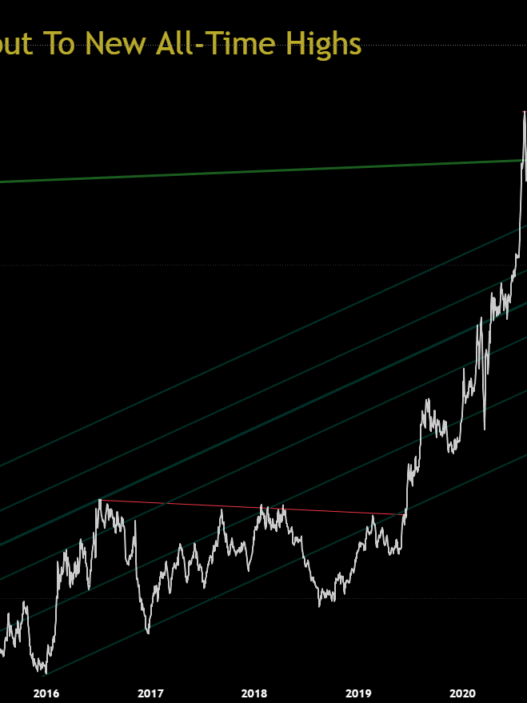
Technically, the recent copper price uptrend looks like the start of the last copper bull 2003-2006, or the price surge 2009-2011 – but this time, copper stockpiles worldwide have contracted by more than 60% since March 2020, dropping to the lowest level in more than 10 years. Serious supply bottlenecks might occur once the global recovery restarts.
Excerpts form “Demand for energy metals `will be massive´ Glencore CEO says“ (The Northern Miner on December 23, 2020):
“Pointing out that the world consumes 29.6 million tonnes of copper annually, Glasenberg [Glencore‘s CEO] noted that miners will have to produce 60 million tonnes of the red metal annually by the year 2050, to meet demand… ”You can see demand growth for these metals is massive over the next thirty years and the mining industry is going to have to step up to the plate to produce these extra metals and that’s going to be very difficult to achieve.” Turning specifically to copper, he noted that mining companies are going to have to go farther afield to find it. “There’s limited shovel-ready projects around the world for new copper mines,” he said. “The world has a challenging task to meet this new demand and it’s going to have to go to new geographies, it’s going to have to go to new locations where they lack infrastructure, and you don’t have the mining expertise in those new areas.“
Commodity analysts have already been forecasting shortages of the red metal. In a Dec. 20 research note, analysts at Bank of America Merrill Lynch warned that “copper mine supply has been virtually unchanged since 2017” and said they expect “a global copper market deficit in 2021.” The analysts noted that mine supply growth “has been low in recent years, as miners had cut back capex since 2012/2013,” and the situation has been exacerbated by slowdowns in production in major copper producing countries Chile and Peru. The China recovery scenario, a weaker dollar, and green-inspired reflation wave have also lifted copper, especially with the Chinese stockpiling impulse having been bigger than initially thought and more strategic in nature. Some banks and investors are now drawing comparisons to the spike in the early 2000s, when a jump in Chinese orders ushered in the last super-cycle for commodities… “Copper has in our view the strongest fundamentals going into 2021,” the BofA analysts wrote.”
Excerpts from “Blankfein Called It, Now the Whole World Is Watching Commodities“ (Bloomberg on January 16, 2021):
“Goldman Sachs, Bank of America Corp. and Ospraie Management LLC have all called for a bull market as stimulus kicks in and vaccines help the world emerge from the coronavirus crisis. JPMorgan Chase & Co. has also joined the chorus, advising clients to boost their exposure to materials while reducing investments in bonds. Commodities haven’t been this sexy since the mid-2000s, when China was stockpiling everything from copper to cotton while crop failures and export bans around the world boosted food prices, eventually toppling governments during the Arab Spring. The backdrop is now starting to look similar, with a broad gauge of commodity prices hitting its highest in six years.
“You have the whole world all of a sudden looking at commodity markets,” said Heber Cardoso, chief commercial officer at HedgePoint Global Markets, the structured commodities unit of ED&F Man Capital Markets that just got bought up by two investment firms. “You have low or negative interest rates fueling inflation, and there are zillions of dollars available looking for returns. There’s a structural change to the way we look at commodities.”
“From an inflation point of view, as an investor, I think investing in material sectors while they’re under-appreciated is not a bad thing now,” he said at the event. “Everyone has decided that we’ll never have inflationary pressure again, oil prices will never go up again. I don’t think so.“
“There’s a view that the dollar is going to be, on a long-term basis, quite weak and, with another round of stimulus coming, that we’re going to be in another circumstance in which the Fed is going to have to really work at controlling inflation,” said Tom Finlon of Brownsville GTR LLC, a trading and logistics firm based in Houston. “When the dollar gets cheap, you’ve got to buy something. That normally begets higher commodity prices.””
Excerpts from “World‘s copper mines struggle to recover from COVID-19“ (Reuters on January 26, 2021):
“The deadly coronavirus has taken a heavy toll on the world’s copper mines. Output in key producer countries such as Peru cratered over the second quarter of 2020 as lockdowns and quarantine measures caused many mines drastically to reduce operations. Recovery has been patchy. Peruvian mines had just about returned to normal run-rates by October, but output in Chile, the world’s largest copper producer, started sliding in the third quarter after a robust first half of the year.
What was supposed to be a year of mined supply growth turned out to be the second consecutive year of zero growth. The resulting supply chain stress is manifest in this year’s benchmark smelter terms which are the lowest in a decade. There is as yet no sign of a turnaround in the raw materials segment of the copper supply chain, suggesting full COVID-19 recovery could be a protracted affair.”
Excerpts from “Electrification will usher in era for the ´Revenge of the Miners‘, financier Friedland promises“ (VancouverSun on January 19, 2021):
““It’s our hope that B.C.’s mining and exploration sector can leverage the opportunity within our economic recovery package to strengthen their sector and in turn help the province’s overall economic recovery through investments and job growth,” [Bruce] Ralston [B.C. Minister of Energy Mines and Low Carbon Innovation] said in his remarks to the [AME’s Remote Roundup] conference.“
The federal government is also banking on mining as a source of post-pandemic economic strength… O’Regan said government put a focus on stimulus help for resource industries, such as tax relief, the federal wage subsidy, extending tax breaks on exploration and a $250 million investment in early stage companies.
And [Robert] Friedland, whose career has included involvement in cornerstone discoveries such as the Voisey’s Bay nickel mine in Labrador and the Oyu Tolgoi copper mine in Mongolia, sees potential for B.C. in his scenario for mining expansion. “I think British Columbia has fantastic exploration potential,” Friedland said. “Up there in the Golden Triangle (of the province’s northwest corner), around Kamloops. We’ve looked at some very interesting things. When the world focuses on infrastructure development, economic stimulation, a green New Deal, it’s apparent that you have to call up those Canadian miners,” Friedland said.”
Stephan Bogner
Contact
Rockstone News & Research
Stephan Bogner (Dipl. Kfm., FH)
Müligässli 1, 8598 Bottighofen
Switzerland
Phone: +41-71-5896911
Email: info@rockstone-news.com
Disclaimer: This article is for informational purposes only and does not constitute investment advice or a recommendation to buy or sell any commodities. The author holds no direct interests or financial instruments related to the mentioned commodities or companies. All views and forecasts reflect the state of knowledge at the time of publication and are subject to change. There is no guarantee that future developments will occur as described. Investing in commodities involves risks. Independent advice from a licensed financial advisor is strongly recommended.