The euro was presented to citizens as a guarantee of stability and prosperity. It was intended to bring Europe closer together economically, facilitate trade and create a stable currency modelled on the Deutsche Mark. Yet the institutional design of the euro contains incentives that can produce exactly the opposite effect over the long term: they can undermine the value of money and, with it, the savings of citizens.
The fundamental problem lies in the particular structure of the European Monetary Union. In a nation state, monetary and fiscal policy at least operate institutionally within the same political framework. In the eurozone, by contrast, monetary policy is shared, while fiscal policy remains largely the responsibility of the individual member states.
This creates a classic tragedy of the commons. One can imagine a school of fish in international waters that several fishermen are free to access. Each individual fisherman has an incentive to catch as many fish as possible. He receives the benefit of the additional catch himself, while the cost of overfishing – the shrinking fish stock – is borne collectively by all fishermen. Precisely because the resource is available to everyone, each individual has an incentive to exploit it as quickly and intensively as possible.
A similar mechanism exists within the European Monetary Union. The commonly used resource is the purchasing power of the euro. Member state governments can increase public spending through deficits and thereby obtain additional resources. The immediate benefits of this spending accrue mainly to the respective government and to recipients of public expenditure within that country. Part of the cost, however, can be externalised to other users of the euro.
This occurs in particular when additional government debt is financed through the banking system and the European Central Bank supports government financing conditions through its monetary policy. The resulting expansion of money and credit can reduce the purchasing power of the euro. The costs of additional public spending are therefore not borne exclusively by the citizens of the deficit country. Through the shared currency area, they are partly distributed across all holders of euros, including those living in other member states.
This creates a problematic incentive for governments: the political benefits of additional public spending are concentrated largely within their own country, while part of the monetary costs can be shifted onto euro users elsewhere. Just as each fisherman has an incentive to catch one more fish, each government has an incentive to run additional deficits as long as it can expect part of the resulting costs to be borne by the currency union as a whole.
The common resource being exploited is therefore ultimately the purchasing power of the shared currency. The more individual states attempt to use this resource for their own political purposes through deficit spending, the greater the pressure on the stability of the euro system becomes. The tragedy lies in the fact that behaviour which may appear rational from the perspective of an individual government in the short term can, in aggregate, weaken the common currency and endanger the savings of all euro holders.
The sovereign debt crisis made this problem highly visible. When individual member states encountered difficulties financing their debt, European institutions faced a dilemma. A consistent application of market principles would have meant that creditors bear losses and that states, in extreme cases, could become insolvent. Instead, the view increasingly prevailed that the stability of the euro system had to be preserved at almost any cost.
This also changed the role of the European Central Bank. The ECB increasingly became the decisive stabilising institution of the monetary union. Bond purchases, extremely low interest rates and a massive expansion of the central bank balance sheet became instruments used not only to pursue monetary policy objectives, but also indirectly to stabilise the financing conditions of highly indebted states.
For savers, this development has far-reaching consequences.
Money is not only a medium of exchange. It is also a means of transferring purchasing power into the future. Anyone who saves gives up consumption today in order to consume tomorrow. A stable currency protects this intertemporal transfer of purchasing power. If money continuously loses value, however, savers are gradually deprived of purchasing power.
Inflation acts like a barely visible tax. The nominal amount in a bank account may remain unchanged or even increase through interest. What matters, however, is not the number shown on the account, but what it can actually buy. If prices rise faster than the return on savings, their real purchasing power declines.
This is where the tragedy of the euro becomes particularly apparent. The political and institutional logic of the monetary union creates persistent pressure towards expansionary monetary policy. High levels of government debt make rising interest rates politically and fiscally costly. At the same time, economic and financial crises can repeatedly be used to justify further central bank intervention. Yesterday’s exceptional measure can easily become tomorrow’s normal instrument.
For long-term savers, this raises a fundamental question: how can wealth be protected against the risks of a politically managed monetary system?
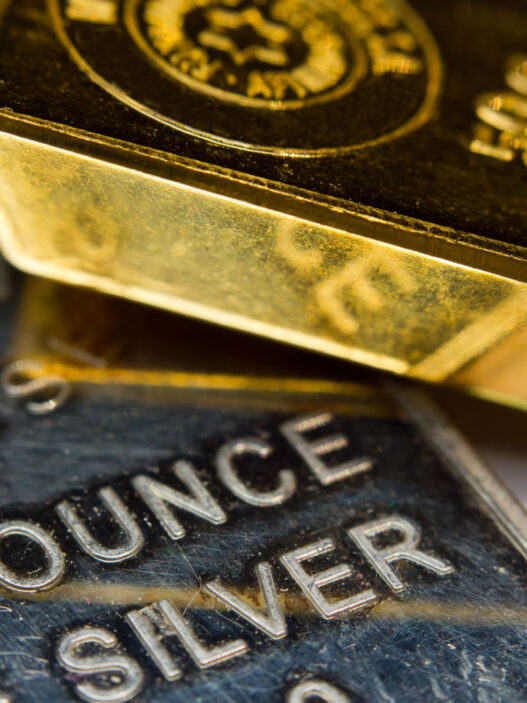
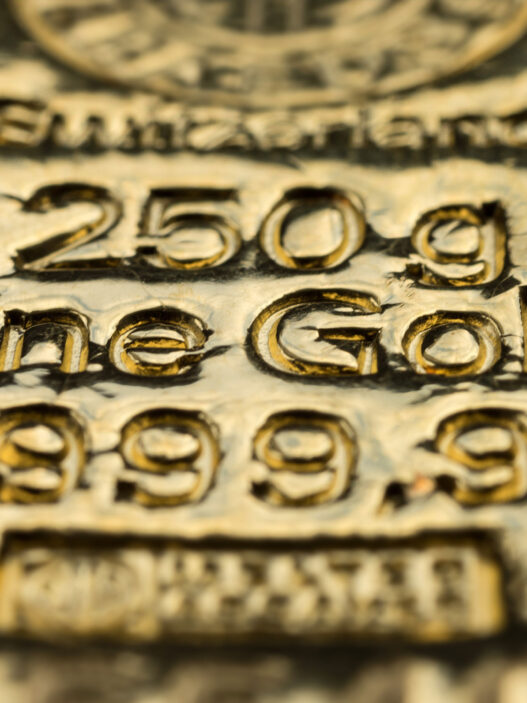
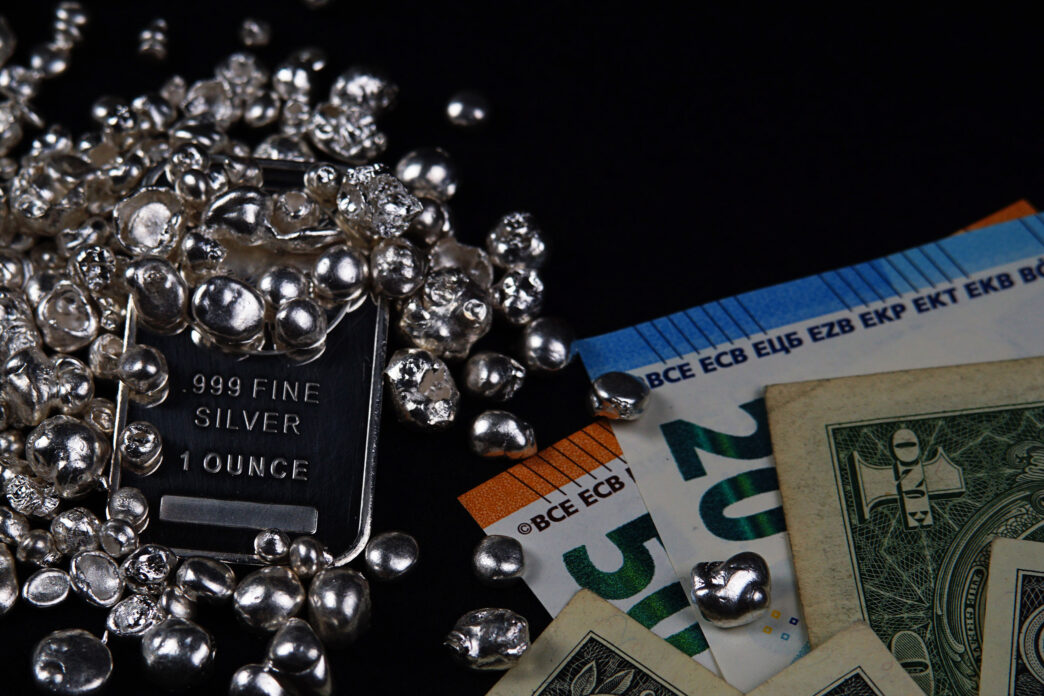
Gold and silver offer a historically proven answer. Unlike the euro, precious metals cannot be created by a decision of a central bank. Their supply cannot be expanded at will in order to stabilise government finances or support financial markets. They have no issuer whose ability to pay determines their value.
This does not mean that the prices of gold or silver cannot fluctuate. Rather, it means that physical precious metals exist outside the system of credit promises and politically managed money creation. This is precisely where their particular role in wealth protection lies.
The true tragedy of the euro therefore lies not only in the possibility of future currency crises. It is already visible in the gradual change in our understanding of money and saving. In a sound monetary system, thrift is rewarded and forms the basis for capital formation and prosperity. In an inflationary monetary system, by contrast, savers are forced to take ever greater risks simply to preserve the purchasing power of their wealth.
Anyone who wants to preserve wealth over the long term should therefore not rely solely on political institutions to protect the value of money. True financial provision begins with recognising that money itself can be a risk.
How can you buy precious metals cheaply and store them safely?

Elementum Deutschland GmbH, based in Sindelfingen (Germany), specializes in trading physical precious metals. Customers who purchase precious metals from Elementum Deutschland (or one of the other national Elementum companies in five European countries) can store them in the renowned high-security vaulting facilities in the St. Gotthard Massif in Switzerland at Elementum International AG.
Of course, you also have the option of purchasing gold and silver directly and having it delivered to your desired address. However, storing silver in the so-called open duty-free warehouse (“offenes Zollfreilager”) at St. Gotthard offers decisive tax advantages:
- The 19% value added tax customary in Germany is completely waived on purchases and sales – a considerable price advantage that effectively secures you 19% more silver for your money.
- If you store your silver in this high-security vault, you can sell it back to Elementum Deutschland GmbH at any time – without any bureaucratic hassle and also without VAT, as the trade takes place within the duty-free warehouse. You will receive the funds via bank wire.
- VAT is only payable when you physically remove the stored silver – either by picking it up in person (after prior notification) or by having it shipped to your address.
More silver, more return
Thanks to duty-free storage, you receive 19% more physical silver when you buy. This additional amount also participates in the performance of the silver price if it rises – a leverage effect that significantly improves your return opportunities.
About Elementum
Elementum is a second-generation, owner-managed family business. Trust, consistency, and long-term thinking are at the heart of our philosophy. The Board of Directors of Elementum International AG is composed of internationally renowned experts in the money and precious metals markets, including economists, analysts, university professors, and precious metals specialists. This in-depth expertise forms the backbone of our actions – for your security, your assets, and your future.

About the Author

Prof. Dr. Philipp Bagus
President of Elementum International AG
Philipp Bagus is Professor of Economics at Universidad Rey Juan Carlos in Madrid, Spain. His research focuses on monetary and business cycle theory, and he has published in international journals such as the Journal of Business Ethics, Independent Review, and the American Journal of Economics and Sociology. He has received numerous awards for his work, including the O.P. Alford III Prize in Libertarian Scholarship, the Sir John M. Templeton Fellowship, the IREF Essay Prize, and the Ludwig Erhard Prize. Bagus is a member of the Academic Advisory Board of the Ludwig von Mises Institute Germany and the author of several books. His best-known works include “The Milei Era: Argentina’s New Path” (2024), “Full Reserve Banking versus the Real Bills Doctrine” (2024), “In Defense of Deflation” (2015), and “The Tragedy of the Euro” (2011).
Contact
Rockstone News & Research
Stephan Bogner (Dipl. Kfm., FH)
Müligässli 1, 8598 Bottighofen
Switzerland
Phone: +41-71-5896911
Email: info@rockstone-news.com
Disclaimer: This article reflects the personal opinion of the author. Elementum assumes no responsibility for the accuracy of the content and accepts no liability for its use. This article may contain links to external third-party websites. Elementum is not responsible for the content of these external sites and expressly distances itself from all information provided there. At the time the links were created, no unlawful content was identifiable. This article does not constitute a recommendation to buy or sell. Elementum International AG is a Swiss company that specializes exclusively in the storage of physical precious metals in a high-security vault facility located in the St. Gotthard mountain massif in Central Switzerland. The Board of Directors and Executive Management of Elementum International AG have been selected solely based on their professional expertise and long-standing experience in precious metals markets. As these individuals may also be professionally active outside their roles at Elementum International AG, the company has no influence over their external activities and respects their right to freedom of expression. Therefore, the views expressed by persons working with or for Elementum do not necessarily reflect the opinion of Elementum International AG. Investments in precious metals are subject to risks, including those specific to the structure of this market. Please read our full risk disclosures and consult a licensed financial advisor before making any investment decisions. Neither the author, Elementum International AG, nor Elementum Deutschland GmbH assume any liability for actions taken based on the information provided. Past performance is not indicative of future results. The cover picture has been obtained and licenced from Shutterstock.com.