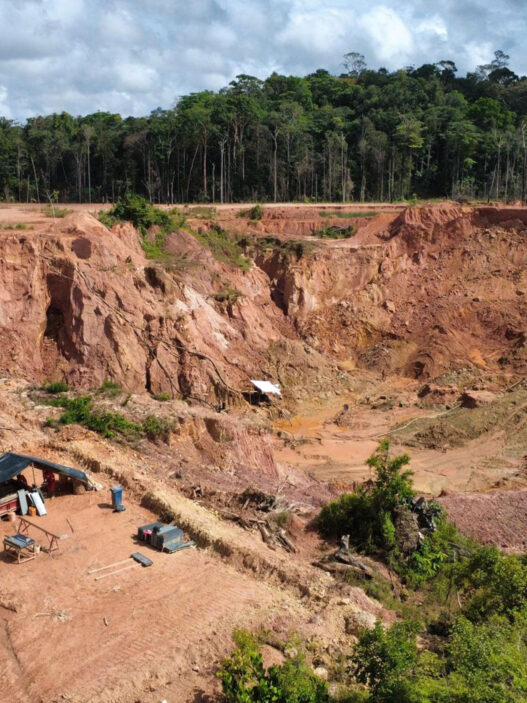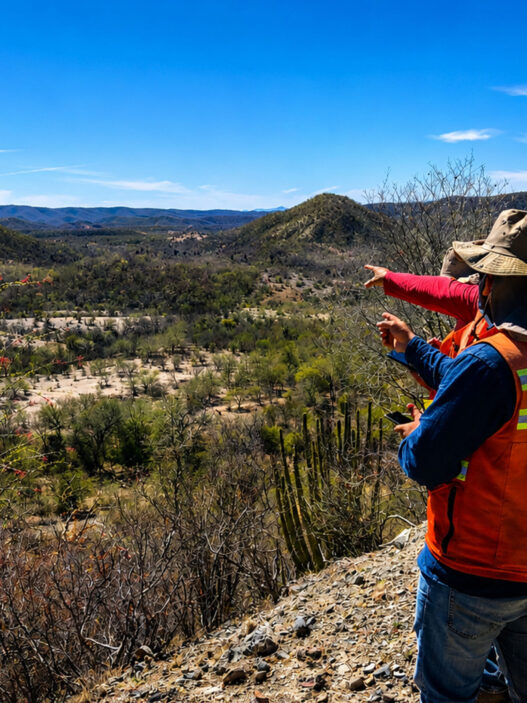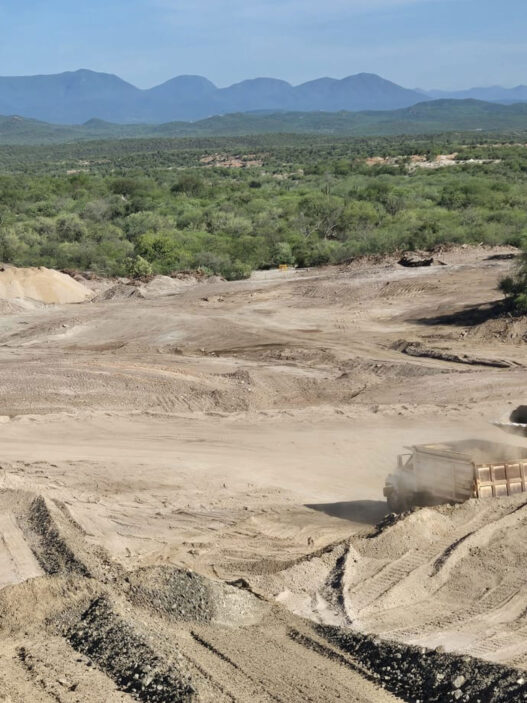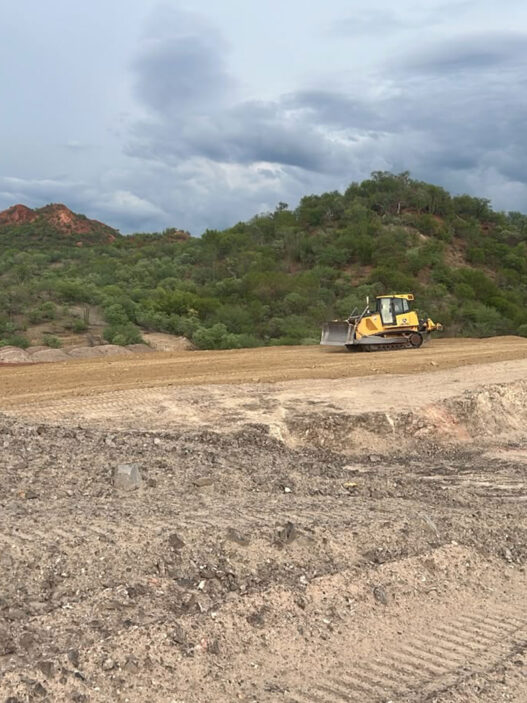
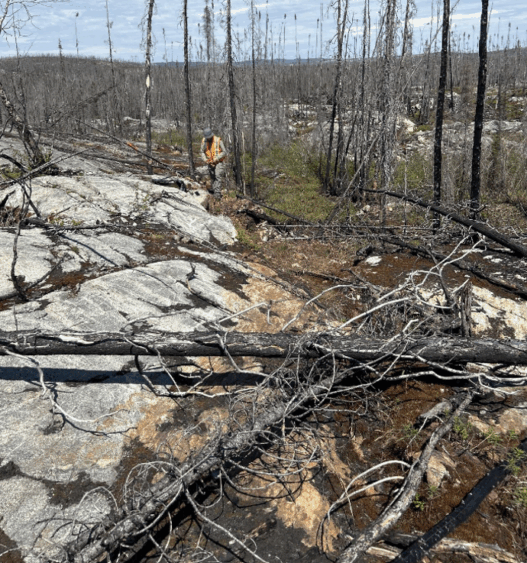

A geologist examines a broad exposure of rusty, strongly sheared tonalite at the Orezone target, where Lux Metals Corp. identified visible pyrite and arsenopyrite during its recent field campaign. Together with mapping, geochemistry and geophysics, these observations will help refine drill targets across the 40 km La Grande Gold Project in Québec‘s James Bay region.
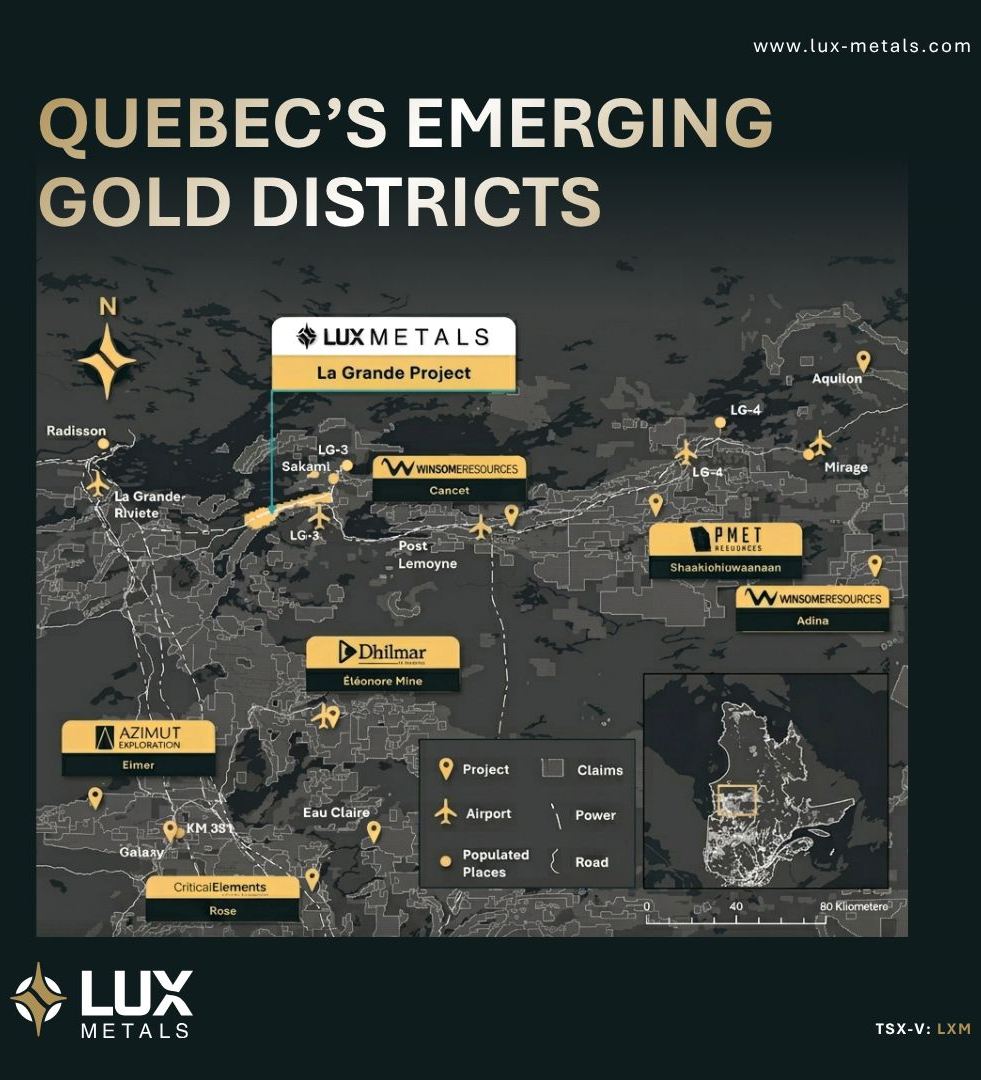
Only a few months after completing the acquisition of the La Grande Gold Project in February 2026, Lux Metals Corp. is already entering what could become the most exciting phase in the company’s history. With a current market capitalization of 11 million CAD, Lux controls a historically drilled high-grade gold system, an ~40 km district-scale land package in Québec’s James Bay region and a fully funded 2026 exploration program. As the company transitions from groundwork to drilling, shareholders can look forward to a steady stream of catalysts, including surface assay results, refined drill targets and the launch of a district-scale drill program.
The latest news from Lux Metals Corp. marks an important transition from planning to execution. Having secured funding, drill permits and an experienced technical team, the company has now completed the first major field program of its 2026 exploration strategy at the La Grande Gold Project. More importantly, the work demonstrates how Lux is systematically building the geological framework for a district-scale drill program that extends well beyond the historic Zone 32 gold system.
Far more than the completion of a 2-week field program, the latest results show that the company is methodically assembling the geological foundation for a comprehensive exploration program across one of the larger underexplored Archean gold corridors under junior company control.
Backed by the successful 4 million CAD financing completed earlier this year, Lux is already generating new geological data that will directly influence drill targeting across its large land package.
Importantly, this exploration program was never intended to simply revisit the historic Zone 32 gold system. Its objective is considerably broader: To improve the geological understanding of the entire La Grande corridor before drill rigs begin testing both the historically drilled Zone 32 system and additional regional targets emerging from modern geological mapping, structural interpretation, geochemistry and geophysics.
That strategy is significant because major Archean gold camps rarely consist of only one mineralized centre. Instead, they commonly evolve into districts containing multiple deposits controlled by the same regional structures, deformation corridors and favourable host rocks.
The geological question Lux is now attempting to answer is therefore much larger than whether Zone 32 can be expanded. It is whether Zone 32 represents just one expression of a much larger mineralizing system extending across the company’s extensive land package.
The latest field program represents another important step toward answering exactly that question.
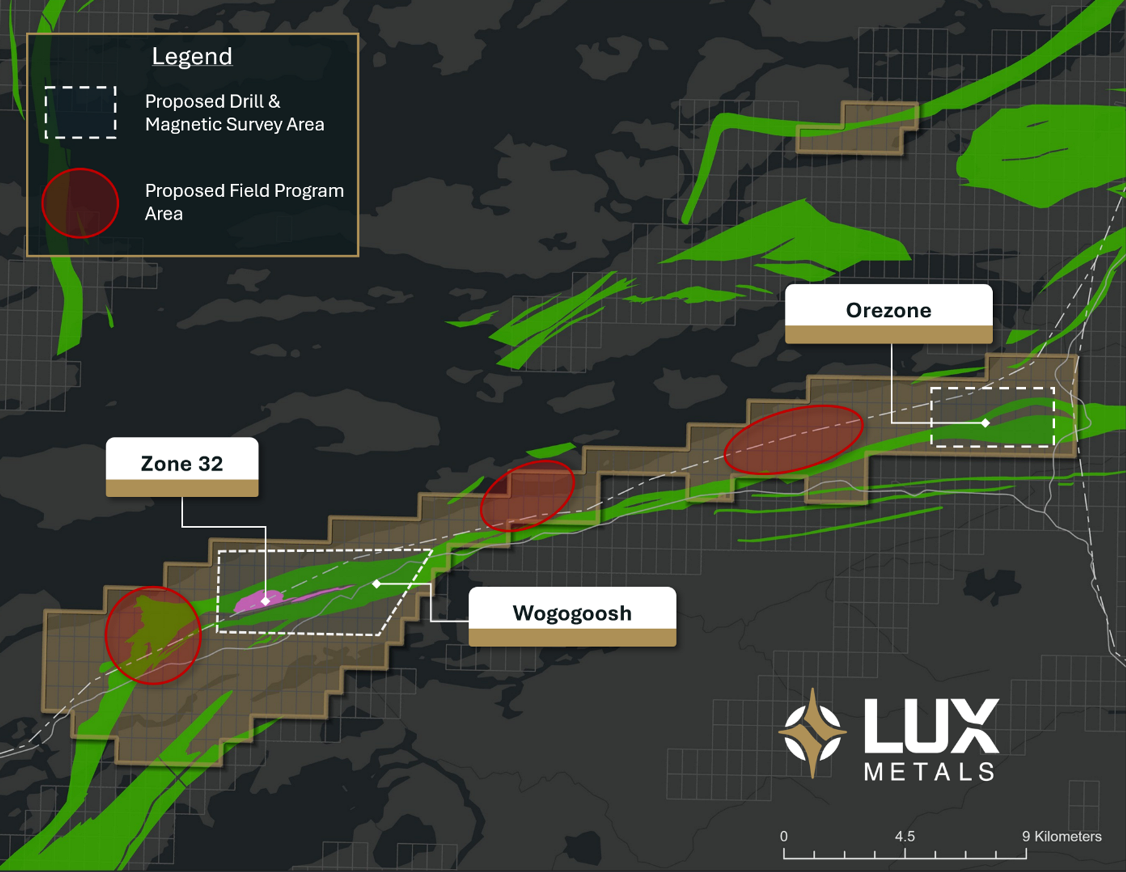
FROM HISTORICAL DATA TO MODERN EXPLORATION
One of the strongest aspects of the Lux story has always been the unusual combination of an extensive historical database and substantial unexplored upside.
Unlike many junior exploration companies that begin with only isolated surface samples or early-stage geophysical anomalies, Lux inherited a project containing more than 40,000 m of historical drilling together with extensive trenching, geological mapping and multiple known gold showings developed by previous operators.
As discussed in the initial Rockstone Report, those historical programs successfully outlined the high-grade Zone 32 gold system while demonstrating that mineralization remains open along strike, down plunge and laterally.
Yet an equally important observation emerged from reviewing the historical work. Most exploration was concentrated within only a relatively small portion of the ~40 km greenstone land package.
Large sections of the property received only limited geological attention despite hosting favourable lithologies, extensive deformation, quartz veining and historical surface mineralization.
That asymmetry creates one of the project’s greatest opportunities.
Rather than beginning with an entirely conceptual exploration target, Lux starts with a historically proven gold system while simultaneously controlling a much larger district where many of the same geological ingredients remain only lightly explored.
The current field program was specifically designed to begin filling those knowledge gaps. Geologists systematically evaluated central and eastern portions of the property where modern geological information remained sparse. Rock sampling, structural measurements, alteration mapping and soil geochemistry were all aimed at building a significantly stronger geological framework before drill collars are finalized.
This approach follows a logical exploration sequence.
Successful exploration rarely begins with randomly positioned drill holes. Instead, the highest-quality drill targets typically emerge after integrating structural geology, alteration mapping, lithological relationships, geochemistry, historical drilling and geophysics into one coherent geological model.
That is precisely the stage Lux has now reached.
A DISTRICT-SCALE EXPLORATION STRATEGY BEGINS TO TAKE SHAPE
When Lux announced its 2026 exploration strategy in May, management emphasized that drilling would represent only one component of a much broader exploration campaign.
Besides ~5,000 m of initial core drilling, the company outlined detailed field mapping, prospecting, surface sampling, ultra high-resolution drone magnetic surveys and advanced structural interpretation.
Importantly, management also stated that drilling would not be limited exclusively to Zone 32. The planned program includes testing parallel structures within the broader tonalite corridor together with initial drill testing of regional targets refined through the field and geophysical programs.
The latest news-release now demonstrates that this strategy is already being executed. During 2 weeks of fieldwork, geological crews from Dahrouge Geological Consulting completed 19 traverses across the property while collecting 100 rock samples and 55 soil samples from areas that have seen comparatively little modern exploration, significantly expanding the geological database.
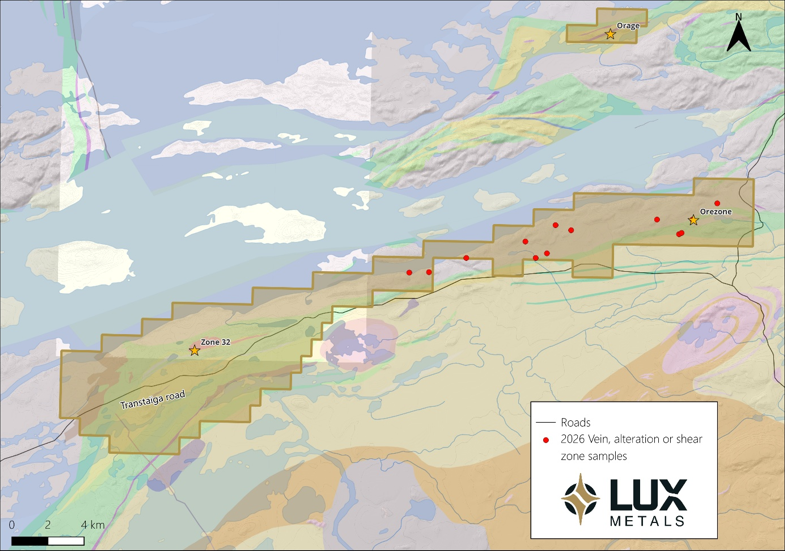
Although assays remain pending, the field observations themselves already provide valuable information regarding the distribution of alteration, structural preparation and sulphide mineralization throughout the broader project area.
For investors, perhaps the most important takeaway is not simply the number of samples collected. It is where they were collected.
The sampling program extends across a significant portion of the broader La Grande corridor instead of clustering around Zone 32. This reinforces management’s message that Lux is evaluating the project as a district-scale exploration opportunity rather than as a single isolated deposit.
THE PATH TO DISCOVERY
Surface mapping rarely generates the excitement associated with drill intercepts. Nevertheless, experienced exploration geologists understand that high-quality geological mapping often determines the success of future drilling programs.
Drill holes are expensive. Poorly positioned drill holes can consume significant exploration budgets without materially improving the geological understanding of a project.
Conversely, drilling guided by detailed structural mapping and modern geological interpretation has a much greater probability of successfully testing the controls on mineralization.
This is especially true within Archean orogenic gold systems.
Unlike many porphyry deposits that form large disseminated mineralized bodies, Archean gold systems are frequently controlled by complex structural networks involving shear zones, fold hinges, competency contrasts between different rock types and repeated episodes of deformation.
Understanding where those structures intersect favourable host rocks often proves far more important than simply identifying quartz veins at surface.
The latest field program therefore focused heavily on documenting structural relationships throughout the property. Geologists mapped deformation intensity, vein orientations, lithological contacts and alteration patterns while simultaneously collecting representative samples for laboratory analysis.
Each of these observations will contribute to an increasingly refined 3D geological model that will ultimately guide drilling. The work also helps reduce geological uncertainty before significant exploration capital is committed to the drill program.
Lux is building a modern geological framework by integrating newly collected field observations with historical datasets, drone magnetics and advanced structural interpretation. That substantially increases the probability that drilling will test the most prospective geological targets available.
MORE THAN JUST QUARTZ VEINS
One of the most encouraging observations reported by Lux involves the widespread occurrence of visible sulphide mineralization associated with quartz-carbonate veining and deformation zones.
During the field campaign, crews collected samples from quartz veins, altered basalts, tonalite, diorite and numerous shear zones distributed throughout the central and eastern portions of the property.
Geologists identified 2 distinct families of quartz veins. One follows the regional foliation while the second cuts across it in an east-west orientation. Interestingly, the foliation-parallel veins generally displayed stronger sulphide mineralization.
Among 33 sampled veins, 17 contained visible sulphides dominated by pyrite together with arsenopyrite and chalcopyrite. 5 samples also contained tourmaline, while 1 sample hosted visible malachite associated with copper-bearing mineralization.
Pyrite and arsenopyrite are among the sulphide minerals most commonly associated with Archean lode gold systems throughout the Superior Province.
Although visible sulphides do not indicate economic gold grades by themselves, they often record the pathways through which mineralizing fluids circulated within the host rocks.
When these sulphides occur together with quartz-carbonate veining, structural deformation and favourable host lithologies, they become increasingly valuable indicators for follow-up exploration.
Even more noteworthy, Lux reported that basalt-hosted settings displayed visible mineralization in 17 of 21 sampled locations.
This suggests that certain volcanic units may have provided particularly favourable physical and chemical environments for hydrothermal fluids during mineralization, an observation that could become increasingly important as drill targets continue to be refined.
FIELD OBSERVATIONS BEGIN TO REVEAL A MUCH LARGER SYSTEM
While assays will ultimately determine whether the sampled rocks contain significant gold values, geological observations made in the field already provide valuable information about the evolution of the La Grande mineralizing system.
One of the most encouraging aspects of the program is that the observed sulphide mineralization is not confined to an isolated showing. Instead, it occurs in multiple geological settings distributed across the broader property.
Quartz-carbonate veins, sulphide-bearing shear zones, altered basalts, mineralized tonalite and structurally prepared host rocks were documented during the campaign.
Collectively, these observations suggest that hydrothermal fluids circulated through a much larger portion of the property than the historic drilling alone might indicate.
That does not automatically imply that every mineralized occurrence hosts economic gold mineralization. However, it does demonstrate that the geological processes responsible for transporting mineralizing fluids operated across a broad corridor rather than within a single isolated structure.
For exploration geologists, this distinction is important.
Successful Archean gold districts commonly develop through repeated deformation events that reactivate regional structures over long geological periods. Those structures create multiple opportunities for hydrothermal fluids to deposit gold within favourable host rocks.
The objective of modern exploration is therefore not simply to identify where quartz veins occur, but to determine which structural settings repeatedly focused mineralizing fluids.
The latest field campaign represents another important step toward answering exactly that question.
ALTERED BASALTS COULD BECOME IMPORTANT DRILL TARGETS
One geological observation stands out in particular. Lux reported that basalt-hosted veins displayed visible sulphide mineralization in 17 of 21 sampled locations.
Although the company appropriately cautions that visible sulphides alone should not be interpreted as evidence of gold mineralization, the consistency of sulphide occurrence within these volcanic rocks deserves attention.
Basalts often provide mechanically favourable host rocks within Archean greenstone belts because they respond differently to deformation than adjacent intrusive rocks. During regional tectonic events, competency contrasts between volcanic rocks and intrusive bodies can localize shearing, fracturing and fluid flow.
That relationship is already well established at the historic Zone 32 system, where gold mineralization occurs near the contact between the La Grande tonalite and surrounding mafic volcanic rocks.
Finding additional sulphide-bearing basalt-hosted veins elsewhere along the corridor raises an important possibility.
The structural conditions that controlled mineralization at Zone 32 may not be unique to one location. Instead, they may recur repeatedly along the broader corridor wherever similar geological relationships developed.
This is precisely why district-scale geological mapping becomes so valuable before drilling begins. The objective is to recognize repeating geological patterns that can be tested systematically throughout the property rather than treating individual showings as isolated targets.
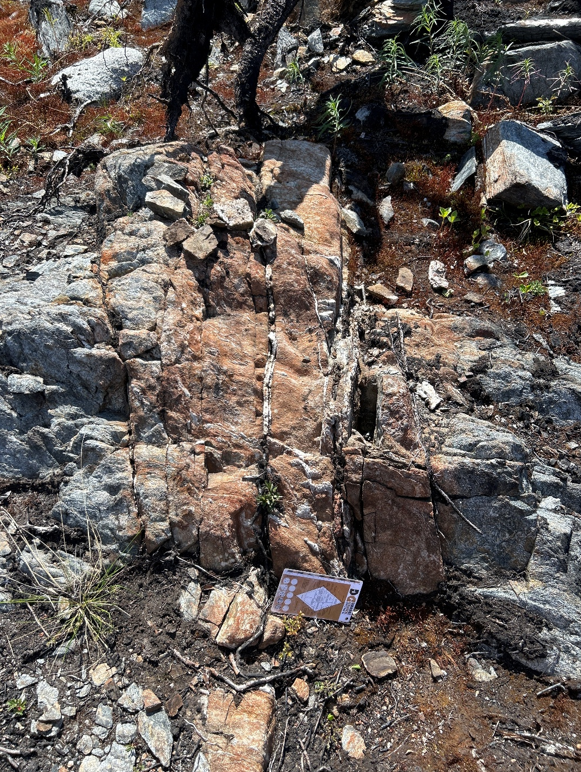
OREZONE CONTINUES TO ATTRACT ATTENTION
Perhaps the most intriguing regional target emerging from the latest field campaign is Orezone.
Readers of the previous Rockstone Report may remember that Orezone had already attracted attention because historical grab samples reportedly returned values of up to 24 g/t gold across an ~500 x 200 m mineralized outcrop exposure. At the time, however, geological understanding of the showing remained relatively limited.
The new mapping program has now added considerably more geological context. According to Lux, Orezone consists of a folded structural setting with tonalite occupying the fold core while basalt forms the fold limbs.
Deformation intensity increases toward the southeast where the volcanic rocks become progressively more sheared.
Fold hinges, lithological contacts and shear zones frequently interact to create zones of enhanced permeability where hydrothermal fluids can circulate repeatedly.
Many Archean gold deposits throughout the Superior Province owe much of their size to exactly these types of structurally prepared environments.
Lux also reported abundant rusty outcrop together with widespread mineralized exposures that remain visible despite historical trenches now being flooded.
A tonalite sample collected near the showing contained between 1% and 5% malachite associated with an epidote-quartz vein, further confirming that hydrothermal alteration affected multiple rock types throughout the area.
Importantly, the company concluded that Orezone warrants additional detailed geological mapping. That recommendation may appear modest on the surface. In reality, it represents one of the most meaningful outcomes of the field campaign.
Detailed follow-up mapping generally indicates that geologists believe an area has sufficient geological complexity and exploration potential to justify further investment before drilling decisions are made.
In other words, Orezone appears to be progressing through the normal exploration pipeline from historical showing toward modern drill target.
SOIL GEOCHEMISTRY COMPLETES THE PICTURE
Rock sampling tells only part of the geological story. Large portions of the La Grande Project are covered by glacial sediments that conceal the underlying bedrock. In these areas, direct sampling of mineralized structures is often impossible.
To overcome this limitation, Lux completed a systematic soil sampling program consisting of 55 samples collected along 9 survey lines across the central and eastern portions of the property. This work complements the mapping program perfectly.
As mineralized rocks slowly weather over geological time, trace amounts of gold and associated pathfinder elements may migrate upward into the overlying soils. Although these geochemical anomalies are often subtle, they can reveal concealed structures and alteration systems that remain completely hidden beneath glacial cover.
When integrated with geological mapping, structural interpretation and high-resolution drone magnetic surveys, soil geochemistry becomes another independent dataset capable of refining drill targets.
Lux is assembling multiple overlapping datasets that either reinforce or challenge one another, creating a far more robust targeting process than any single exploration method could provide.
This integrated approach represents one of the major differences between modern exploration programs and many historical campaigns completed decades ago.
Lux’s President and CEO, Carl Ginn, summarized the significance of the completed field program by stating:
“Zone 32 has shown us what this corridor is capable of, and the rest of the trend has seen very little modern work. Two weeks of mapping and sampling gave us the first analytical data from these areas. With assays pending, we will go into our drill program at Zone 32 with a stronger picture of the broader system.”
Carl Ginn’s statement highlights a broader exploration philosophy. Before aggressively expanding drilling, Lux is first seeking to understand the geological processes that created Zone 32 and then apply those insights across the remainder of the property.
Zone 32 already demonstrates that the La Grande corridor can host significant gold mineralization based on extensive historical drilling. The company’s objective is now to determine whether the geological ingredients responsible for that mineralized system continue elsewhere along the remaining 38 km of largely underexplored strike length.
That explains why management invested time and capital into geological mapping before aggressively expanding drilling.
Every structural measurement, every alteration zone, every sulphide-bearing vein and every soil anomaly contributes to a more complete understanding of how the district evolved geologically.
By allowing geology to guide drill targeting from the outset, Lux improves exploration efficiency, reduces unnecessary drilling and increases the probability that future holes will test the most prospective parts of the system. That approach generally produces better exploration decisions, reduces unnecessary drilling and increases the probability that future drill holes will test the most prospective parts of the system.
THE NEXT CATALYSTS
With the field campaign now complete, Lux enters the next phase of its 2026 exploration strategy.
All 100 rock samples and 55 soil samples have been submitted to AGAT Laboratories for gold and multi-element analysis.
According to the company, assay results are expected within ~3-4 weeks.
Positive assays from newly mapped regional targets could rapidly elevate those areas into drill-ready targets alongside Zone 32. Once received, the analytical data will be reviewed, interpreted and integrated with the geological observations collected during the mapping program together with historical datasets and ongoing geophysical work.
This integration phase is where individual observations begin to evolve into drill targets. A sulphide-bearing quartz vein, by itself, represents only one piece of information. A soil anomaly alone tells only part of the story. Likewise, a magnetic lineament or a structural measurement may have limited significance when considered in isolation.
When all of these independent datasets begin pointing toward the same location, confidence in a target increases substantially. That appears to be exactly the process now underway at La Grande.
DRILLING THE DISTRICT
The upcoming drill program is often described simply as a 5,000 m program at Zone 32. That description, however, captures only part of Lux’s exploration strategy.
As outlined previously by the company, the 2026 exploration program includes expanding the historic Zone 32 mineralized envelope down plunge and along strike, increasing drill density within the known system, testing parallel structures inside the broader tonalite corridor and conducting initial drill testing of regional targets refined through geological mapping, geochemistry and geophysics.
Zone 32 remains the logical starting point because more than 40,000 metres of historical drilling have already demonstrated broad intervals of significant gold mineralization that remain open in multiple directions.
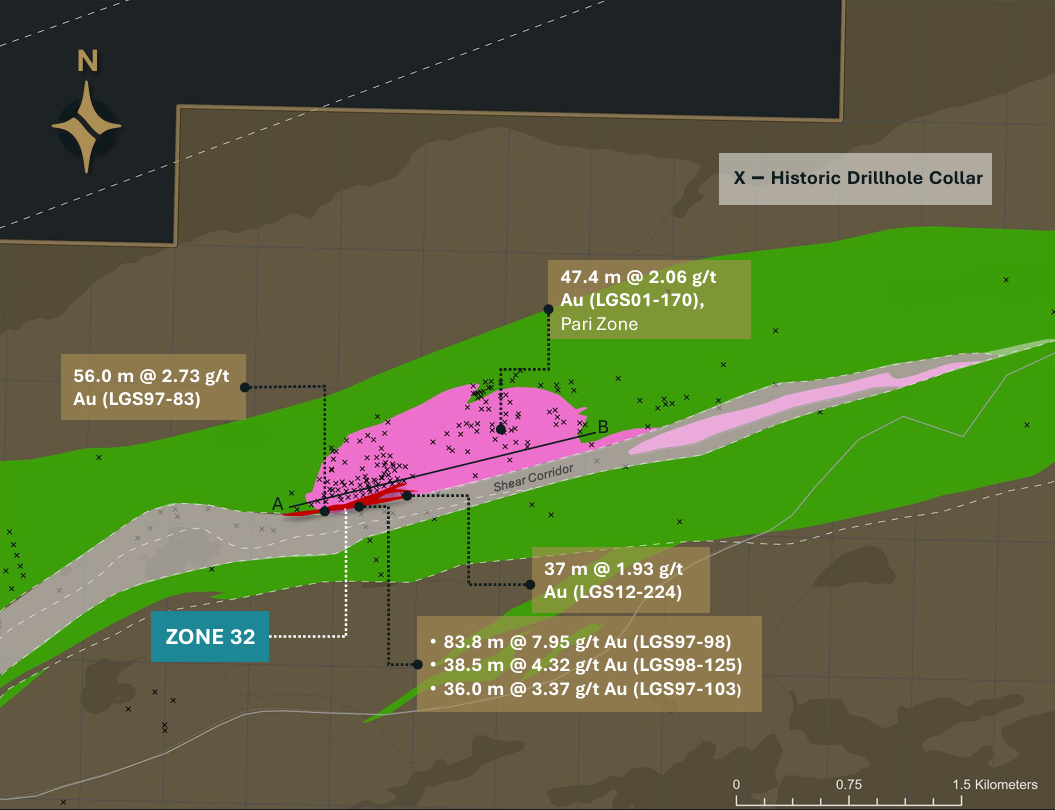
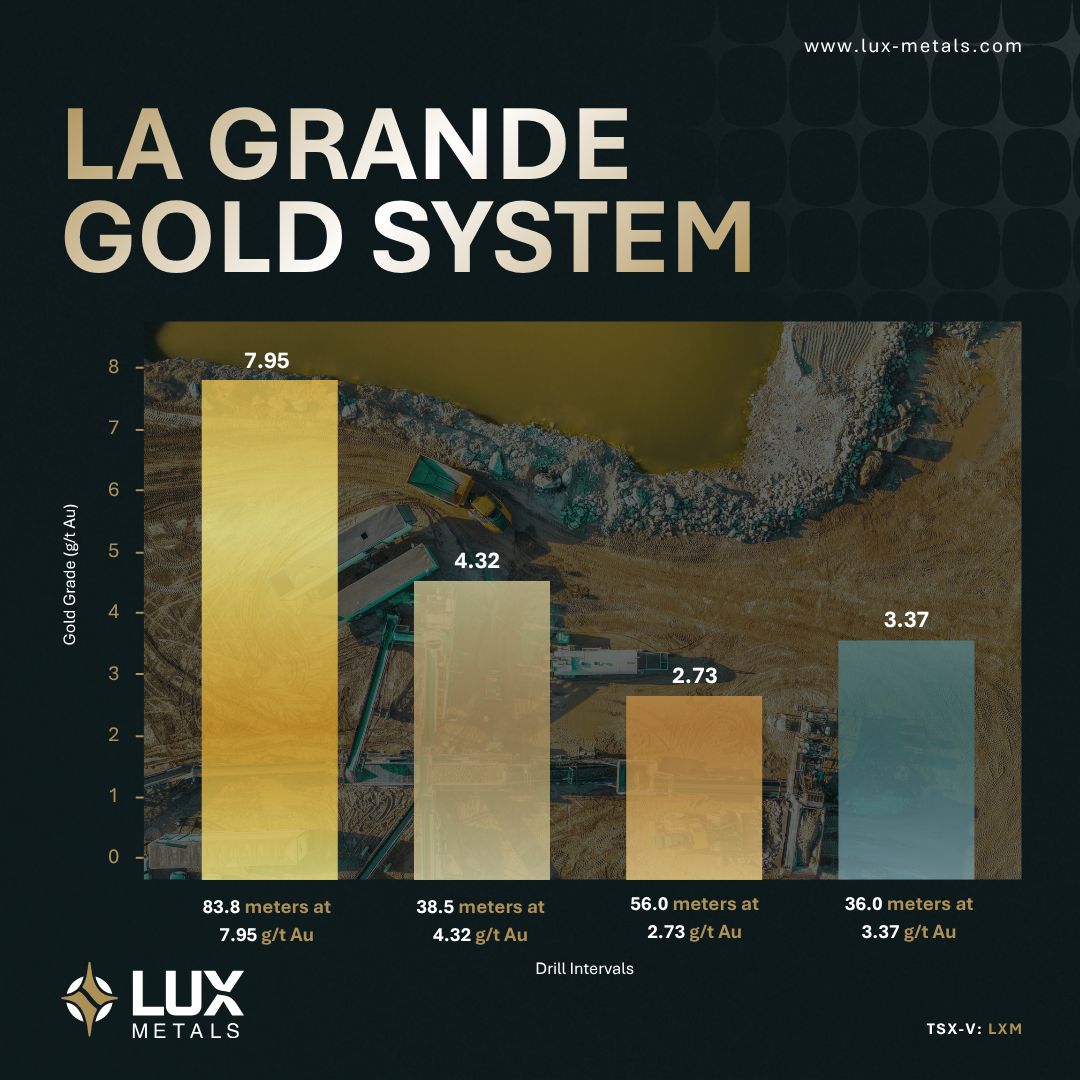
The probability of successfully expanding a known mineralized system is generally higher than making a completely new grassroots discovery.
At the same time, Lux is deliberately building a second pipeline of opportunities across the broader property.
Regional targets such as Orezone, Wogogoosh and additional structural corridors identified during the current field campaign provide the Company with exploration optionality well beyond a single deposit.
That diversification strengthens the overall exploration strategy. Lux is gradually assembling multiple exploration opportunities capable of generating future drill campaigns as geological confidence continues to improve.
A CONTINUOUS FLOW OF CATALYSTS
For investors, the exploration timeline now appears well defined.
The first catalyst will be the assay results from the recently completed field program. Those assays will place numerical values on the geological observations already reported by the company and may highlight additional areas requiring follow-up.
The second catalyst will likely involve final refinement of drill targets as geological mapping, lab results, historical datasets and geophysical information are integrated into the evolving exploration model.
Attention will then shift toward mobilization of the drill program itself. Once drilling begins, investors should remember that the program is expected to evaluate several aspects of the La Grande Project simultaneously:
- Expansion drilling at Zone 32 will test whether the historic mineralized system extends farther down plunge and along strike.
- Infill drilling may improve geological continuity within portions of the existing system.
- Parallel structures could demonstrate that mineralization is distributed across a broader corridor than currently understood.
- Regional targets refined through the latest field program may begin receiving their first modern drill tests.
Taken together, these activities have the potential to generate a sustained sequence of exploration catalysts and newsflow rather than a single isolated exploration event.
THE BIGGER PICTURE
A theme has become increasingly clear over the past several months: Lux is not simply returning to a historical gold project. The company is systematically rebuilding the geological understanding of an entire mineralized district using modern exploration techniques that were unavailable during much of the historical work.
Historical drilling established that Zone 32 hosts broad intervals of high-grade gold mineralization and remains open in multiple directions. The latest field campaign demonstrates that geological activity is now expanding well beyond that historically drilled area.
Every new structural observation, every alteration zone, every sulphide-bearing vein and every mapped outcrop contributes to a more comprehensive understanding of how the broader La Grande corridor evolved.
Whether that work ultimately identifies an additional deposit or several mineralized centres remains to be determined by future drilling.
What can already be observed is the exploration strategy itself. Lux is steadily progressing from historical knowledge toward modern geological validation. That transition often marks an important stage in the evolution of successful exploration projects.
BOTTOM LINE
Only a month ago, Lux outlined an ambitious exploration strategy built around 3 central objectives: Advancing the historic Zone 32 gold system, systematically evaluating regional targets and developing a district-scale geological model for the broader La Grande Project.
The latest news demonstrates that the company is already executing that plan.
The recently completed field campaign extends far beyond a routine sampling exercise. It represents the first systematic modern evaluation of large portions of the ~40 km La Grande corridor under Lux’s ownership.
Geological crews documented widespread alteration, multiple generations of quartz veining, structurally controlled sulphide mineralization and favourable host rocks across areas that have seen comparatively little modern exploration. Assays are now pending, while the geological observations are already being integrated into the evolving exploration model.
Equally important, the program reinforces the broader investment thesis first presented in the initial Rockstone Report.Zone 32 remains an exceptional starting point because extensive historical drilling has already demonstrated broad gold intercepts within a mineralized system that remains open along strike, down plunge and laterally. Yet Zone 32 represents only a small portion of Lux’s land package.
The greater opportunity lies in determining whether the same geological processes responsible for creating the historic Zone 32 discovery also operated elsewhere along the remaining 38 km of largely underexplored greenstone belt, potentially giving rise to additional gold systems. The latest mapping campaign was specifically designed to begin answering that question.
Backed by a strong treasury, drill permits already in hand and an experienced technical team led by Dahrouge Geological Consulting, Lux appears well positioned to enter one of the most active phases in the company’s history.
Surface assays, integrated targeting, drill mobilization and the testing of both the historic Zone 32 system and additional regional targets together have the potential to create a sustained pipeline of exploration catalysts throughout the remainder of 2026.
The coming drill program therefore represents more than the next chapter at Zone 32. It may become the first comprehensive test of a much larger Archean gold district that is only beginning to reveal its full geological potential.
Company Details

Lux Metals Corp.
#1615 – 200 Burrard Street
Vancouver, BC, V6C 3L6 Canada
Phone: +1 604 678 5308
Email: info@lux-metals.com
www.lux-metals.com
ISIN: CA55067G1081 / CUSIP: 55067G108
Shares Issued & Outstanding: 76,905,216
Canada Symbol (TSX.V): LXM
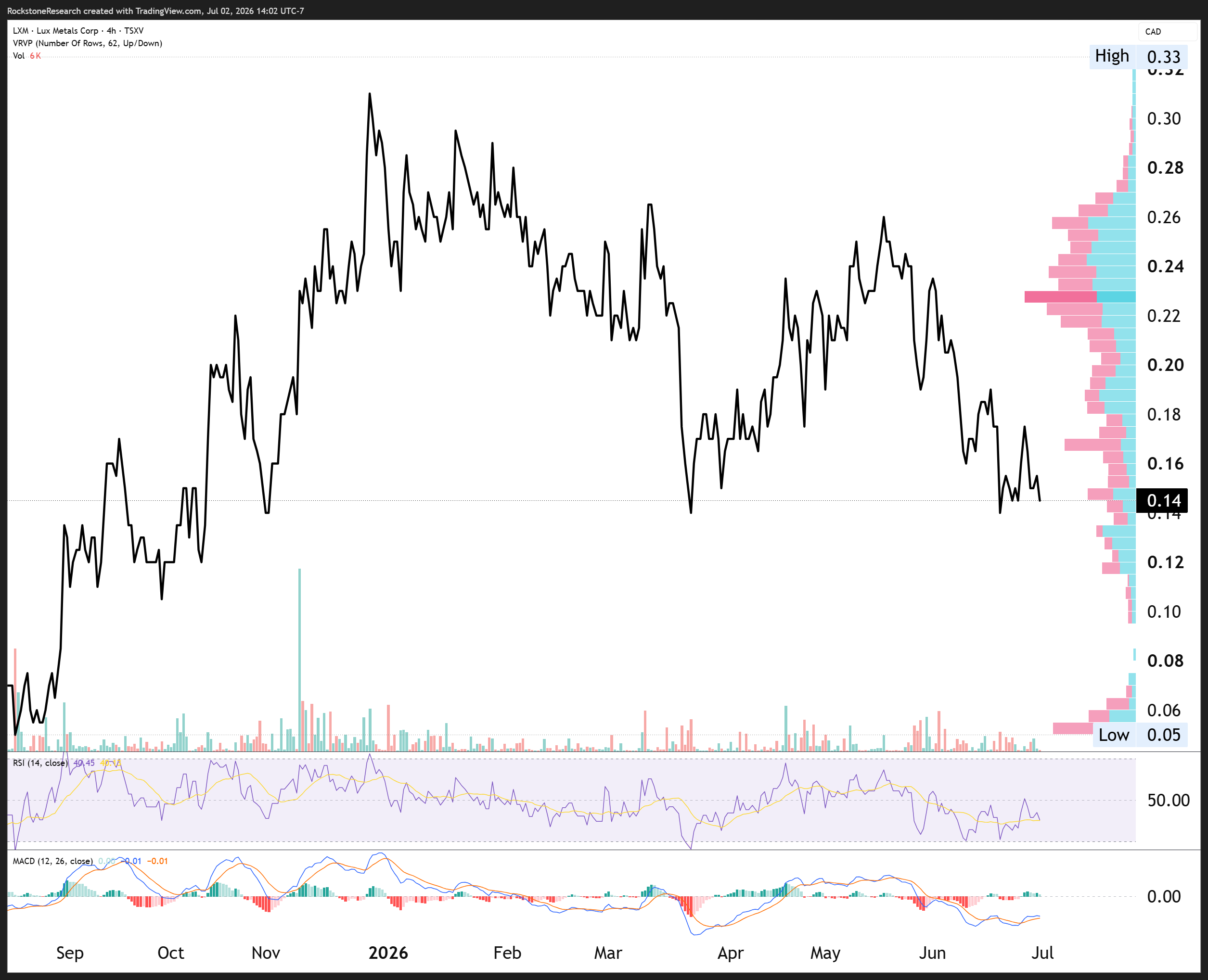
Current Price: 0.145 CAD (07/02/2026)
Market Capitalization: 11 Million CAD
Germany Symbol / WKN: GP80 / A41JQW
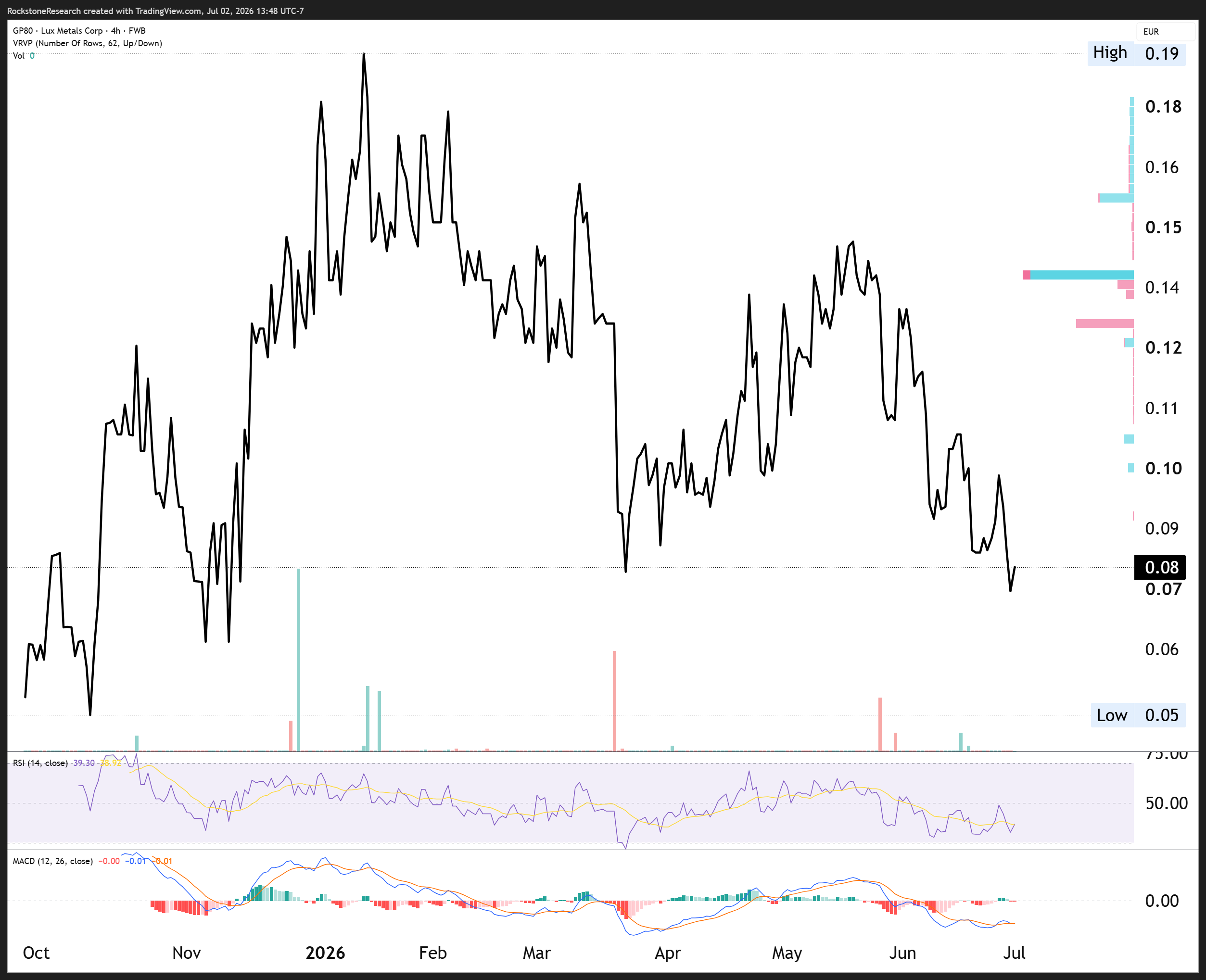
Current Price: 0.0795 EUR (07/02/2026)
Market Capitalization: 6 Million EUR
Stephan Bogner
Contact
Rockstone News & Research
Stephan Bogner (Dipl. Kfm., FH)
Müligässli 1, 8598 Bottighofen
Switzerland
Phone: +41-71-5896911
Email: info@rockstone-news.com
Disclaimer and Information on Forward Looking Statements: Rockstone, Lux Metals Corp. (“Lux“; “the Company“) and Zimtu Capital Corp. caution investors that any forward-looking information provided herein is not a guarantee of future results or performance, and that actual results may differ materially from those in forward-looking information as a result of various factors. The reader is referred to Lux’s public filings for a more complete discussion of such risk factors and their potential effects, which may be accessed through its documents filed on SEDAR+ at www.sedarplus.ca. All statements in this report, other than statements of historical fact, should be considered forward-looking statements. Much of this report is comprised of statements of projection. Such statements involve known and unknown risks, uncertainties and other factors that may cause actual results or events to differ materially from those anticipated in these forward-looking statements. There can be no assurance that such statements will prove to be accurate, as actual results and future events could differ materially from those anticipated in such statements. Forward-looking statements in this report include statements, interpretations, conclusions, geological comparisons, strategic observations and market commentary regarding Lux Metals Corp.’s exploration strategy and the advancement of the La Grande Gold Project in Québec’s James Bay region. Such statements include, but are not limited to, the Company’s expectations regarding the geological significance of the recently completed field program, the interpretation of geological mapping, structural analysis, rock and soil sampling, historical exploration data, pending assay results and the development of a district-scale geological model across the approximately 40 km La Grande Project. Forward-looking statements also include expectations regarding the Company’s planned exploration activities, including the successful integration of geological mapping, geochemistry, structural interpretation, geophysical surveys and historical datasets into refined drill targets, as well as the anticipated commencement, execution and outcomes of future diamond drilling programs designed to test both the historic Zone 32 gold system and additional regional targets. Additional forward-looking statements include assumptions regarding the potential expansion of the Zone 32 mineralized system, the continuity and distribution of mineralization, the significance of newly identified alteration zones, sulphide-bearing structures and regional exploration targets and the possibility that future exploration activities may lead to additional discoveries, resource delineation or district-scale exploration success. Forward-looking statements further include assumptions regarding the strategic advantages of the La Grande Project’s regional infrastructure, including year-round road access, hydroelectric power infrastructure and proximity to other active exploration and mining projects within Québec’s James Bay region. Forward-looking statements also include assumptions regarding future exploration success, the timing of laboratory assay results, target generation, exploration prioritization, future financing requirements, strategic partnerships, institutional participation, market interest and the Company’s ability to continue executing its exploration strategy. Forward-looking statements are based on current expectations, interpretations, estimates and assumptions that are inherently subject to significant geological, technical, operational, regulatory, financial and market uncertainties and may differ materially from actual outcomes. Exploration & Geological Interpretation Risks: Statements regarding the geological significance of mapping, sampling, structural interpretation, alteration, sulphide mineralization, historical drilling, target generation and district-scale exploration potential are inherently speculative. Geological observations, historical exploration results, geophysical interpretations and pending laboratory assays may not accurately predict future drilling success, mineral continuity, resource definition or economic viability. Historical Data & Verification Risks: Portions of the technical information referenced in this report are based on historical exploration work completed by previous operators. Although Lux Metals has incorporated historical information into its exploration model, there can be no assurance regarding the completeness, accuracy or verification of all historical datasets. Historical drill results, trenching, sampling and geological interpretations should not be relied upon as indicative of future exploration success or future mineral resource estimates. Laboratory & Assay Risks: Statements regarding pending assay results and their potential significance are forward-looking. Laboratory analyses may not confirm field observations, alteration patterns or visual sulphide mineralization, and assay turnaround times may differ from current expectations. Exploration Program Execution Risks: Planned exploration activities, including target generation, geological modelling, geophysical surveys and future diamond drilling, remain subject to operational risks including weather conditions, wildfire activity, contractor availability, equipment failure, logistical challenges, permitting requirements, technical difficulties, labour shortages and other unforeseen circumstances. Planned exploration activities may be delayed, modified or cancelled. Mineral Resource & Economic Development Risks: The La Grande Gold Project does not currently host a NI 43-101 compliant mineral resource estimate. Statements regarding future resource delineation, deposit size, development potential or economic viability are speculative in nature. There can be no assurance that future exploration will define economically recoverable mineral resources or demonstrate economic feasibility. Permitting & Regulatory Risks: Although exploration permits for the Company’s planned 2026 drilling program have been obtained, future exploration and any potential development activities remain subject to additional permitting, environmental regulation, Indigenous consultation and governmental approvals. Future authorizations may not be obtained on acceptable terms, within anticipated timelines or at all. Financing Risks: While Lux Metals recently completed a C$4 million financing to fund its current exploration program, additional financing may be required for future exploration, resource delineation, development or corporate activities. There can be no assurance that future financing will be available on favourable terms or at all. Commodity Price & Market Risks: The Company’s future prospects remain dependent upon gold prices, capital market conditions and investor sentiment toward junior exploration companies. Changes in commodity prices, equity market conditions or broader economic uncertainty may materially affect the Company’s ability to finance future activities or maintain market valuation. Infrastructure & Development Risks: Although the La Grande Project benefits from favourable regional infrastructure, including road access and nearby hydroelectric facilities, there can be no assurance that existing infrastructure will adequately support future exploration or mine development. Additional infrastructure requirements, logistical limitations or regional development constraints may affect future project advancement. Comparative Project & Geological Analogy Risks: References to other exploration projects, discoveries, deposits or mining companies within Québec’s James Bay region are provided solely for geological context and should not be interpreted as predictive of exploration success at the La Grande Gold Project. Geological similarities or regional proximity do not imply comparable exploration results, mineral resources, economic outcomes or market valuation. Macroeconomic & External Risks: The Company’s exploration activities and future development plans remain subject to broader macroeconomic, geopolitical, regulatory, environmental, supply chain, currency, inflationary and capital market risks. Changes in mining legislation, taxation, environmental regulations, Indigenous consultation requirements, political developments, labour disruptions or force majeure events may materially affect exploration activities, financing prospects or future project advancement. Accordingly, readers should not place undue reliance on forward-looking information. Actual results may differ materially from those expressed or implied in the forward-looking statements contained in this report. Rockstone and the author of this report do not undertake any obligation to update any statements made in this report except as required by law. Past performance, comparisons to other companies, projects, deposits, jurisdictions, exploration results, geological analogies, commodities, market events or industry trends are provided for illustrative purposes only and should not be considered indicative of future results.
Disclosure of Interest and Advisory Cautions: Nothing in this report should be construed as a solicitation to buy or sell any securities mentioned. Rockstone, its owners and the author of this report are not registered broker-dealers or financial advisors. Before investing in any securities, you should consult with your financial advisor and a registered broker-dealer. Never make an investment based solely on what you read in an online or printed report, including Rockstone’s report, especially if the investment involves a small, thinly-traded company that is not well known. The author of this report, Stephan Bogner, is paid by Zimtu Capital Corp. (“Zimtu”), a TSX Venture Exchange listed investment company. Part of the author’s responsibilities at Zimtu is to research and report on companies in which Zimtu has an investment. Accordingly, while the author of this report is not paid directly by Lux Metals Corp. (“Lux” or the “Company”), the author’s employer Zimtu Capital Corp. may benefit from volume and appreciation of Lux’s stock price. Zimtu currently holds securities of Lux Metals Corp., including common shares and share purchase warrants. According to Lux’s news-release dated March 9, 2026, Zimtu currently holds 2,750,000 common shares of Lux and 2,750,000 warrants comprised of: (i) 1,000,000 warrants exercisable at 0.05 CAD per share until February 14, 2027; and (ii) 1,750,000 warrants exercisable at 0.40 CAD per share until January 26, 2028. The author of this report also owns equity of Lux Metals Corp. and equity of Zimtu Capital Corp., and therefore may benefit from volume and price appreciation of these securities. This represents a significant conflict of interest that may affect the objectivity of this report. The author may buy or sell securities of Lux Metals Corp., Zimtu Capital Corp. or comparable companies at any time without notice, which may create additional conflicts of interest. Lux Metals Corp. has engaged Zimtu Capital Corp. to provide advertising, marketing and investor awareness services pursuant to a consulting agreement announced by Lux on February 13, 2026 and updated on March 9, 2026. Under the agreement, Zimtu is to provide services including investor presentations, online publications, digital marketing, newsletters, social media content, video news releases and related investor awareness activities. The agreement is for a term of 12 months at a rate of 16,666.67 CAD per month plus applicable GST, representing aggregate annual cash compensation of approximately 200,000 CAD plus GST. All payments under the agreement are payable in cash. Lux Metals Corp. has stated that no securities are proposed to be issued to Zimtu as compensation for the services provided under the agreement. The agreement remains subject to approval of the TSX Venture Exchange. Zimtu Capital Corp. is located at Suite 1450 – 789 West Pender Street, Vancouver, BC V6C 1H2 Canada and may be contacted at 604-681-1568 or info@zimtu.com. Overall, multiple conflicts of interest exist. Therefore, the information provided in this report should not be construed as independent financial analysis or investment advice, but rather as paid promotional commentary and market awareness material. This report does not constitute a recommendation to buy or sell securities and does not replace independent investment advice or independent due diligence. Rockstone’s and the author’s views and opinions regarding Lux Metals Corp. are the author’s own views and are based upon information believed to be reliable, including publicly available information, company disclosures and third-party sources. Rockstone and the author have not independently verified all technical, financial or corporate information referenced in this report. Rockstone and the author do not guarantee the accuracy, completeness or usefulness of any content contained in this report, nor its fitness for any particular purpose. Furthermore, Rockstone and the author do not guarantee that Lux Metals Corp. will perform as anticipated or that any comparisons made to other companies, projects or geological systems will prove to be accurate or applicable. For the avoidance of doubt, this report is not intended for distribution to, or use by, any person or entity in any jurisdiction where such distribution, publication or use would be contrary to local law or regulation. Readers are solely responsible for ensuring that their review and use of this report complies with applicable laws in their jurisdiction. Neither Rockstone nor the author accepts liability for any direct or indirect loss arising from the use of this report or from any investment decision made in reliance upon it. Please read the entire Disclaimer carefully. If you do not agree to all of the Disclaimer, do not access this website or any of its pages including this report in form of a PDF. By using this website and/or report, and whether or not you actually read the Disclaimer, you are deemed to have accepted it. Information provided is educational and general in nature and should not be interpreted as personalized investment, financial, legal, tax or professional advice. Data, tables, figures and pictures, if not labeled or hyperlinked otherwise, have been obtained from Stockwatch.com, Tradingview.com, Lux Metals Corp. and the public domain.