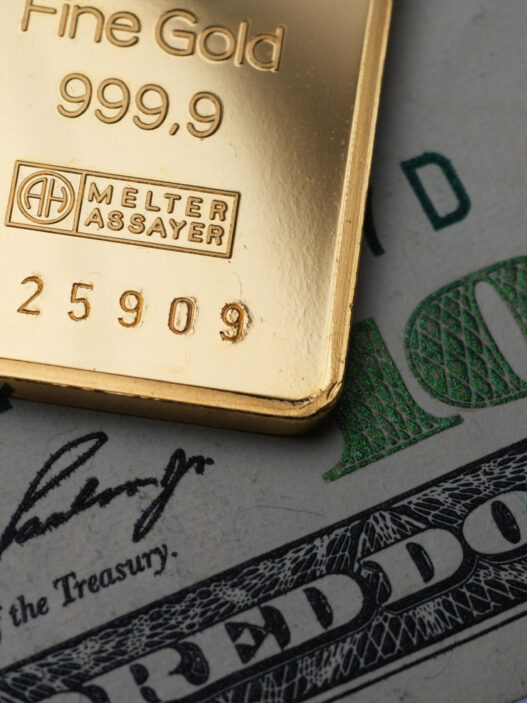

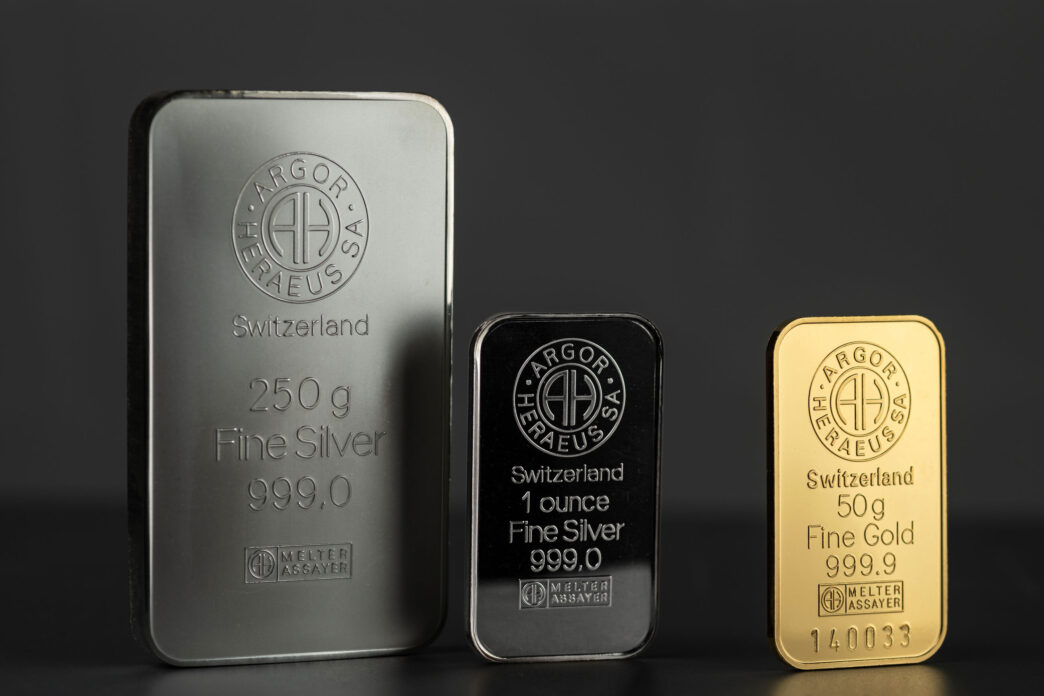
Our modern monetary system is often presented as a necessary foundation of advanced economies. Central banks, flexible money supply management, and “active” crisis intervention are portrayed as signs of progress. But this perspective obscures the real core of the problem: The modern fiat money system is not only unstable – it is fundamentally unjust. And that is precisely why more and more people are turning to precious metals.
The injustice begins with money creation itself. In today’s systems, new money does not come into existence through effort, saving, or production, but through political and banking decisions. Central banks and commercial banks hold the privilege of creating purchasing power out of thin air. That privilege is the decisive point: It is not a market process, but an institutional special right.
This new money does not enter the economy evenly. It flows first to governments, banks, and financial markets. These first recipients can spend it before prices have adjusted. Later recipients – employees, savers, retirees – face higher prices without their incomes keeping pace. This effect is not a side issue; it is inherent to the system. Inflation is therefore not a neutral byproduct, but a hidden redistribution.
Those who provide for the future are hit especially hard. Saving means giving up consumption today in order to gain security tomorrow. In a just monetary system, saving would be protected. In today’s system, it is systematically punished. Zero and negative interest rates, deliberate inflation policy, and monetary expansion make losses in purchasing power the new normal. Those who save lose. Those who borrow – or who gain early access to newly created money – win.
This development is not an accident; it is politically desired. Inflation relieves debtors and governments while it expropriates creditors. Budget deficits are easier to finance when the central bank stands ready in the background. The costs of this policy are not shown transparently, but spread out over time through the loss of purchasing power. That is fiscally convenient – and morally problematic.
Here lies the real injustice of the system: It violates property rights. Some actors have privileged access to money creation, others do not. Some can protect themselves against inflation, others cannot. Such a system cannot be just – even if it is defended with good intentions.
Precious metals stand in sharp contrast to this model. Gold and silver are not political promises, but real goods. They cannot be produced at will, they have no issuer and no monopoly. Their scarcity is physical, not politically defined. That is precisely where their strength lies – and their fairness.
Under a precious-metals standard, there are no privileged first recipients. Purchasing power does not arise by decree, but through market processes grounded in property rights. Increases in value do not result from money creation, but from productivity and thrift. Those who save are not expropriated; they preserve purchasing power. Those who take on debt cannot rely on inflation. Responsibility and liability come back together.
In addition, precious metals act as a natural limit on state power. A state that cannot multiply its money at will must set priorities. It must justify spending and raise taxes openly. That increases transparency and accountability. Historically, phases of stable precious-metal monetary orders were often characterized by long-term price stability and real gains in prosperity – not despite monetary discipline, but because of it.
The growing flight into gold and silver is therefore not a speculative phenomenon, but a rational response to monetary injustice. Precious metals are not primarily a tool to become rich. They are a tool not to be expropriated. They protect against inflation, against political arbitrariness, and against the slow erosion of savings.
The debate about money is ultimately a debate about justice. As long as money production remains monopolized and politicized, the system is unjust – regardless of its official goals. Precious metals do not offer a perfect world, but they offer fair rules. And fair rules are the foundation of any free order. Secure property rights are pillars of a market economy.
In an unjust monetary system, precious metals are not an anachronism. They are a form of self-defense.
How can you buy precious metals cheaply and store them safely?

Elementum Deutschland GmbH, based in Sindelfingen (Germany), specializes in trading physical precious metals. Customers who purchase precious metals from Elementum Deutschland (or one of the other national Elementum companies in five European countries) can store them in the renowned high-security vaulting facilities in the St. Gotthard Massif in Switzerland at Elementum International AG.
Of course, you also have the option of purchasing gold and silver directly and having it delivered to your desired address. However, storing silver in the so-called open duty-free warehouse (“offenes Zollfreilager”) at St. Gotthard offers decisive tax advantages:
- The 19% value added tax customary in Germany is completely waived on purchases and sales – a considerable price advantage that effectively secures you 19% more silver for your money.
- If you store your silver in this high-security vault, you can sell it back to Elementum Deutschland GmbH at any time – without any bureaucratic hassle and also without VAT, as the trade takes place within the duty-free warehouse. You will receive the funds via bank wire.
- VAT is only payable when you physically remove the stored silver – either by picking it up in person (after prior notification) or by having it shipped to your address.
More silver, more return
Thanks to duty-free storage, you receive 19% more physical silver when you buy. This additional amount also participates in the performance of the silver price if it rises – a leverage effect that significantly improves your return opportunities.
About Elementum
Elementum is a second-generation, owner-managed family business. Trust, consistency, and long-term thinking are at the heart of our philosophy. The Board of Directors of Elementum International AG is composed of internationally renowned experts in the money and precious metals markets, including economists, analysts, university professors, and precious metals specialists. This in-depth expertise forms the backbone of our actions – for your security, your assets, and your future.

About the Author

Prof. Dr. Philipp Bagus
President of Elementum International AG
Philipp Bagus is Professor of Economics at Universidad Rey Juan Carlos in Madrid, Spain. His research focuses on monetary and business cycle theory, and he has published in international journals such as the Journal of Business Ethics, Independent Review, and the American Journal of Economics and Sociology. He has received numerous awards for his work, including the O.P. Alford III Prize in Libertarian Scholarship, the Sir John M. Templeton Fellowship, the IREF Essay Prize, and the Ludwig Erhard Prize. Bagus is a member of the Academic Advisory Board of the Ludwig von Mises Institute Germany and the author of several books. His best-known works include “The Milei Era: Argentina’s New Path” (2024), “Full Reserve Banking versus the Real Bills Doctrine” (2024), “In Defense of Deflation” (2015), and “The Tragedy of the Euro” (2011).
Contact
Rockstone News & Research
Stephan Bogner (Dipl. Kfm., FH)
Müligässli 1, 8598 Bottighofen
Switzerland
Phone: +41-71-5896911
Email: info@rockstone-news.com
Disclaimer: This article reflects the personal opinion of the author. Elementum assumes no responsibility for the accuracy of the content and accepts no liability for its use. This article may contain links to external third-party websites. Elementum is not responsible for the content of these external sites and expressly distances itself from all information provided there. At the time the links were created, no unlawful content was identifiable. This article does not constitute a recommendation to buy or sell. Elementum International AG is a Swiss company that specializes exclusively in the storage of physical precious metals in a high-security vault facility located in the St. Gotthard mountain massif in Central Switzerland. The Board of Directors and Executive Management of Elementum International AG have been selected solely based on their professional expertise and long-standing experience in precious metals markets. As these individuals may also be professionally active outside their roles at Elementum International AG, the company has no influence over their external activities and respects their right to freedom of expression. Therefore, the views expressed by persons working with or for Elementum do not necessarily reflect the opinion of Elementum International AG. Investments in precious metals are subject to risks, including those specific to the structure of this market. Please read our full risk disclosures and consult a licensed financial advisor before making any investment decisions. Neither the author, Elementum International AG, nor Elementum Deutschland GmbH assume any liability for actions taken based on the information provided. Past performance is not indicative of future results. The cover picture has been obtained and licenced from Shutterstock.com.