


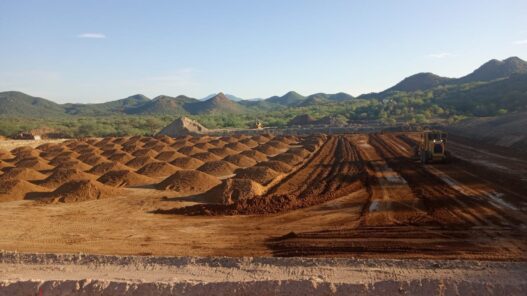
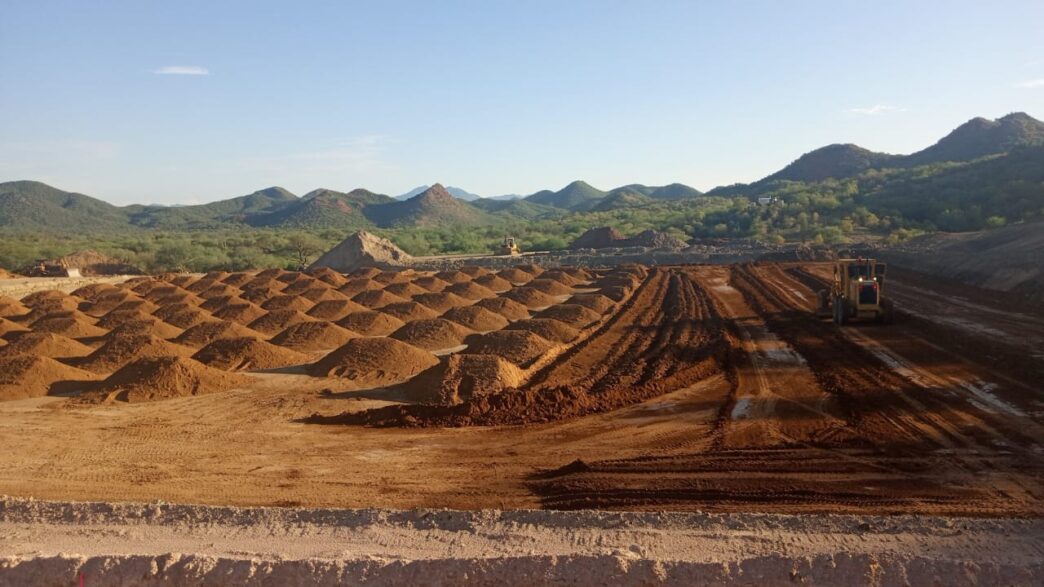
Gran Pilar is nearing the moment when it moves beyond exploration and into actual gold production. While the infrastructure for the pilot facility is already taking shape on site, Tocvan is now delivering exactly the kind of data that matters before operations begin: How much gold can actually be recovered under realistic heap-leach conditions and how should the material be prepared to achieve the best results?
The answer is significantly better than what Tocvan achieved in its large-scale heap-leach test in 2023. As the company reports in today’s news-release, the new closed-circuit column tests recovered up to 82.3% of the gold at the finer crush size.
Just how focused Tocvan has become on the upcoming start of production is clear from CEO Christopher Gordon’s comments in the same news. And by now, this is no longer just about metallurgy:
“These closed-circuit column results give us a much clearer picture of how Gran Pilar material will perform under heap-leach conditions as we finish the 50,000-tonne pilot. Gold extraction of 75 to 82 percent at commercial crush sizes, without agglomeration, is a clear improvement on the 2023 bulk test and supports first production later this year. At the request of several major buyers evaluating our material, we have started additional metallurgical and product-characterization work. That program is designed to meet their due-diligence requirements and position us to sell gold-silver product on commercial terms as the pilot comes online.”
Chris Gordon, CEO of Tocvan, in today’s news-release
For shareholders, the second part is particularly noteworthy: While the pilot facility is still being completed, several larger prospective buyers are apparently already evaluating material from Gran Pilar. The story is therefore increasingly shifting away from exploration and lab work toward production, product quality and potential commercialization. Gran Pilar is moving into exactly the phase Tocvan has been working toward for years.
This does not yet amount to a sales agreement. But the fact that larger prospective buyers are already looking at the material says a great deal about how far Gran Pilar has come. The key questions are no longer only: Where is the gold and how large is the system? Increasingly, the focus is on how that gold can be recovered, processed and ultimately brought to market.
This is the point where an exploration project starts turning into a producing pilot gold operation.
The new results come from an independent closed-circuit column-leach program using ~1,037 kg of material. These column tests more closely replicate future heap-leach conditions than simple bottle-roll tests and were specifically designed to optimize the gold-silver recovery strategy for Tocvan’s pilot facility.
The result: At a P80 crush size of 3/8 inch, 81.6-82.3% of the gold and 54.8-58% of the silver were recovered. At the coarser P80 3/4-inch crush size, gold recovery was only around 75-76%.
The comparison with 2023 is especially interesting: Back then, Tocvan’s bulk-sample heap-leach test on coarser material achieved 62% gold recovery over 46 days. The new results are clearly higher. Tocvan’s previous planning assumption for the pilot facility had also been based on roughly 70% gold recovery.
Of course, the lab results do not mean that the pilot facility will automatically achieve 82% recovery. But they do indicate that Gran Pilar material may perform materially better under realistic heap-leach conditions than the original 70% assumption suggested.
SIMPLER THAN EXPECTED
Another interesting result could also have a meaningful impact on operating economics later on. The tests show that agglomerating the material with cement did not materially improve gold or silver recovery, while at the same time increasing cyanide consumption. The non-agglomerated columns required only around 1.08-1.29 kg of NaCN per tonne, compared with 1.55-1.74 kg/t for the agglomerated variants.
In other words, an additional processing step does not automatically translate into better recovery. If this result is confirmed during pilot operations, Tocvan may be able to eliminate agglomeration altogether, simplifying the process while potentially reducing part of the ongoing processing costs.
BOTTOM LINE
Anyone who has followed Tocvan for some time knows how much patience the story has required. For years, the focus was on drilling, new target areas, permitting, metallurgy and, eventually, the planning and construction of the pilot facility. Every one of those steps was necessary. But for shareholders, the ultimate goal remained something that always seemed to lie somewhere in the future: Seeing Gran Pilar actually move into production.
Now that moment is becoming tangible. The pilot facility is nearing completion. The latest column tests have achieved gold recoveries of up to 82.3%. The production process is being understood and optimized in ever greater detail. And even before the facility has started operating, several larger potential buyers are already evaluating material from Gran Pilar.
For long-term shareholders, this may be the most important difference compared with the past: Gran Pilar is no longer simply a story about gold in the ground. It is increasingly about actually getting that gold out of the ground.
Of course, the 50,000-tonne facility is still a pilot operation. Only there will Tocvan be able to determine how well the column-test results translate to a much larger scale. That is exactly what the pilot was built to find out.
But much of what Tocvan has been talking about for years is now becoming visible: Drill holes are turning into tonnes. Lab tests are turning into an actual production process. Plans are turning into infrastructure. And Gran Pilar is moving toward producing a real gold-silver product for the first time.
For shareholders who have followed this journey for years, this could mark the beginning of the phase they have been waiting for. The wait for Gran Pilar’s next major step is nearing its end. Now it is getting real.
And if Tocvan can stay on schedule, the coming months could mark the turning point when Gran Pilar is no longer just discovering gold, but begins actually producing it.
Company Details

Tocvan Ventures Corp.
Suite 1150 Iveagh House
707 – 7th Avenue S.W.
Calgary, Alberta, Canada T2P 3H6
Phone: +1 403 668 7855
Email: bsutherland@tocvan.ca (Brodie Sutherland)
www.tocvan.com
ISIN: CA88900N1050
Shares Issued & Outstanding: 78,735,014
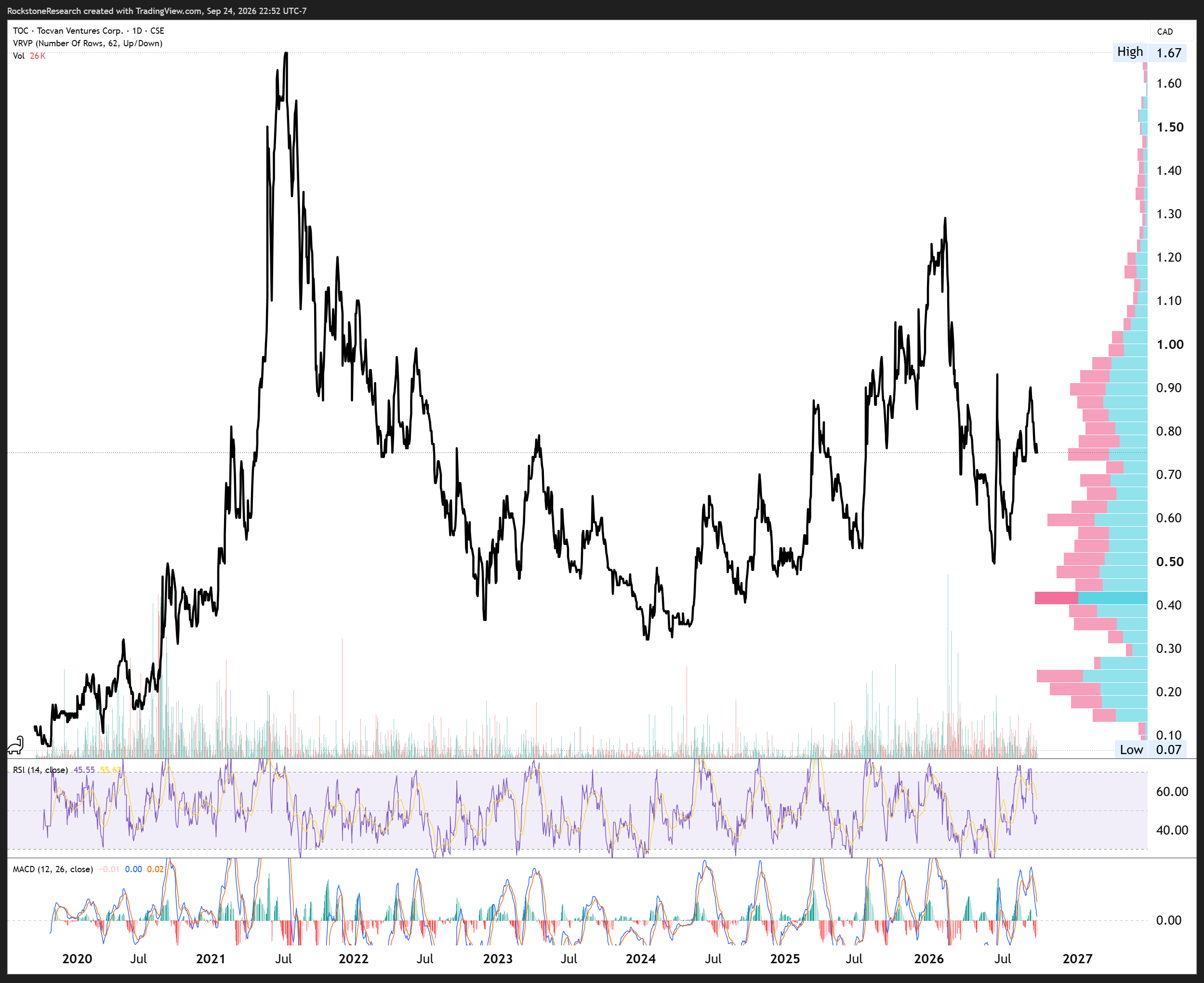
Canada Symbol (CSE): TOC
Current Price: 0.75 CAD (09/24/2026)
Market Capitalization: 59 Million CAD
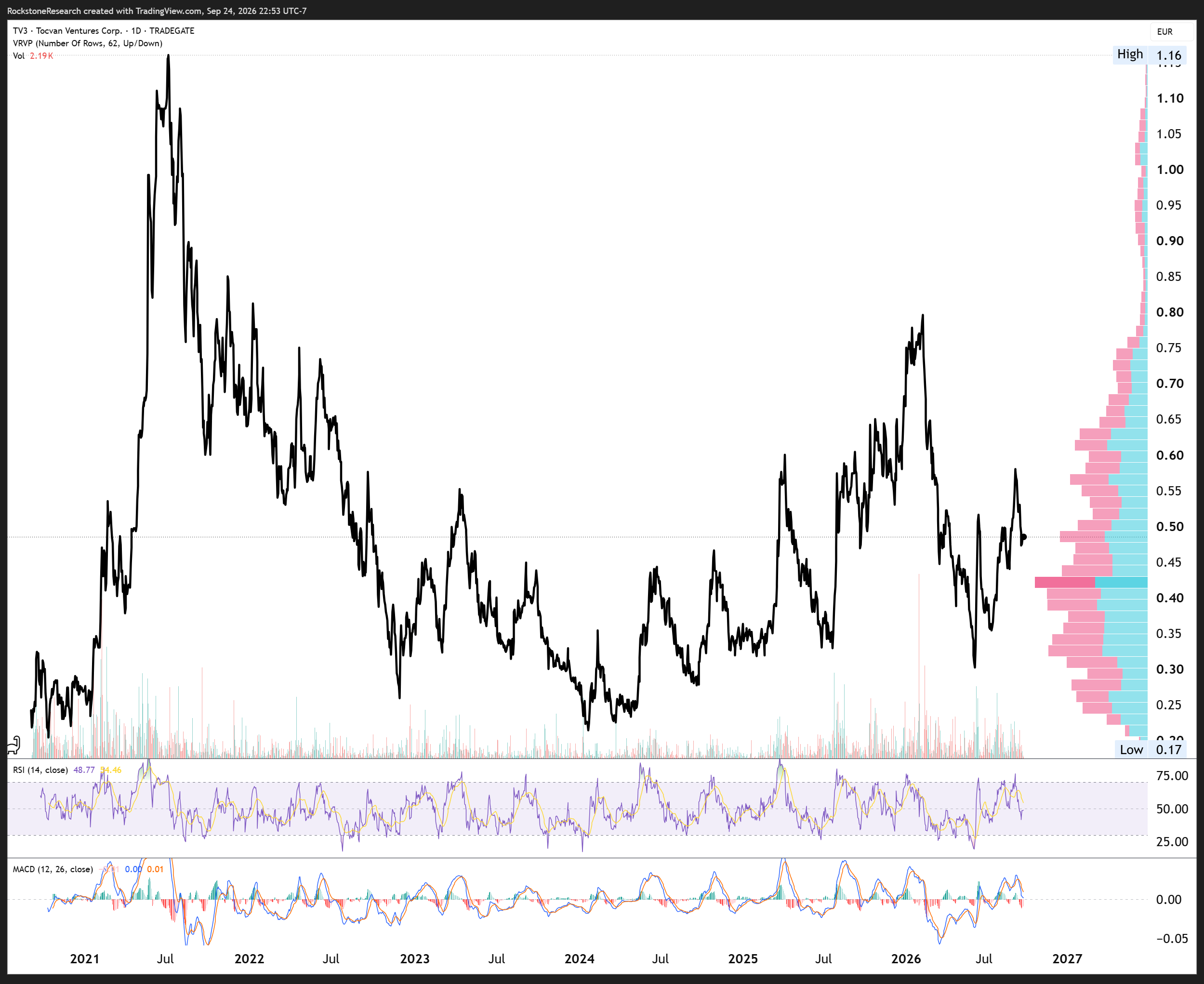
Germany Symbol / WKN (Tradegate): TV3 / A2PE64
Current Price: 0.476 EUR (09/24/2026)
Market Capitalization: 38 Million EUR
Contact
Rockstone News & Research
Stephan Bogner (Dipl. Kfm., FH)
Müligässli 1, 8598 Bottighofen
Switzerland
Phone: +41-71-5896911
Email: info@rockstone-news.com
Disclaimer and Forward-Looking Information: Rockstone and Tocvan Ventures Corp. (“Tocvan”; “the Company”) expressly point out that all forward-looking information contained in this report does not represent a guarantee of future results or performance. Actual results may differ materially from those projected. Readers are referred to Tocvan’s public filings, available on SEDAR+ at www.sedarplus.ca, for a more detailed discussion of risk factors and their potential impact. All statements in this report, other than statements of historical fact, constitute forward-looking statements. This report includes expectations, interpretations, projections and assumptions based on information available at the time of writing, including public disclosures by Tocvan Ventures Corp. and statements made by its management. Forward-looking statements include, but are not limited to, statements, expectations and assumptions regarding: The interpretation, significance and potential economic relevance of the latest closed-circuit column-leach metallurgical results from the Gran Pilar Gold-Silver Project; the potential applicability of the reported gold and silver recoveries to the planned 50,000-tonne pilot facility; the possibility that pilot-scale heap-leach operations may achieve recoveries comparable to, approaching or exceeding previous Company assumptions; the significance of gold extraction rates of approximately 75-82% and silver extraction rates of approximately 49-58% reported from the column tests; the potential benefits of finer crushing; the potential operating, metallurgical or economic implications of using a P80 3/8-inch crush size rather than a coarser P80 3/4-inch crush size; the interpretation that finer crushing may materially improve gold recovery; the potential trade-off between increased crushing costs and higher metal recovery; the potential ability to operate without agglomeration; the potential reduction in reagent consumption, processing complexity or operating costs if agglomeration is not required; the relevance of reported cyanide and lime consumption rates; the significance of low copper dissolution; the potential suitability of Gran Pilar material for heap-leach processing; the design, optimization, completion, commissioning and operation of the permitted Gran Pilar pilot facility; the targeted commencement of initial gold-silver production in Q4 2026; the possibility of producing gold-silver doré or other saleable gold-silver products; the potential commercial significance of additional metallurgical and product-characterization work; the interest or evaluation of Gran Pilar material by prospective buyers; the possibility that such work may satisfy buyer due-diligence requirements; the possibility that Tocvan may enter into future commercial arrangements or sell gold-silver products on commercial terms; the potential transition of Gran Pilar from exploration and development toward pilot-scale production; the possible validation of processing parameters, recoveries, reagent consumption, throughput and operating costs through pilot operations; and the potential implications of successful pilot operations for future project development, resource evaluation, larger-scale production or commercial mining. Statements in this report describing Gran Pilar as approaching production, moving beyond exploration, transitioning toward becoming a producing gold operation, or similar expressions represent forward-looking expectations based on the current construction status of the pilot facility, permitting, metallurgical test work and statements made by Tocvan management. Such statements should not be interpreted as confirmation that commercial production has commenced or will commence, that the project has demonstrated economic viability or that Gran Pilar constitutes an economically mineable mineral deposit. The latest metallurgical results were generated from an independent closed-circuit column-leach test program conducted on approximately 1,037 kilograms of bulk composite material at P80 crush sizes of 3/4 inch and 3/8 inch. Reported gold recoveries of approximately 75-82% and silver recoveries of approximately 49-58% were achieved under laboratory column-test conditions. These results should not be interpreted as a guarantee that comparable recoveries will be achieved in the 50,000-tonne pilot facility or in any future commercial-scale operation. Laboratory and column-test performance may differ materially from larger-scale operating conditions due to variations in feed grade, mineralogy, oxidation, particle-size distribution, permeability, solution flow, stacking, compaction, irrigation, climate, reagent consumption, leach kinetics and operating practices. The reported recovery of up to approximately 82.3% gold at the finer P80 3/8-inch crush size represents a significant improvement over the approximately 62% gold recovery reported from Tocvan’s 2023 bulk-sample heap-leach test on coarser material. However, the two test programs were conducted under different conditions, with different material preparation, leach durations and operating parameters and should not be interpreted as directly equivalent commercial-scale comparisons. Past metallurgical performance is not necessarily indicative of future pilot-scale or commercial-scale recovery. Statements regarding the potential benefits of finer crushing are forward-looking. Although the latest tests indicate that finer crushing improved gold extraction by approximately six percentage points, finer crushing may require additional capital, power, equipment, maintenance and operating expenditures. There can be no assurance that the incremental value of higher metal recovery will exceed the additional costs associated with finer crushing. The optimal crush size for pilot or future commercial operations has not yet been established and will depend on technical and economic factors that remain subject to further testing and engineering. Statements regarding the potential elimination of agglomeration are also forward-looking. The latest tests indicate that cement agglomeration did not materially improve gold or silver extraction and was associated with higher cyanide consumption. However, agglomeration may affect permeability, solution distribution, heap stability, fines migration and operating performance at larger scale in ways that cannot be fully replicated in laboratory columns. There can be no assurance that pilot-scale or future commercial operations will not require agglomeration or another form of material conditioning. Any potential cost savings from eliminating agglomeration remain uncertain until tested and quantified under pilot operating conditions. Statements regarding cyanide consumption, lime consumption and low copper dissolution are based on laboratory test conditions and may not be representative of future operations. Reagent consumption may vary materially depending on feed characteristics, water chemistry, solution management, mineralogy, operating conditions and scale. Higher-than-anticipated reagent consumption could materially affect operating costs and project economics. Statements regarding the evaluation of Gran Pilar material by several larger prospective buyers and additional metallurgical and product-characterization work are forward-looking to the extent they imply future commercial relationships, sales, offtake agreements or revenue. Tocvan has stated that additional work has been initiated at the request of several major buyers evaluating its material in order to meet due-diligence requirements and position the Company to sell gold-silver product on commercial terms as the pilot comes online. Such evaluations do not constitute purchase commitments, binding sales agreements, offtake agreements or guarantees of future sales. There can be no assurance that any prospective buyer will complete its evaluation, enter into an agreement with Tocvan, purchase material or accept future Gran Pilar products on commercially acceptable terms. Statements concerning the construction, completion, commissioning and operation of the Gran Pilar pilot facility, including targeted initial production in Q4 2026, are forward-looking. Although Tocvan reports that the 50,000-tonne heap-leach pilot facility is permitted and nearing completion, there can be no assurance that construction or commissioning will be completed according to the current schedule, that production will commence in Q4 2026 or at all, or that the facility will achieve anticipated throughput, feed grades, recoveries, reagent consumption, production rates, operating costs or other technical and economic parameters. Pilot-scale production is not equivalent to demonstrated commercial-scale economic viability. The purpose of the pilot facility is, among other things, to test and optimize mining, material handling, crushing, stacking, leaching, recovery and operating parameters at a larger scale. Results from the pilot may be materially different from laboratory or column-test results and may identify additional technical, metallurgical, operational or economic challenges. Any references in this report to Gran Pilar becoming a gold producer, transitioning from exploration to production, producing its first gold-silver product, the start of production, or similar expressions should be understood in the context of the planned pilot-scale operation and not as confirmation of sustainable commercial production. Successful pilot operations would not, by themselves, establish a mineral reserve, demonstrate economic mineability or confirm that a full-scale commercial mine will be developed. There are currently no mineral reserves defined for the Gran Pilar Project and pilot-scale extraction should not be interpreted as evidence that the project has demonstrated commercial economic viability. Mineralized material processed through the pilot facility does not necessarily constitute ore in the economic sense. Further drilling, mineral resource estimation, metallurgical testing, engineering, mine planning, permitting, financing and economic studies may be required before any future commercial-scale mining operation could be developed. Forward-looking statements are subject to numerous known and unknown risks and uncertainties that could cause actual results to differ materially from those expressed or implied. These include, but are not limited to: the speculative nature of mineral exploration, development and pilot-scale mining; geological, sampling and metallurgical uncertainty; variability in feed grade, mineralogy, oxidation and gold-silver deportment; uncertainty regarding laboratory-to-pilot-scale recovery performance; heap permeability, solution flow and leach kinetics; crushing and agglomeration requirements; reagent availability and consumption; water availability and quality; processing, construction, commissioning and operating risks; equipment availability and performance; contractor performance; labour availability and costs; delays in completing or commissioning the pilot facility; the possibility that targeted Q4 2026 production may be delayed or not achieved; the possibility that gold or silver recoveries may be lower than laboratory results or management expectations; the possibility that operating costs may be higher than anticipated; the possibility that finer crushing may not be economically justified; the possibility that agglomeration or other additional processing steps may ultimately be required; uncertainty regarding product specifications and marketability; the possibility that prospective buyers may not enter into commercial arrangements; financing and liquidity risks; future shareholder dilution; commodity-price risk; gold and silver price volatility; exchange-rate fluctuations; energy, reagent, labour and capital-cost inflation; permitting, environmental, water, infrastructure, land-access and community-relations risks; political, legal, regulatory, taxation, security and social risks associated with operating in Mexico; capital-market conditions; and other risks beyond the Company’s control. Assumptions made by management and interpretations made by the author may prove to be incomplete, overly optimistic or incorrect. Actual pilot performance may differ materially from laboratory test results. Gold and silver recoveries may be lower than anticipated; reagent consumption or crushing costs may be higher; permeability or solution-management issues may arise; construction or commissioning may be delayed; the pilot facility may not achieve targeted throughput or production rates; prospective buyers may not enter into agreements with Tocvan; produced material may not meet desired specifications; commercial terms may be less favourable than anticipated; and successful pilot operations may not ultimately lead to a larger-scale commercial mining operation. Any references in this report to the 82.3% gold recovery result, improved recoveries compared with the 2023 bulk-sample test, potential cost savings, process simplification, buyer interest, future product sales, first production, transition from explorer to producer, future commercial production, project development, project value, share-price appreciation or similar expressions represent expectations, interpretations or opinions based on publicly available information at the time of publication and, where applicable, statements made by Tocvan management. Such statements should not be interpreted as confirmation of future recoveries, operating costs, economic viability, binding commercial agreements, future revenues, profitability, commercial production, financing, share-price appreciation or investment returns. Forward-looking statements are inherently subject to significant risks and uncertainties and there can be no assurance that such statements will prove accurate. Assumptions made by management or interpretations made by the author may prove to be incomplete, overly optimistic or incorrect. Actual metallurgical performance, construction progress, commissioning, pilot production, commercial negotiations, operating results, economic conditions and future events may differ materially from those expressed or implied in this report. Readers are cautioned not to place undue reliance on forward-looking statements and should review the risk factors described in Tocvan Ventures Corp.’s public filings before making any investment decision. Neither Rockstone, the author nor Tocvan Ventures Corp. undertakes any obligation to update or revise forward-looking statements, except as required by applicable law.
Disclosure of Interests and Legal Notice: Nothing in this report should be construed as an invitation to buy or sell securities. Rockstone, its owners, and the author of this report are not registered broker-dealers or financial advisors. Before investing in securities, you should always consult your financial advisor and a registered broker-dealer. Never make an investment decision based solely on online or printed reports, including reports from Rockstone – particularly when it comes to small, thinly traded companies. The author of this report, Stephan Bogner, received compensation from Tocvan Ventures Corp. in the amount of 19,000 CAD for a period of 3 months. In addition, he holds securities of Tocvan and will therefore also benefit from increased trading volume and share price appreciation. This represents a significant conflict of interest that may affect the objectivity of this reporting. The author may buy or sell securities of Tocvan at any time without notice, which may give rise to additional conflicts of interest. This report should be understood as a promotional publication and does not replace individual investment advice. All information is current as of the date of publication and is subject to change without notice. Liability for financial losses resulting from investments made on the basis of this report is excluded. The views of Rockstone and the author regarding the companies presented in this report reflect solely their own assessments and are based on information from public sources deemed reliable. Rockstone and the author have not conducted independent due diligence. Neither Rockstone nor the author guarantees the accuracy, completeness, or usefulness of the content, nor its suitability for any particular purpose. There is likewise no guarantee that the companies mentioned will perform as expected, or that comparisons with other companies will prove valid. Please read the full disclaimer carefully. If you do not agree with it, do not use this website or report. By using the website or this report, you agree to the disclaimer, regardless of whether you have read it in full. The information provided is of a general and educational nature. Data, tables, figures, and images, unless otherwise indicated or linked, originate from Tradingview.com, Stockwatch.com, Tocvan Ventures Corp., and publicly available sources.


