

When you first read today‘s news-release from Homerun Resources Inc., it might sound technical and abstract: “Intellectual Property Agreement… particle-based thermal energy storage… new patent… EMS integration…”
For many investors, that’s a blur. But underneath the jargon, something rare just happened: A small-cap silica company has quietly secured the keys to a national-lab-born energy storage technology that is poised to sit at the heart of the next phase of the energy transition.
This isn’t business as usual. It’s a shift in identity, in scope, and in how the company’s long-term growth potential is defined. For a company of Homerun’s size, opportunities like this are exceedingly uncommon.
This report unpacks all of that and shows why this is a defining moment for Homerun shareholders – a moment many may one day see as the true beginning of the story.
The Turning Point
Everyone knows the story by now: Solar and wind are exploding. Electric vehicles are everywhere. Governments talk about “net zero” like it’s a given. But there’s a huge problem no politician can talk or spin away:
The sun doesn’t always shine. The wind doesn’t always blow.
Batteries (like lithium-ion) help, but they’re expensive and usually only store power for a few hours. They’re great for short fluctuations but not for “3 cloudy days in a row” or “a week of calm wind.” Utilities and data centers increasingly need something else:
Long-duration energy storage!
Think 10, 20, 50+ hours of energy, or even multiple days, delivered at far lower cost per kWh than lithium batteries. And built from abundant and safe materials, not rare metals from unstable places or supply chains prone to disruption.
This is the gap no one has been able to close. Until now.
And it’s precisely the gap Homerun is now stepping directly into, with a solution powerful enough to change the trajectory of the entire energy transition and reshape how industries think about reliable clean energy.

“This IPA is the culmination of a two-year partnership between Homerun and NREL and is the realization of the synergy across the Homerun vertical strategy where our unique silica sand facilitates particle-based energy storage and silica calcination purification integrated with the Homerun Energy EMS to complete and advance the potential commercial offerings. Having achieved this level of integration on the capital expended to date, is a complement to the vision and creativity within our electrification strategy. Working with the team at NREL, lead by Zhiwen Ma, has fast-tracked the development cycle to where we are today at the precipice of commercialization into a global electrification revolution demanding economic long-life, long duration energy storage and industrial heating/cooling solutions.”
Brian Leeners, CEO of Homerun Resources Inc., in today‘s news-release
Meet ENDURING: Turning Sand into a Giant Rechargeable Heat Battery
At the center of this story is NREL: The U.S. National Renewable Energy Laboratory, run for the U.S. Department of Energy (DOE).
For over 15 years and with around 20 million USD in R&D funding (including ARPA-E), NREL has developed a system called ENDURING (Economic Long-Duration Thermal Energy Storage).
The core idea is surprisingly simple: Use silica sand as the storage medium in a giant thermal battery.

Here’s how it works:
- Charge: You take cheap electricity (for example from solar or wind when prices are low or even negative) and use it to heat silica sand to over 1,000°C using electric heaters.
- Store: The hot sand is stored in insulated silos. It can sit there for days, holding that thermal energy with relatively low loss.
- Discharge: When energy is needed (at night, during peak demand, or during a grid emergency) you run air or another fluid through heat exchangers, turning that stored heat back into:
- Electricity (via turbines or expanders), and/or
- Industrial process heat (for factories, data centers, district heating, etc.).
Because silica sand is cheap, abundant, non-toxic & stable, the system can be:
- Multi-day.
- Much cheaper per kWh than batteries for LDES (long-duration energy storage).
- Scalable from industrial sites to utility-scale (MWh to GWh) with no geographic constraints; unlike pumped hydro or underground caverns.

NREL’s own comparison shows particle-based sand systems with large capacity, low storage cost and flexible siting relative to other LDES technologies like compressed air or flow batteries.
In short: ENDURING is a proven, DOE-backed way to store renewable energy cheaply for a long time – using sand.
Homerun’s Silica: From Raw Material to Strategic Ingredient
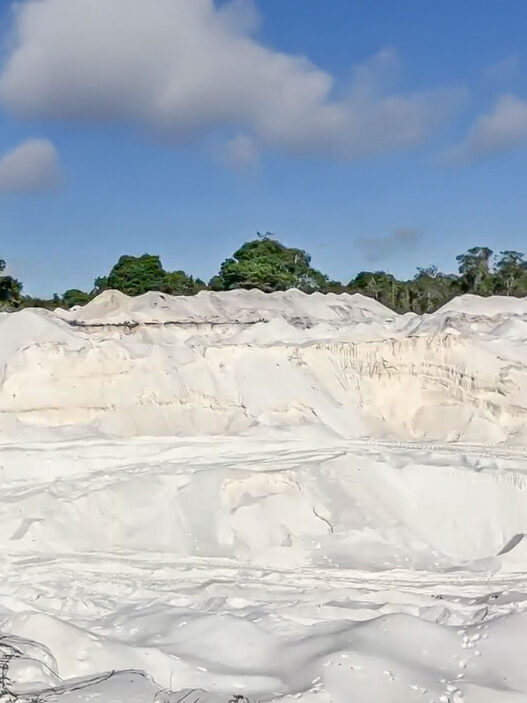
Homerun’s original “origin story” was about high-purity, low-iron silica sand in Bahia, Brazil: Ideal for ultra-clear glass, first and foremost solar glass. That alone is valuable.
But NREL’s ENDURING system uses silica sand as the storage medium itself.
So suddenly, Homerun’s Brazilian silica deposit is not just feedstock for glass. It becomes the core material inside a LDES system developed by the U.S. Department of Energy’s flagship renewables lab.
This is the first major piece of the synergy: Resource + Technology.
The Breakthrough Agreement
The news-release says Homerun Energy USA, a 100%-owned U.S. subsidiary, has signed an Intellectual Property Agreement (IPA) with Alliance for Sustainable Energy LLC, the operator of NREL.
Here’s what that actually means in practice, in plain language:
1) Global IP option on NREL’s sand-based storage
Under this IPA, Homerun receives a global option to license the intellectual property (IP) related to NREL’s particle-based thermal energy storage systems (i.e. the ENDURING technology and its patent portfolio in the U.S., Canada, and Brazil).
- Homerun has a 12-month exclusive option period to negotiate the full license.
- During that period, Homerun is the only party with the right to move toward global commercialization of this technology.
Once the full license is executed, Homerun would hold: Global commercialization rights to a DOE/NREL-developed energy storage platform, protected by multiple patents.
Below slide breaks this down clearly: 5 existing patents covering the ENDURING system, global commercialization rights, 12 month exclusive option, license terms based on revenue share or royalties.

2) Obligations, not just a paper deal
This isn’t a passive paper license. NREL requires Homerun to use “commercially reasonable efforts” to actually bring this IP to market through a vigorous commercialization program.
In other words: NREL is not handing this to Homerun for a trophy. They want a partner who will deploy it at scale. And Homerun has stepped into that role.
The New Joint Patent: A 2-for-1 Machine (Energy + High-Purity Silica)
The most exciting part of the news isn’t just the IP agreement. It’s the new patent application filed jointly by NREL and Homerun.
This invention integrates 2 processes into 1 system:
- Thermal energy storage (TES): Using sand as the medium.
- Silica sand purification: Using that same thermal cycling to clean and upgrade the silica.
Think of it as a giant rechargeable sand battery that, while charging and discharging, upgrades the sand into a higher-value industrial material.

According to Homerun Energy‘s new corporate presentation:
- Raw silica sand enters the system as a low-cost material.
- It is repeatedly heated to over 1,000°C and cooled as part of the energy storage cycle.
- Those high temperatures volatilize and remove impurities (metals, organic matter, moisture, etc.).
- The sand exits as ultra high-purity, low-iron silica: Suitable for advanced applications like extra-clear glass, solar glass, smart glass, optical uses, and even battery-related materials.
So this system produces 2 “products” at once:
- Stored energy: Multi-day heat and/or electricity.
- Upgraded silica: A premium material with much higher selling price than raw sand.
This is precisely why the corporate presentation calls it “the only energy storage system on the planet with an ancillary revenue source”.
For shareholders, that matters because:
- It can lower the effective cost of energy storage (silica sales subsidize the system).
- It ties the value of Homerun’s silica deposits directly to both glass markets and storage deployments.
- It creates multiple profit streams from each installation.

Homerun’s New Business Model: 4 Stacked Layers of Value
This is where the story really escalates. Above slide shows Homerun’s new integrated strategic position.
Homerun now sits across 4 layers:
- Raw material: Its own silica sand quarries (the Santa Maria Eterna Silica Sand District in Bahia, Brazil).
- Technology IP: Exclusive option on 5 NREL patents plus 1 new joint patent.
- System integration: Turnkey ENDURING system deployment (design, build, integration).
- Digital layer / AI EMS: An AI-powered Energy Management System (“The Hub”) that optimizes when the system charges and discharges, predicts demand, and unlocks grid services revenue.
No competitor controls all 4 layers of the value chain (“the stack“). Homerun stands alone with this level of vertical integration.
From this unified stack of capabilities, multiple revenue streams emerge:
- Silica sand sales: Supplying raw sand to ENDURING systems and other customers.
- System sales: Selling turnkey ENDURING installations (heat, power, or combined).
- License fees and royalties: Licensing the technology to third-party manufacturers/operators.
- EMS subscriptions: Recurring software revenue from AI EMS running across installed systems.
- Purified silica sales: Selling the upgraded, high-purity silica output from the dual-purpose process.
For an investor, this is powerful because instead of being a single-product story, Homerun now has a diversified portfolio of revenue streams all tied to the same core technology and resource.

Why This Tech Matters in the Real World
The slides in Homerun Energy‘s corporate presentation are full of real-world scenarios where ENDURING could be deployed. Here are the most intuitive ones:
1) Data centers (from cost center to grid asset)
Data centers (especially AI-focused ones) have 2 giant energy headaches:
- They need 24/7 reliable power.
- They output huge amounts of heat and require enormous cooling.
The corporate presentation shows how ENDURING can be integrated into data centers as a tri-generation system, providing electricity, heat, and cooling from 1 thermal battery:
- Store cheap renewable power as heat in sand.
- Use that heat to generate electricity and drive chillers for cooling.
- Recycle waste heat into local district heating or back into the system.
The result: Data centers transform from pure cost centers into flexible grid assets, able to help balance the grid and potentially earn revenue from energy markets.
2) Industrial heat and decarbonization
Many industries don’t just need electricity, they need high-temperature heat (e.g. steel, chemicals, cement, food processing, pulp and paper, etc.).
ENDURING can provide process heat across a wide temperature range (below 0°C to above 1,000°C) directly replacing fossil-fuel boilers. Each 100 MW electric-equivalent system could offset around 50,000 tons of CO₂ per year, according to the decarbonization slide.
3) Grid-scale renewable integration
Utilities trying to integrate large amounts of wind and solar need:
- Multi-day energy storage
- Flexible siting (no special topography)
- Long asset life
ENDURING offers 1-10 MW modular units all the way up to 10-100+ MW utility-scale configurations with multi-day LDES.
4) Nuclear + energy storage + heat
Another slide shows integration with nuclear power using ENDURING to buffer output, provide district heat, desalination, industrial heat and more.
All of these are real, trillion-dollar markets where someone will have to provide long-duration, economic, low-carbon energy storage and heat. Homerun now has a credible seat at that table, backed by DOE-developed IP.

AI EMS: Turning Hardware into a High-Margin Software Story
On its own, thermal storage is powerful. But adding a smart digital brain on top can transform economics.
Homerun plans to integrate its AI Energy Management System (EMS) as the control layer for the ENDURING system.
This EMS (branded “The Hub“ and announced on November 26) is designed to:
- Forecast demand: Predict when the customer will need more power/heat.
- Optimize pricing: Charge the sand when power is cheap, discharge when prices spike.
- Balance the grid: Respond to renewable variability and grid signals in real time.
- Enable advanced services: Such as energy trading, demand response participation, capacity markets.
- Reduce OPEX: The corporate presentation suggests operational costs per system could be cut by 15-30% with AI optimization.
See “The Hub” in action:
This video walks through the installation and reveals the system’s practical and commercial potential:
You are currently viewing a placeholder content from YouTube. To access the actual content, click the button below. Please note that doing so will share data with third-party providers.
More InformationFor shareholders, the AI EMS does 2 things:
- It opens recurring, high-margin software revenue (subscriptions, performance-based fees).
- It increases the attractiveness and profitability of every hardware deployment.
This is what transforms Homerun from a simple materials and hardware business into a scalable, vertically integrated energy-tech platform with multiple avenues for growth.
Where Others Compete, Homerun Leads
The deck summarizes 8 competitive moats. Let’s break them all down:
- IP control: If the license is executed, Homerun would control both key NREL patents and the new joint patent, securing a protected competitive position in the market.
- Raw material access: Their own silica resource means supply security, price stability, and margin capture.
- Dual revenue model: Energy + purified silica output; competitors don’t have that second revenue stream to subsidize cost.
- First-mover advantage: No other company is in this exact configuration (DOE-backed IP + silica assets + EMS + system integration).
- Government validation: Being tied to NREL and ARPA-E greatly reduces tech-risk in the eyes of utilities, industrial clients, and financiers.
- Massive market: Broad industry analyses suggest long-term potential in the tens to hundreds of billions of USD for combined LDES, industrial heat, and thermal storage (driven by global electrification and decarbonization mandates). Capturing even a small fraction would be significant for a company of Homerun’s size.
- Multiple exit paths: Operate systems, license the tech, or become a strategic acquisition target for big energy, industrials, or infrastructure funds.
- ESG alignment: By enabling real reductions in fossil-fuel use and supporting renewable integration, Homerun sits at the intersection of climate policy, sustainability goals, and ESG capital allocation.
For investors, all of this is important because it opens multiple routes for Homerun to create value. It raises the upper limit of what the company can grow into as execution unfolds.

Implications for Shareholders
So why is this a “great to be a shareholder” type of moment?
Because this isn’t incremental.
It’s transformational. It fundamentally changes what kind of company Homerun is becoming.
Homerun is moving from a junior silica project into a vertically integrated energy-transition platform.
One that:
- owns the resource,
- controls the IP through a global option and forthcoming license,
- builds and delivers full systems, not just materials,
- operates the software layer that optimizes and monetizes those systems, and
- participates in multiple high-value markets (power, industrial heat, data-center energy, advanced materials).
Homerun no longer fits into a traditional mining or materials box.
It begins to straddle clean-tech, energy storage, industrial decarbonization, and advanced materials: Sectors that command very different market multiples.
It also aligns the company with powerful global policy currents: The IRA in the U.S., the EU Green Deal, global net-zero commitments and industrial electrification mandates.
And perhaps most importantly: It gives institutional investors a story they understand and care about (long-duration energy storage, grid flexibility, electrified industry, and decarbonization solutions with real IP behind them).
This is why the moment matters. It marks the point where Homerun’s potential ceiling rises dramatically.
Bottom Line: This News Feels Big
For years, the energy transition has searched for real LDES solutions.
Many ideas exist on paper but far fewer have 15+ years of DOE and ARPA-E work, patents, and peer-reviewed data behind them.
In this context, the fact that NREL chose to sign an exclusive global IP option with Homerun and jointly filed a new patent with them, and is allowing Homerun to integrate its own AI EMS into that platform, is not just another small-cap headline.
It marks the moment where a company that started as a silica story in Brazil steps onto the global stage as a potential key player in LDES, industrial decarbonization and high-purity silica materials – with DOE-grade technology at its core.
For an investor, the essence is crystal clear: Homerun won‘t be just selling sand. They’re aiming to sell the systems and intelligence that could make renewable power truly 24/7 and to profit twice from every installation:
Once from energy, and once from purified, ultra-high-grade silica sand.
If Homerun can convert this blueprint into operating systems, humming turbines, and purified silica flowing out of its own technology, then today’s announcement won’t simply be news.
It will be the inflection point – the page in the chart where the story finally lifts.
The moment investors look back on and say: “That’s when it truly started.”
Company Details

Homerun Resources Inc.
#2110 – 650 West Georgia Street
Vancouver, BC, V6B 4N7 Canada
Phone: +1 844 727 5631
Email: info@homerunresources.com
www.homerunresources.com
ISIN: CA43758P1080 / CUSIP: 43758P
Shares Issued & Outstanding: 64,061,179

Canada Symbol (TSX.V): HMR
Current Price: 1.01 CAD (11/28/2025)
Market Capitalization: 65 Million CAD

Germany Ticker / WKN: 5ZE / A3CYRW
Current Price: 0.585 EUR (12/01/2025)
Market Capitalization: 38 Million EUR

Stephan Bogner
Contact
Rockstone News & Research
Stephan Bogner (Dipl. Kfm., FH)
Müligässli 1, 8598 Bottighofen
Switzerland
Phone: +41-71-5896911
Email: info@rockstone-news.com
Disclaimer and Information on Forward Looking Statements: Rockstone and Homerun Resources Inc. (“Homerun“) caution investors that any forward-looking information provided herein is not a guarantee of future results or performance, and that actual results may differ materially from those in forward-looking information as a result of various factors. The reader is referred to Homerun’s public filings for a more complete discussion of such risk factors and their potential effects, which may be accessed through its documents filed on SEDAR+ at www.sedarplus.ca. All statements in this report, other than statements of historical fact, should be considered forward-looking statements. Much of this report is comprised of statements of projection. Forward-looking statements in this report include, but are not limited to, statements regarding Homerun’s ability to execute the Intellectual Property Agreement (IPA) with NREL, including expectations that the Company will successfully negotiate and secure a full global commercialization license following the 12-month exclusive option period; assumptions that the license terms will be agreed upon on commercially reasonable terms; and expectations that such a license would grant Homerun durable, long-term rights to deploy, integrate, license, or otherwise commercialize the ENDURING particle-based thermal energy storage system globally. The development, scalability, and commercial viability of NREL’s ENDURING system, including assumptions regarding performance, round-trip efficiency, multi-day operational capability, siting flexibility, cost competitiveness relative to lithium-ion batteries and other LDES technologies, long asset life, and suitability for industrial heat, grid-scale storage, combined heat and power, data-center cooling, and nuclear integration. Homerun’s ability to integrate its new AI Energy Management System (“The Hub”) into the ENDURING platform, including expectations that the EMS will forecast demand, optimize charging/discharging, reduce operating costs by 15-30%, interface across multiple device types, enable advanced energy-market participation (capacity markets, demand response, energy trading), and potentially generate recurring subscription or performance-based revenue streams. The technical feasibility and commercial potential of the new jointly filed NREL-Homerun patent, including assumptions that the dual-purpose system will successfully integrate thermal energy storage with silica-sand purification; that high temperatures will consistently remove impurities at scale; that the process will reliably generate upgraded, ultra-high-purity silica; and that such purified silica will meet specifications for advanced applications including solar glass, smart glass, optics, and energy-material feedstocks. The ability of Homerun to deploy ENDURING systems at industrial or utility scale, including assumptions about modularity (1-10 MW units), large-scale systems (10-100+ MW), multi-day storage capability, conversion efficiency, and the Company’s capacity to design, construct, integrate, and operate such systems for customers. Homerun’s assumptions regarding potential customer markets, including expectations of interest from data centers (for tri-generation, grid stability, or cooling), industrial heat applications (steel, chemicals, cement, pulp and paper, food processing), utilities (for renewable integration), nuclear facilities (for heat buffering and district heating), and other commercial or industrial energy users. Homerun’s expectations that ENDURING will generate multiple revenue streams, including sales of raw silica feedstock; sales of turnkey storage systems; licensing and royalty revenues; EMS subscription revenues; and revenues from the sale of upgraded high-purity silica produced as an ancillary product of the thermal energy storage cycle. Market assumptions regarding long-duration energy storage (LDES), industrial heat decarbonization, and thermal storage opportunities, including expectations that combined markets could reach tens to hundreds of billions of USD globally over the long term, driven by electrification mandates, sustainability policies, and industrial-heat decarbonization. Assumptions that Homerun’s vertical integration will provide competitive advantages, including expectations that controlling silica resources, technology IP, system integration, and EMS software will give Homerun strategic positioning relative to competing LDES technologies and companies. Assumptions regarding government policies, incentives, and regulatory frameworks, including expectations that IRA (U.S.), EU Green Deal, and global decarbonization policies will continue to favor long-duration storage, industrial electrification, and clean-energy solutions; that such policies will support deployment, financing, or customer adoption; and that these incentives will remain in place or expand. Expectations regarding cost structure and economic performance, including assumptions that ENDURING will achieve <10 USD/kWhe storage cost, competitive or superior CAPEX per kW, lower OPEX due to AI EMS optimization, and sufficient performance to support industrial or utility-scale economics. Expectations relating to financing for system deployments or company growth, including assumptions about access to capital markets, strategic investors, infrastructure funds, or development-finance sources; and expectations that favorable financing terms may be available as the technology de-risks. Comparisons to competing technologies or industrial pathways, including assumptions that ENDURING’s performance, cost profile, flexibility, and dual-revenue structure will be competitive with other thermal storage systems, lithium-ion batteries, flow batteries, hydrogen, compressed air energy storage, or other LDES solutions. Expectations involving risk, scalability, and future project execution, including assumptions that pilot systems, demonstrations, commercial installations, or partnerships can be successfully achieved; that supply chains will be adequate; that technical performance will match laboratory or pilot data; and that system deployments will not encounter material delays, failures, or cost overruns. Such statements involve known and unknown risks, uncertainties and other factors that may cause actual results or events to differ materially from those anticipated in these forward-looking statements. There can be no assurance that such statements will prove to be accurate, as actual results and future events could differ materially from those anticipated in such statements. Risks and uncertainties include, but are not limited to: Regulatory, Licensing & IP Risks: Homerun may not successfully negotiate or finalize a full global license agreement with NREL after the 12-month option period. Terms may change, be delayed, or not be agreed upon. NREL or the U.S. Department of Energy may alter licensing requirements, commercialization obligations, or intellectual property conditions. The new joint patent may not be granted or may not provide sufficient protection. Technology Performance Risks (ENDURING System): The ENDURING particle-based thermal energy storage system may not perform at commercial scale as expected. Storage duration, round-trip efficiency, response time, thermal cycling durability, material stability, or system integration performance may fall short of laboratory or pilot data. Real-world conditions may reduce efficiency or increase costs relative to projected <10 USD/kWhe storage economics. Dual-Purpose System Risks (Thermal Storage + Silica Purification): The integrated “2-for-1” system may not consistently produce high-purity silica at scale. Thermal cycling may not reliably remove impurities across different silica feedstocks. The purified material may fail to meet specifications for solar glass, optics, smart glass, battery precursor materials, or other premium applications. Revenue or cost-offset benefits from dual-purpose operation may not materialize. AI EMS (“The Hub”) Risks: Integration of Homerun’s AI Energy Management System into ENDURING or third-party systems may not function as expected. Forecasting accuracy, pricing optimization, grid-signal response, or OPEX reduction may underperform projections. EMS deployment may face cybersecurity risks, software bugs, interoperability challenges, or slower-than-expected adoption by industrial or utility customers. Commercial Deployment Risks: Homerun may face difficulties designing, engineering, constructing, or commissioning ENDURING systems. Scaling from MW-scale modules to 10–100+ MW systems may introduce unforeseen technical or economic challenges. Customers may delay or cancel anticipated pilot projects or commercial installations. Competition from other LDES technologies may reduce market demand. Market Adoption Risks: Industrial, utility, data-center, district-heating, or nuclear customers may not adopt ENDURING at expected rates. Long-duration storage markets may grow slower than anticipated. Customers may prefer alternative solutions such as lithium-ion batteries, flow batteries, hydrogen, or competing thermal storage technologies (e.g. firebrick or graphite). Resource & Material Risks: Availability, consistency, or suitability of silica feedstock, whether from Santa Maria Eterna or third-party sources, may not meet system requirements. Scaling the system’s thermal medium supply chain may require additional resources or processing. Supply Chain & Hardware Risks: Critical components (heaters, insulation, silos, exchangers, control systems) may experience shortages, delays, or cost inflation. Fabrication partners may not produce components at quality or cost levels assumed in the report. Financing & Capital Market Risks: Capital required to commercialize ENDURING systems, build pilot plants, expand EMS software, or develop silica feedstock processing may exceed estimates. Project financing, infrastructure funding, or equity financing may not be available on acceptable terms. Market volatility, interest rate increases, or macroeconomic downturns may reduce access to capital. Partnership & Counterparty Risks: Collaborations with NREL, industrial partners, utilities, data centers, or potential licensees may not proceed as expected. Counterparties may delay projects, renegotiate terms, or fail to perform contractual obligations. Interest from “big energy”, industrials, or infrastructure funds may not lead to actual deals. Competitive Risks: Other LDES providers (e.g. firebrick, graphite, molten salt, flow batteries, compressed air, hydrogen-based systems) may advance faster, secure larger customers, achieve better economics, or be preferred due to brand, incumbency, or perceived lower risk. Competitors may develop alternative purification or dual-use systems that reduce Homerun’s differentiation. Policy & Incentive Risks: Changes to IRA incentives, DOE programs, decarbonization mandates, ESG requirements, grid-service regulations, or industrial electrification policy could negatively affect market demand or project economics. Future policy environments may not continue to support long-duration storage or thermal electrification. Environmental & Permitting Risks: Thermal storage facilities or silica processing installations may require permits, environmental assessments, or community acceptance that may be delayed, denied, or modified. Opposition from local stakeholders could slow deployments. Operational Risks: Pilot or commercial systems may experience operational downtime, unexpected maintenance costs, accidents, thermal material degradation, or safety issues. Integration of ENDURING into industrial processes or data centers may require modifications, retrofits, or custom engineering beyond initial assumptions. Data, Modeling & Assumption Risks: Economic projections, storage-cost estimates, efficiency assumptions, and market size expectations provided in this report may prove inaccurate. LDES market projections are based on industry analyses and scenario models that may not reflect actual adoption or economics. Macroeconomic & Currency Risks: Inflation, supply chain disruptions, or global economic instability could impact equipment pricing, financing rates, and customer demand. Currency fluctuations in key markets (USD, CAD, BRL, EUR) may affect capital costs, OPEX, and funding availability. Force Majeure & Natural Event Risks: Extreme weather, natural disasters, grid instability, pandemics, or geopolitical shocks could materially disrupt technology deployment, supply chains, construction, or operational performance. Liquidity & Trading Risks: As a small-cap issuer, Homerun’s shares may experience significant volatility, limited liquidity, wide bid-ask spreads, and susceptibility to market sentiment. Investors may experience difficulty entering or exiting positions without affecting the share price. Accordingly, readers should not place undue reliance on forward-looking information. Rockstone and the author of this report do not undertake any obligation to update any statements made in this report except as required by law. Past performance and comparisons to other companies or jurisdictions are provided for illustrative purposes only and should not be considered indicative of future results.
Disclosure of Interest and Advisory Cautions: Nothing in this report should be construed as a solicitation to buy or sell any securities mentioned. Rockstone, its owners and the author of this report are not registered broker-dealers or financial advisors. Before investing in any securities, you should consult with your financial advisor and a registered broker-dealer. Never make an investment based solely on what you read in an online or printed report, including Rockstone’s report, especially if the investment involves a small, thinly-traded company that isn’t well known. The author of this report, Stephan Bogner, is paid by Homerun Resources Inc. On September 8, 2025, Homerun announced that the company “entered into an agreement with Rockstone Research to provide marketing services to the company”, and that “Rockstone Research is an arm’s-length marketing firm and has been engaged for an initial three-month term for total consideration of $25,000, which is payable up front. The company does not propose to issue any securities to Rockstone in consideration for the services to be provided to the company.” The author owns equity of Homerun and thus will profit from volume and price appreciation of the stock. This also represents a significant conflict of interest that may affect the objectivity of this reporting. The author may buy or sell securities of Homerun (or comparable companies) at any time without notice, which may give rise to additional conflicts of interest. Overall, multiple conflicts of interests exist. Therefore, the information provided in this report should not be construed as a financial analysis or recommendation but as an advertisement. This report should be understood as a promotional publication and does not replace individual investment advice. Rockstone’s and the author’s views and opinions regarding the companies that are featured in the reports are the author‘s own views and are based on information that was received or found in the public domain, which is assumed to be reliable. Rockstone and the author have not undertaken independent due diligence of the information received or found in the public domain. Rockstone and the author of this report do not guarantee the accuracy, completeness, or usefulness of any content of this report, nor its fitness for any particular purpose. Lastly, Rockstone and the author do not guarantee that any of the companies mentioned in the reports will perform as expected, and any comparisons that were made to other companies may not be valid or come into effect. Please read the entire Disclaimer carefully. If you do not agree to all of the Disclaimer, do not access this website or any of its pages including this report in form of a PDF. By using this website and/or report, and whether or not you actually read the Disclaimer, you are deemed to have accepted it. Information provided is educational and general in nature. Data, tables, figures and pictures, if not labeled or hyperlinked otherwise, have been obtained from Stockwatch.com, Tradingview.com, Homerun Resources Inc. and the public domain.