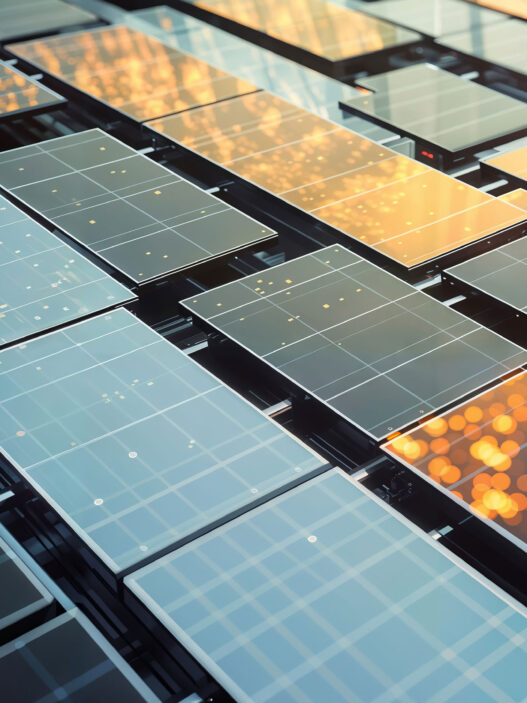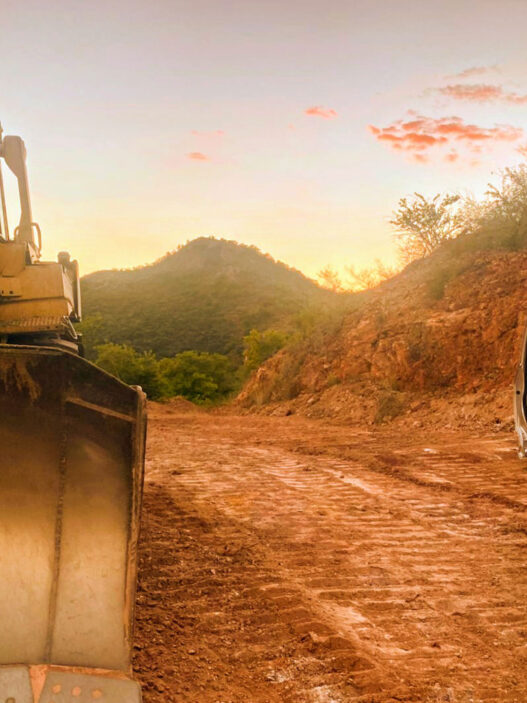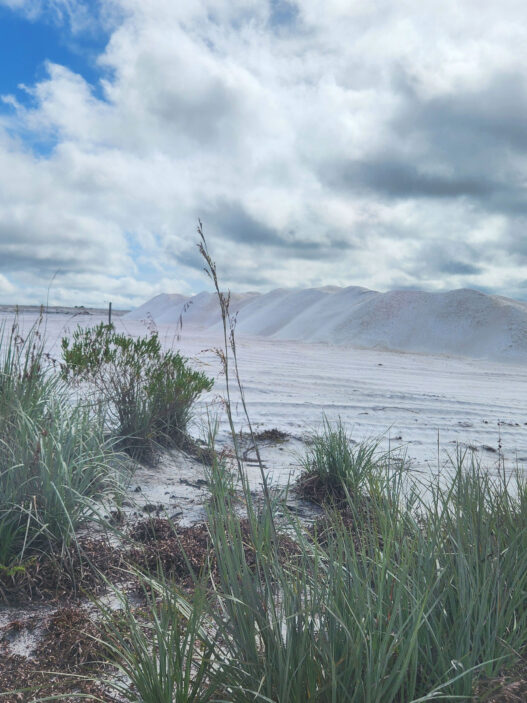


Today, Homerun Resources Inc. announced the engagement of DTEC PMP GmbH, a leading German engineering and project-management firm, to deliver a Bankable Feasibility Study (BFS) for its planned antimony-free solar glass manufacturing facility in Bahia, Brazil.
This milestone represents the transition of Homerun’s clean-energy vision from engineering concept to bankable industrial reality – the crucial step that opens the door to full-scale financing and construction.
Securing project funding upon completion of the BFS would be a truly company-making event, as it would confirm the project’s economic viability and pave the way for Homerun to move decisively into commercial production – establishing the first antimony-free solar glass facility in the Americas.
Built for Funding Approval
A BFS is not simply another technical report; it is the definitive, independently verified validation of economic and engineering viability that enables institutional funding.
Unlike preliminary or pre-feasibility studies, a BFS meets the rigorous international standards required by commercial banks, export-credit agencies, development institutions such as BNDES, and strategic investors for capital deployment.
For Homerun, the BFS will include:
- Complete process and plant design;
- CAPEX and OPEX estimation under international financing standards;
- Market analysis for high-transmission solar glass;
- Risk and ESG frameworks;
- A financial model that underpins future debt and equity negotiations.
Completion of the BFS is expected in Q1 2026, fully aligned with Homerun’s commercial roadmap for Latin America’s first high-efficiency solar glass plant. Upon delivery, the BFS will serve as the cornerstone document for securing project financing and initiating detailed design and construction activities.
“Engaging DTEC represents a powerful milestone in the advancement of our solar glass strategy. With this Bankable Feasibility Study, we are moving decisively toward making Brazil home to Latin America’s first dedicated high-efficiency solar glass manufacturing facility. The projected Q1 2026 completion keeps us directly aligned with our timeline for commercialization, and we believe the results will validate the exceptional economics and ESG benefits of our vertically integrated model.”
Brian Leeners, Homerun‘s CEO, commented in today‘s news-release
BNDES: A Strategic Pathway to Financing
In Brazil, the Banco Nacional de Desenvolvimento Econômico e Social (BNDES) plays a pivotal role in financing renewable-energy infrastructure. With assets exceeding 820 billion BRL (~$141 billion USD), BNDES is one of the world’s largest development banks, second only to China Development Bank.
Through dedicated programs such as BNDES Finem (for large-scale solar projects) and BNDES Automático (for SMEs in renewable energy), as well as its joint innovation-funding framework with Finep, the bank provides long-term credit lines, equity investments, non-reimbursable funds, and economic subsidies.
For Homerun, the completion of a bankable-grade study is not merely a formality – it is the qualifying gateway for submission to BNDES and Finep under their renewable-energy financing programs, which are explicitly structured to support domestic solar-manufacturing initiatives.
The BFS will therefore serve as both the technical foundation and the financial passport for Homerun to access Brazil’s powerful clean-energy funding ecosystem and secure project-level financing under national incentive programs such as REIDI (Special Regime for the Incentive of Infrastructure Development), which provides tax exemptions for renewable-energy infrastructure.

Brazil Validates Homerun’s Vision: Selected for BNDES + Finep Funding
In addition to the BFS milestone, it is important to highlight that Homerun has already secured a significant strategic validation from Brazil’s leading development institutions.
In June 2025, Homerun was selected by BNDES and Finep under Public Call No. 753 to advance to the Detailed Work Plan (DWP) stage of Brazil’s $815 million USD Strategic Minerals Transformation Initiative:
- The joint call attracted 124 proposals nationwide, and only 11-12 companies were selected to proceed, with Homerun standing out as the only silica/silicon-focused project chosen.
- This competitive selection underscores the national importance and innovation potential of Homerun’s vertically integrated silica-to-solar-glass strategy.
In July 2025, the company advanced further, receiving the Joint Support Plan from BNDES and Finep:
- This document identifies the specific financial instruments and programs available to Homerun, including long-term credit lines, equity investments, non-reimbursable funds, economic subsidies, Climate Fund financing, More Innovation (R&D&I), Pioneering Plant financing, and FINEM productive-capacity funding.
- The Joint Support Plan confirms that Homerun’s project has passed the critical technical and strategic-screening phase used by both institutions, positioning the company to submit full financing requests once the Bankable Feasibility Study is completed.
Together, both these milestones achieved in the summer of 2025 demonstrate that Homerun is already embedded within Brazil’s highest-level industrial financing ecosystem, and that the BFS now represents the final technical requirement before submitting full funding applications to BNDES and Finep.
As such, the BFS is far more than a procedural exercise; it is the critical bridge that links Homerun’s technical progress with access to large-scale development financing, potentially in the hundreds of millions of dollars.
Homerun: Built for Bankability
The strength of Homerun’s upcoming BFS lies in the simplicity of its chemistry. The plant is designed to produce 100% antimony-free solar glass, a game-changer detailed in Rockstone’s October 2025 report “Purity Unlocked: Homerun’s Antimony-Free Solar Glass by Design”.
Because Homerun’s ultra-pure silica feedstock from the Santa Maria Eterna Deposit (< 20 ppm Fe) requires no antimony fining agents, the BFS can be executed with fewer process variables, fewer environmental and permitting uncertainties, and a cleaner economic model.
Key advantages for the BFS phase include:
- Simpler process flow: No antimony inputs, recovery loops, or hazardous-waste streams.
- Lower CAPEX and OPEX: Optimized furnace design and reduced reagent costs.
- Stronger ESG scoring: Elimination of carcinogenic inputs simplifies compliance and improves financeability.
- Reduced market risk: No dependency on volatile antimony pricing or Chinese supply chains.
In short, Homerun’s BFS is inherently more robust and straightforward to finance: A rare advantage in industrial feasibility, where chemical complexity often drives risk and contingency costs.

Partnering with DTEC PMP
Based in Gelsenkirchen, Germany, DTEC PMP GmbH brings over 2 decades of international experience in glass manufacturing, steel processing, petrochemical, and power-plant engineering.
Founded in 2005, the company today employs a network of about 70 engineers, technicians, and project specialists, combining commercial and technical expertise across multiple disciplines. DTEC’s model is built on long-term contracts with highly qualified personnel, allowing it to form project-specific teams that can be deployed rapidly for large-scale industrial assignments worldwide.
“Effective project and site management today is, more than ever, determined by the skill of the project management to set up a professional team for the upcoming tasks in a short time. From this ever-recurring challenge the idea was born, to hire experienced and qualified personnel in long term contracts, matching the needs of our customers. With a unique philosophy of serving our clients, our engineers and specialists in different disciplines get the opportunity to work for our customers, building industrial plants all over the world in different areas.”
www.dtecpmp.de/english/foreword.aspx
This philosophy has made DTEC a trusted partner to some of the world’s largest engineering and industrial corporations, delivering bank-compliant documentation, project management, and site supervision that meet international financing and ESG standards.
Over the past 2 decades, DTEC has executed projects in more than 25 countries for renowned global clients, a portfolio that includes:
- ThyssenKrupp AG: Integrated steel-plant project management and construction coordination in Brazil.
- MAN D&T: Diesel power plants in Brazil, France, and Morocco (civil, mechanical, and electrical works).
- Uhde GmbH (ThyssenKrupp Uhde): Coking plants, urea fertilizer complexes, and gasifier facilities in Brazil, Egypt, Russia, and Turkey.
- Shell: Refinery maintenance and coordination in Germany.
- SMS Siemag / SMS Meer: Rolling mills, precision-steel and continuous-casting facilities in Germany and China.
- Ferrostaal AG / Lurgi Lentjes Bischoff / RWE Industrie-Lösungen: Desulfurization units, petrochemical plants, pulp mills, and power infrastructure across Europe.
- Danieli, Hitachi-Zosen, SPX Cooling Towers, Hochtief, and Hadeed (Sabic): Steel, power, and process-industry projects across Asia, Europe, and the Middle East.
- INEOS: Construction management, plant piping, and technical documentation for major petrochemical complexes in Germany.
This impressive reference base demonstrates DTEC’s capacity to work within multinational project consortia, interface with major OEMs and financial institutions, and deliver the technical documentation, QA/QC systems, and scheduling standards required for financing under export-credit agencies and development banks.
For Homerun, DTEC’s global experience and proven execution capabilities provide the technical depth and financial credibility required to complete a Bankable Feasibility Study to international standards.
With DTEC’s background in large-scale glass and metallurgical plants, as well as its longstanding relationships with major EPC contractors and financiers, the company is exceptionally well positioned to support Homerun’s goal of establishing the first antimony-free solar glass facility in the Americas: A project designed to meet not only engineering excellence but also the bankability criteria of institutions such as BNDES and Finep.

China’s Tightening Grip on Antimony Production and Exports
While the BFS focuses on Homerun’s antimony-free advantage, global developments underscore why this innovation matters.
- In early November 2025, market intelligence (AsianMetal) reported that Hunan Yanshan Antimony Industry, one of China’s largest antimony-ingot producers, had halted production. Although no formal company statement confirming the date has surfaced, this aligns with a broader, well-documented wave of smelter suspensions and export controls across Hunan and other provinces.
- Throughout 2024-2025, China’s antimony sector – centered in Lengshuijiang, Hunan (“the Antimony Capital of the World”) – faced escalating environmental enforcement and resource depletion.
- Many mines have seen declining ore grades, forcing increased reliance on imports from Russia, Tajikistan, and Myanmar – supplies now constrained.
- Industry data from Zhiyan Research, Shanghai Metals Market (SMM), and Huachuang Securities indicate that by late 2024, more than half of China’s smelters were idle or operating at reduced rates, with output falling ~25% in mid-2025 amid safety and pollution audits.
- Local authorities ordered shutdowns following detection of heavy-metal contamination in the Zi Jiang river basin, while export restrictions imposed in 2024 and reinforced in 2025 further tightened supply.
- According to Reuters and Fastmarkets, China formally lifted its blanket antimony export ban in late 2025 but replaced it with even stricter licensing rules, effectively restricting civilian shipments. Many exporters have now suspended overseas sales entirely, leaving Western manufacturers exposed to price spikes and supply insecurity.
Implications for the Solar-Glass Industry
The tightening of China’s antimony supply chain directly impacts the solar-glass industry, which relies on antimony compounds (mainly sodium antimonate and di-antimony trioxide) to remove bubbles and control tint during melting.
With antimony supply constrained and prices volatile, manufacturers outside China face a dual crisis of cost and availability. For companies still dependent on antimony additives, this introduces severe uncertainty, both financial and regulatory, as antimony remains classified in the EU and U.S. as a suspected carcinogen increasingly restricted in consumer and building products.
In this environment, Homerun’s antimony-free process stands out not just as an environmental innovation, but as a strategic safeguard. By eliminating antimony entirely, the company’s solar-glass design bypasses the most fragile raw-material bottleneck, simplifying production, compliance, and financing. This clarity strengthens Homerun’s BFS by removing a volatile input cost, reducing environmental-permit risk, and improving lender confidence.

Bottom Line
Homerun’s engagement of DTEC marks the transition from technical proof to financial validation. It signals that the project is now progressing from conceptual engineering toward the rigorous standards required for major development-bank financing.
With the BFS underway and completion targeted for Q1 2026, the company is entering the phase where milestones evolve into real project execution.
The timing is ideal: Global dependence on Chinese antimony has become a structural weakness in the solar-supply chain, while Homerun is poised to deliver the first scalable Western alternative – cleaner, safer, and easier to finance. As supply-chain pressures intensify, the strategic value of a domestically produced, antimony-free solar glass solution increases materially.
Antimony risk is rising. Homerun offers the way forward.

Distributed Solar Generating Capacity – Brazil‘s Fastest-Growing Power Source

“Growth in distributed solar generation capacity has driven growth in total electricity generation capacity in Brazil since 2019. Distributed solar generation capacity grew from less than 1 gigawatt (GW) in 2018 to 40 GW in 2025 through June, accounting for 43% of all electricity capacity additions over that period. In 2012, Brazil implemented net metering policies, which have recently contributed to large increases in distributed solar generation capacity. Compared with distributed solar, utility-scale solar generating capacity at the end of June was only 17.9 GW, according to the Brazilian Electricity Regulatory Agency (ANEEL). As of June 30, 2025, total solar electric generating capacity in Brazil was 23% of the total electric generating capacity. Home and building owners installed more than 3.7 million renewable distributed generation systems in Brazil as of June 30, 2025. Unlike centralized generators, where power plants produce electricity and send it long distances over power lines to customers, distributed generators produce near the point of use, for example, by using solar arrays on the rooftops of homes and businesses. In Brazil, solar photovoltaic dominates the distributed generation sector, representing 99% of the country’s total distributed generation capacity. Small hydroelectric and wind account for the remaining 1% of distributed generation... The expansion of installed solar capacity, both utility-scale and distributed generation, appears likely to continue, although its future pace is less clear. As of June 30, 2025, there were 122 GW of planned utility-scale solar facilities listed in ANEEL’s data.“
https://cleantechnica.com/2025/09/26/distributed-solar-generating-capacity-is-the-fastest-growing-power-source-in-brazil/ (September 26, 2025)
Company Details

Homerun Resources Inc.
#2110 – 650 West Georgia Street
Vancouver, BC, V6B 4N7 Canada
Phone: +1 844 727 5631
Email: info@homerunresources.com
www.homerunresources.com
ISIN: CA43758P1080 / CUSIP: 43758P
Shares Issued & Outstanding: 64,061,179

Canada Symbol (TSX.V): HMR
Current Price: 0.90 CAD (11/12/2025)
Market Capitalization: 58 Million CAD

Germany Ticker / WKN: 5ZE / A3CYRW
Current Price: 0.515 EUR (11/13/2025)
Market Capitalization: 33 Million EUR
Stephan Bogner
Contact
Rockstone News & Research
Stephan Bogner (Dipl. Kfm., FH)
Müligässli 1, 8598 Bottighofen
Switzerland
Phone: +41-71-5896911
Email: info@rockstone-news.com
Disclaimer and Information on Forward Looking Statements: Rockstone Research and Homerun Resources Inc. (“Homerun“) caution investors that any forward-looking information provided herein is not a guarantee of future results or performance, and that actual results may differ materially from those in forward-looking information as a result of various factors. The reader is referred to Homerun’s public filings for a more complete discussion of such risk factors and their potential effects, which may be accessed through its documents filed on SEDAR+ at www.sedarplus.ca. All statements in this report, other than statements of historical fact, should be considered forward-looking statements. Much of this report consists of statements of projection, expectation, or intent. Forward-looking statements in this report include, but are not limited to, statements regarding: 1) The engagement of DTEC PMP GmbH to conduct a Bankable Feasibility Study (BFS) for Homerun’s proposed antimony-free solar-glass manufacturing facility in Bahia, including the expected scope, methodology, and completion timeline (targeted for Q1 2026). 2) Anticipated outcomes of the BFS, including generation of technical, economic, and ESG data sufficient to meet international bankability standards and to qualify for project-finance approval from commercial banks, export-credit agencies, and development institutions such as BNDES and Finep. 3) Expectations that Homerun’s selection under Public Call No. 753, as one of only 11–12 companies chosen from 124 applicants, will strengthen its eligibility for future financing, accelerate project advancement, or result in preferential consideration by BNDES and Finep. 4) Assumptions that receipt of the Joint Support Plan (JSP) from BNDES and Finep, and the identification of eligible financial instruments, will lead to approval of future funding applications or access to long-term credit lines, equity investments, subsidies, or non-reimbursable funds. 5) Plans for the design, permitting, construction, and operation of a large-scale solar-glass facility using Homerun’s ultra-pure silica resource from the Santa Maria Eterna deposit, including expectations about process design, energy access, logistics, and downstream integration. 6) Beliefs and expectations about process technology, including that Homerun’s high-purity silica can be processed into solar glass without antimony or other toxic fining agents, achieving commercial-scale production with improved environmental performance, lower operating costs, and enhanced ESG compliance. 7) Expectations that global antimony-supply constraints, export restrictions from China, and rising antimony prices will increase demand for antimony-free solar glass or enhance Homerun’s competitive position. 8) Anticipated market position for Homerun as one of the first large-scale producers of 100% antimony-free solar glass in the Western Hemisphere, and the expectation that such products will offer competitive, regulatory, and sustainability advantages in global solar-supply chains. 9) Expectations that continued growth of Brazil’s distributed-generation and utility-scale solar markets will drive demand for domestically produced solar glass and support the long-term economics of Homerun’s planned facility. 10) Expectations that Brazil will continue to expand its renewable-energy and advanced-manufacturing sectors, and that Homerun could benefit from or contribute to Brazil’s emergence as a regional hub for solar-glass production and clean-technology exports. 11) Assumptions that DTEC PMP GmbH’s engineering expertise, project-management capabilities, and historical track record will translate into successful completion of the BFS, bank-compliant technical documentation, or enhanced financing prospects. 12) Assumptions that ongoing Brazilian policies, tariffs, and financial-incentive programs will continue to promote domestic solar manufacturing, infrastructure development, and strategic-minerals investment. 13) Potential participation of strategic, institutional, or development-finance partners in project funding, construction, and offtake agreements following completion of the BFS. Such statements involve known and unknown risks, uncertainties, and other factors that may cause actual results or events to differ materially from those anticipated in these forward-looking statements. There can be no assurance that such statements will prove to be accurate, as actual results and future events could differ materially from those anticipated. Readers are cautioned not to place undue reliance on forward-looking information. Rockstone undertakes no obligation to update or revise any forward-looking statements except as required by applicable securities laws. Risks and uncertainties include, but are not limited to, the following: BFS, Engineering, and Technical Risks: The Bankable Feasibility Study (BFS) may not be completed on the anticipated timeline, budget, or scope, or may not confirm the technical, economic, or ESG assumptions outlined in this report. Engineering designs or process-flow assumptions prepared by DTEC PMP GmbH may require material revision during detailed design, permitting, or construction. Homerun’s high-purity silica may not consistently achieve antimony-free melting performance at industrial scale, resulting in increased operating costs, slower ramp-up, or the need for process adjustments. Furnace behavior, impurity control, energy consumption, or throughput may differ from projections once the operation is scaled. Risks Related to Public Call No. 753 and DWP Selection: Selection under Public Call No. 753, or advancement to the Detailed Work Plan (DWP) stage, may not result in continued government support, prioritized review, or access to future programs. Such programs may be modified, delayed, suspended, or discontinued, and selection may not provide any financial or strategic benefit. Risks Related to the Joint Support Plan (JSP): Receipt of the Joint Support Plan from BNDES and Finep does not guarantee approval of future financing, access to specified instruments, or acceptance into the identified credit lines, subsidies, or incentive programs.BNDES and Finep may change eligibility criteria, impose additional technical requirements, or request further studies after the BFS. Permitting, Regulatory, and Policy Risks: Required environmental, industrial, construction, and energy permits in Brazil may not be obtained on expected timelines, or at all. Regulatory frameworks, renewable-energy incentives, tax structures (including REIDI), and industrial policies may change and adversely impact project economics. Shifts in Brazilian political, economic, or social conditions may affect development timelines or financing opportunities. Financing and Development-Bank Risks: Access to BNDES, Finep, export-credit agencies, or commercial lenders is not assured, and financing may not be available on reasonable terms or in required amounts. Rising interest rates, inflation, BRL/USD exchange-rate volatility, or changes in credit conditions could materially impact financing and project economics. Development institutions may require additional studies, ESG audits, or revisions to the BFS before committing capital. Construction, Supply Chain, and Operational Risks: Challenges in sourcing equipment, constructing the furnace, securing EPC contractors, or establishing reliable logistics may cause delays or cost overruns. Energy availability, grid connection, gas supply, or infrastructure development may differ from expectations or require additional investment. Start-up, commissioning, and scaling to continuous production may take longer than anticipated. Market, Offtake, and Product-Acceptance Risks: Demand for antimony-free solar glass or low-carbon glass may not grow at expected rates, and potential price premiums may not materialize. Non-binding expressions of interest or preliminary offtake discussions may not convert into firm contracts. Competing solar-glass manufacturers may introduce alternative technologies or antimony-reduction methods that diminish Homerun’s competitive advantage. Risks Related to Antimony Market Dynamics: Global antimony-supply constraints may ease, prices may decline, or China may relax export restrictions, reducing the market advantage of antimony-free solar glass. Changes in raw-material markets may alter customer demand or impact pricing expectations. Risks Related to Brazil’s Solar-Manufacturing and Distributed-Generation Growth: Projections for Brazil’s distributed-generation (DG) and utility-scale solar capacity may not materialize, reducing domestic demand for solar glass. Changes to net-metering regulations, DG incentives, or grid policies could adversely affect market growth. Human Capital and Execution Risks: Homerun may be unable to recruit or retain key technical, engineering, and operations personnel essential for project development. Shortages of specialized contractors or industrial labor may affect timelines and costs. Comparative, Data, and Third-Party Information Risks: Certain data, market forecasts, third-party analyses, and industry statistics used in this report have not been independently verified and may be inaccurate or incomplete. Comparisons to other projects may not be valid due to differences in geology, technology, jurisdiction, or cost structure. Timing and Force-Majeure Risks: BFS completion, financing, permitting, construction, or commissioning may take longer than expected. Weather events, natural disasters, pandemics, and other force-majeure circumstances may disrupt operations, logistics, or development. Liquidity and Trading Risks: Securities of small-cap issuers such as Homerun often involve substantial risk, including low liquidity, volatility, wide bid–ask spreads, and the potential loss of invested capital. Accordingly, readers should not place undue reliance on forward-looking information. Rockstone and the author of this report do not undertake any obligation to update any statements made in this report except as required by law. Past performance and comparisons to other companies or jurisdictions are provided for illustrative purposes only and should not be considered indicative of future results.
Disclosure of Interest and Advisory Cautions: Nothing in this report should be construed as a solicitation to buy or sell any securities mentioned. Rockstone, its owners and the author of this report are not registered broker-dealers or financial advisors. Before investing in any securities, you should consult with your financial advisor and a registered broker-dealer. Never make an investment based solely on what you read in an online or printed report, including Rockstone’s report, especially if the investment involves a small, thinly-traded company that isn’t well known. The author of this report, Stephan Bogner, is paid by Homerun Resources Inc. On September 8, 2025, Homerun announced that the company “entered into an agreement with Rockstone Research to provide marketing services to the company”, and that “Rockstone Research is an arm’s-length marketing firm and has been engaged for an initial three-month term for total consideration of $25,000, which is payable up front. The company does not propose to issue any securities to Rockstone in consideration for the services to be provided to the company.” The author owns equity of Homerun and thus will profit from volume and price appreciation of the stock. This also represents a significant conflict of interest that may affect the objectivity of this reporting. The author may buy or sell securities of Homerun (or comparable companies) at any time without notice, which may give rise to additional conflicts of interest. Overall, multiple conflicts of interests exist. Therefore, the information provided in this report should not be construed as a financial analysis or recommendation but as an advertisement. This report should be understood as a promotional publication and does not replace individual investment advice. Rockstone’s and the author’s views and opinions regarding the companies that are featured in the reports are the author‘s own views and are based on information that was received or found in the public domain, which is assumed to be reliable. Rockstone and the author have not undertaken independent due diligence of the information received or found in the public domain. Rockstone and the author of this report do not guarantee the accuracy, completeness, or usefulness of any content of this report, nor its fitness for any particular purpose. Lastly, Rockstone and the author do not guarantee that any of the companies mentioned in the reports will perform as expected, and any comparisons that were made to other companies may not be valid or come into effect. Please read the entire Disclaimer carefully. If you do not agree to all of the Disclaimer, do not access this website or any of its pages including this report in form of a PDF. By using this website and/or report, and whether or not you actually read the Disclaimer, you are deemed to have accepted it. Information provided is educational and general in nature. Data, tables, figures and pictures, if not labeled or hyperlinked otherwise, have been obtained from Stockwatch.com, Tradingview.com, Homerun Resources Inc. and the public domain. The cover picture has been obtained and licenced from 123rf.com.