



More than a billion years ago, long before electric vehicles, battery factories or the modern energy transition, immense bodies of magma were cooling deep beneath what is now Québec. As they crystallized, they created something geologically unusual: Thick, apatite-rich phosphate layers with a chemical character that may prove highly relevant to one of today’s fastest-growing battery technologies.
A peer-reviewed study published in Ore Geology Reviews traces the formation of First Phosphate’s Bégin-Lamarche deposit back more than a billion years and helps explain why its phosphate mineralization combines unusually high apatite concentrations with relatively low chlorine and very low levels of several potentially problematic elements. Its significance therefore extends well beyond academic geology, connecting the deposit’s natural history with First Phosphate’s strategy to supply purified phosphoric acid to the North American LFP battery industry.
In that sense, geological processes that shaped Bégin-Lamarche more than a billion years ago may have created phosphate characteristics that modern battery supply chains are now seeking. What was once molten rock deep within the Earth’s crust could ultimately become part of a strategic North American source of LFP battery material.
Most recently, First Phosphate Corp. announced that Bégin-Lamarche has been the subject of a peer-reviewed scientific study in Ore Geology Reviews, an Elsevier journal specializing in economic geology and mineral deposits. The study was prepared by researchers from Queen’s University and the Université du Québec à Chicoutimi (UQAC) and examines the Mountain, North and South Zones.
For Rockstone readers who have followed First Phosphate since early August, the publication fits into a broader sequence of project de-risking. Resource growth, capital-market expansion and growing international financing support have already strengthened the development case. The new scientific work now goes deeper, into the origins of the deposit itself, and helps explain why the mineralization possesses the characteristics around which First Phosphate’s downstream strategy is being built.
In previous reports, we discussed the substantial growth and upgrading of the Bégin-Lamarche phosphate resource, followed by First Phosphate’s expansion into the U.S. capital markets through its Nasdaq presence and, most recently, the growing role of international project financing, including the Swiss SERV Letter of Support covering up to ~212.5 million USD of a potential export contract.
Those developments addressed some of the central questions facing an emerging mining project:
- Is the deposit large enough?
- Can the company reach deeper capital markets?
- Can a credible financing structure be assembled?
The scientific paper goes back to an even more fundamental question: What exactly makes the phosphate mineralization at Bégin-Lamarche different?
And increasingly, the geology itself is beginning to explain the business model.
A RARE MAGMATIC PHOSPHATE SYSTEM
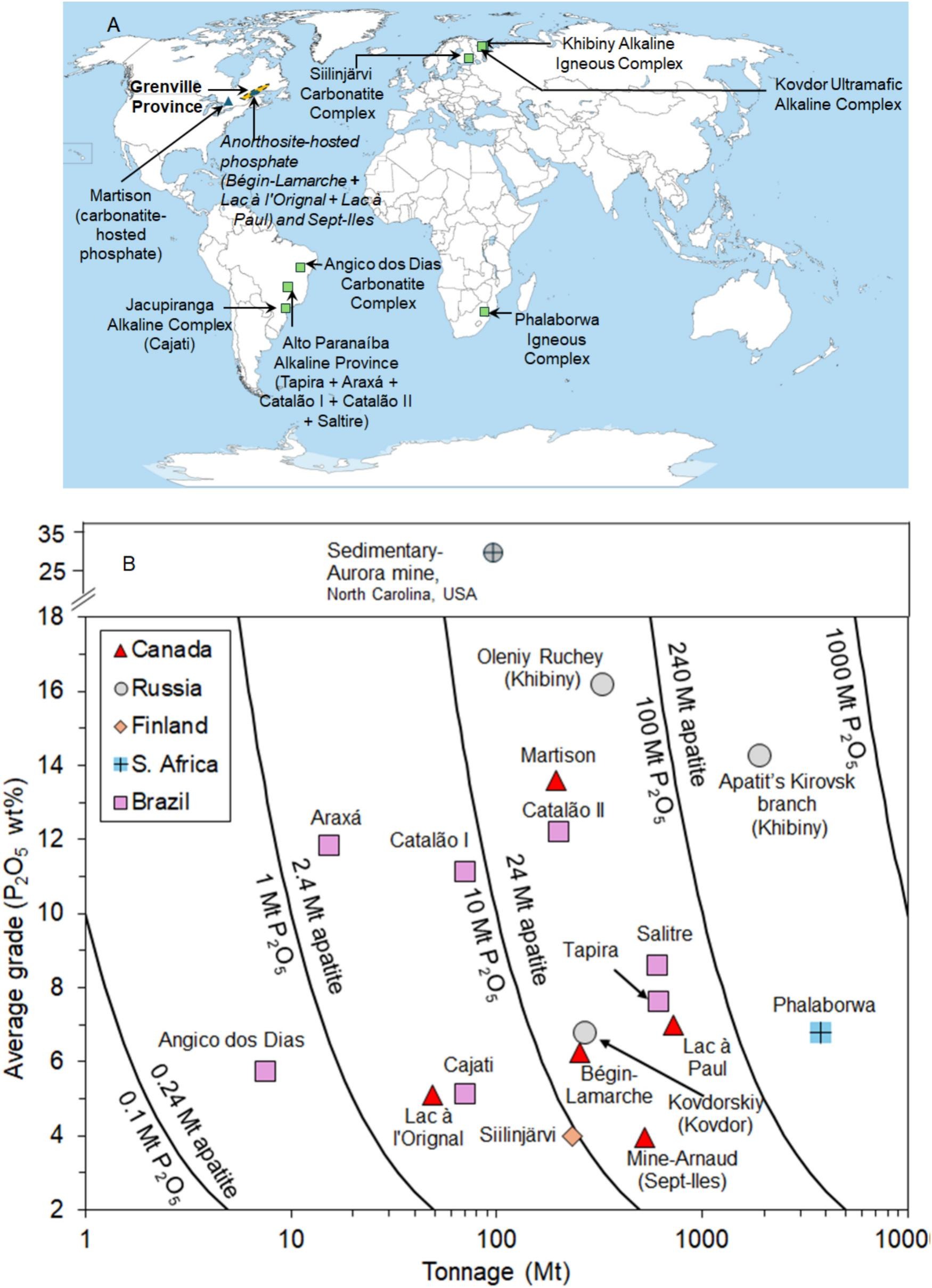
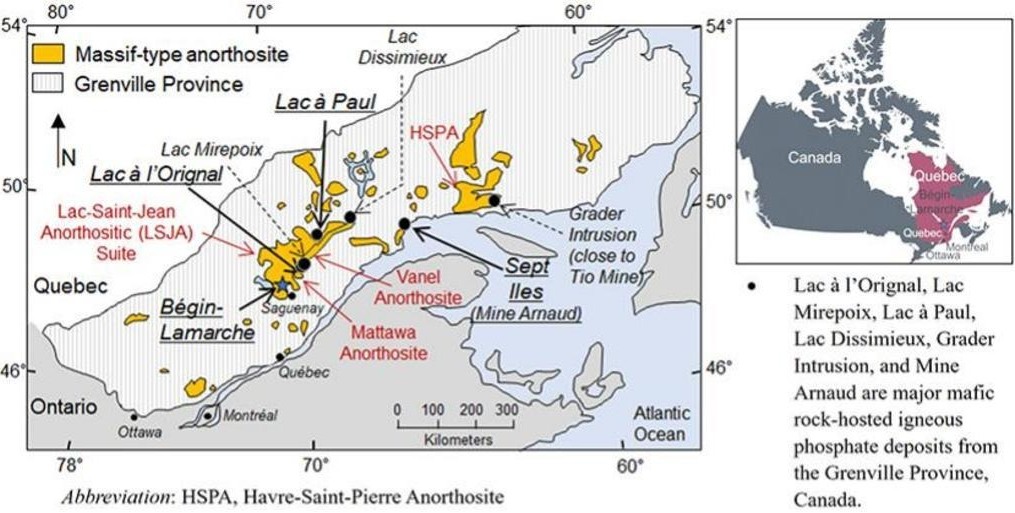
Bégin-Lamarche sits within the ~1.16-billion-year-old Lac-Saint-Jean Anorthositic Suite in Québec’s Grenville Province, one of the largest anorthosite complexes in the world.
Anorthosite sounds exotic, but the basic concept is relatively simple: It is an igneous rock formed when magma slowly cooled and crystallized deep within the Earth’s crust. At Bégin-Lamarche, phosphate-rich magmas crystallized within this enormous geological system and produced layers rich in apatite: The mineral containing the phosphorus that First Phosphate ultimately wants to recover.
This geological setting is important because igneous phosphate deposits form very differently from the sedimentary phosphate systems that dominate global production. Their mineralogy can therefore be more straightforward, with apatite occurring as a primary magmatic mineral rather than as material accumulated through sedimentary processes over time.
The scientific study describes the Bégin-Lamarche system as extending ~2.5 km along strike, with an overall thickness of roughly 200-400 m. It contains repeated layers of phosphate-bearing mafic and ultramafic rocks across the Mountain, North and South Zones. These repeated mineralized layers indicate that phosphate formation was part of the magmatic evolution of the system itself, rather than a single isolated event. Instead, apatite appears to have formed repeatedly as the magma evolved and crystallized under changing physical and chemical conditions.
This layered architecture is important because the phosphate did not simply accumulate as loose material after the rocks had formed. According to the authors, the apatite crystallized directly from magma over an extended period. That makes Bégin-Lamarche a genuinely magmatic phosphate system.
HOW NATURE CREATED SO MUCH APATITE
One of the most striking conclusions of the study concerns the amount of fluorapatite contained in certain parts of Bégin-Lamarche.
The researchers distinguish between 2 principal phosphate-bearing rock types:
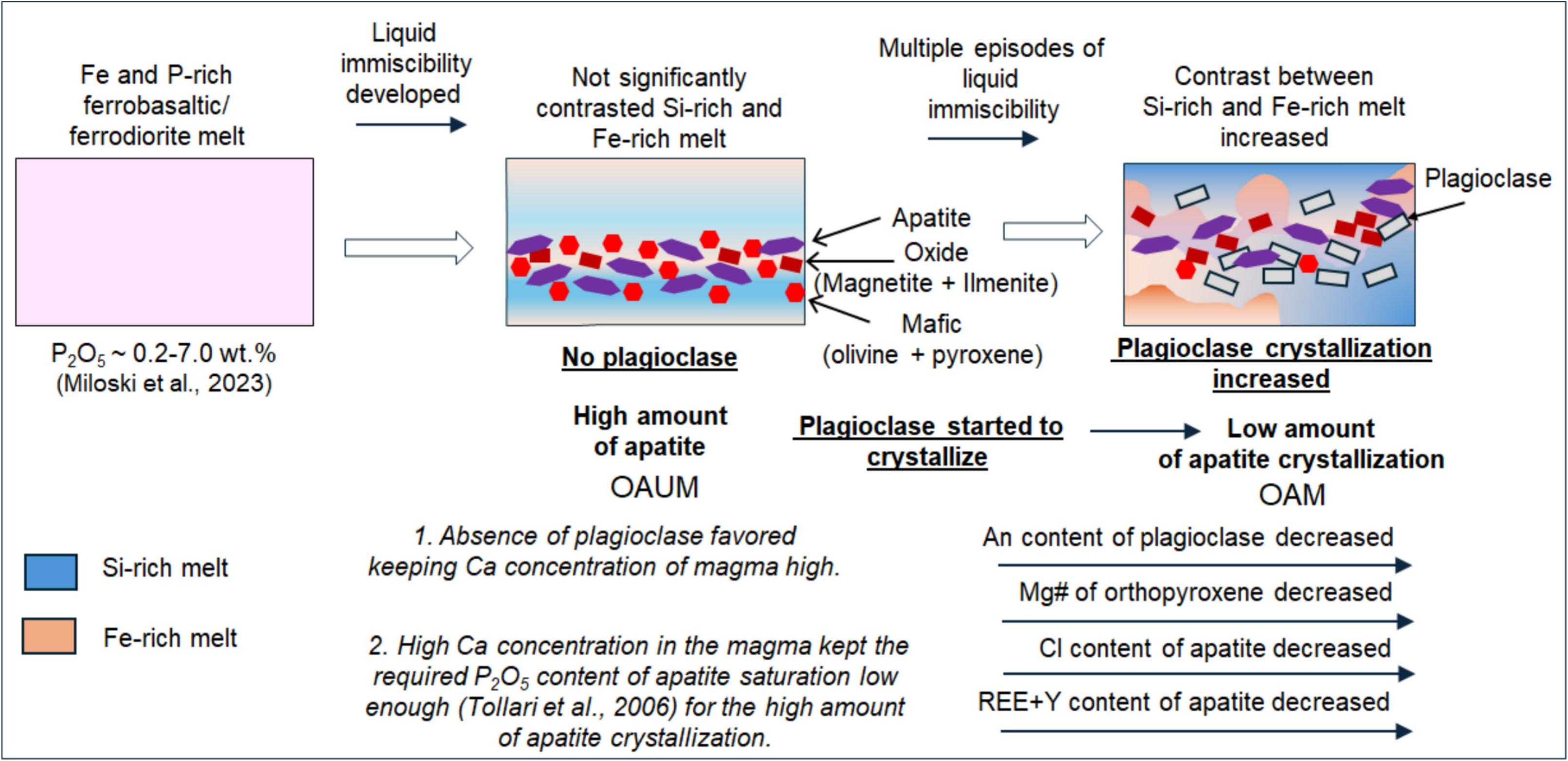
- The first is called oxide-apatite ultramafic rock, abbreviated OAUM. These rocks contain very little plagioclase and can contain an extraordinary 18-86% fluorapatite by volume.
- The second is oxide-apatite mafic rock, or OAM. These rocks contain more plagioclase and generally less apatite, reaching up to ~26%.
This contrast between OAUM and OAM is central to understanding why some parts of Bégin-Lamarche became so strongly enriched in phosphate-bearing apatite. The key is not simply how much phosphorus was present in the magma, but the order in which the major minerals crystallized from it.
The scientific terminology may sound complicated, but the underlying mechanism is surprisingly intuitive: More than 1 billion years ago, the magma forming Bégin-Lamarche began to crystallize. During an important early stage, very little plagioclase was forming.
Plagioclase normally consumes calcium. Because little plagioclase was crystallizing, more calcium remained available in the magma. That allowed the magma to stay favourable for apatite formation for a longer period, enabling unusually large quantities of phosphate-bearing apatite to crystallize. Once plagioclase began forming more abundantly, calcium was increasingly locked into that mineral and apatite crystallization diminished.
In effect, the evolving magma chemistry created a natural window during which apatite could crystallize in exceptionally large volumes before other minerals began competing more strongly for the available calcium.
In simplified terms, the magma effectively created its own phosphate-rich layers as it cooled. That is an important scientific explanation for one of Bégin-Lamarche’s defining characteristics: Certain layers became exceptionally enriched in apatite because of the sequence in which different minerals crystallized.
THE MAKING OF AN UNUSUALLY HIGH-GRADE CONCENTRATE
The second conclusion highlighted in First Phosphate’s news-release concerns the quality of the phosphate concentrate that can be produced from the mineralization.
A mine does not sell the entire rock mass it extracts. The purpose of beneficiation is to separate the valuable apatite from unwanted minerals and produce a concentrated phosphate product.
Earlier beneficiation testing on Bégin-Lamarche material produced an apatite concentrate grading 40.9% P₂O₅. The chemistry of that concentrate was very close to that of the apatite crystals themselves, which contained ~41.7% P₂O₅ in the earlier university work. The peer-reviewed paper independently characterizes the apatite mineral itself at ~41.4-42.4% P₂O₅.
This helps explain why beneficiation can produce such a high-grade concentrate: The phosphate-bearing mineral being separated is itself exceptionally rich in P₂O₅. The paper provides useful global context. It notes that marketable concentrates produced from the igneous phosphate deposits discussed by the authors typically grade ~35.4-38.7% P₂O₅, compared with around 29.7-31.5% for the sedimentary examples used in the study.
Against that background, a concentrate around 40% P₂O₅ is notable by global industry standards and reinforces the potential for Bégin-Lamarche to produce a premium phosphate feedstock for downstream processing.
For First Phosphate, this is particularly relevant because concentrate quality is the bridge between the geology of Bégin-Lamarche and the downstream phosphoric acid process envisioned in the company’s development strategy.
CHLORINE: A SMALL NUMBER WITH BIG CONSEQUENCES
The third major finding may ultimately be one of the most commercially relevant. Chlorine is one of the hidden enemies of phosphoric acid production.
Before phosphate can become part of an LFP battery cathode, phosphate concentrate must be converted into phosphoric acid and then purified further. Chlorine matters because it is corrosive to processing equipment and cannot simply be removed before phosphoric acid production.
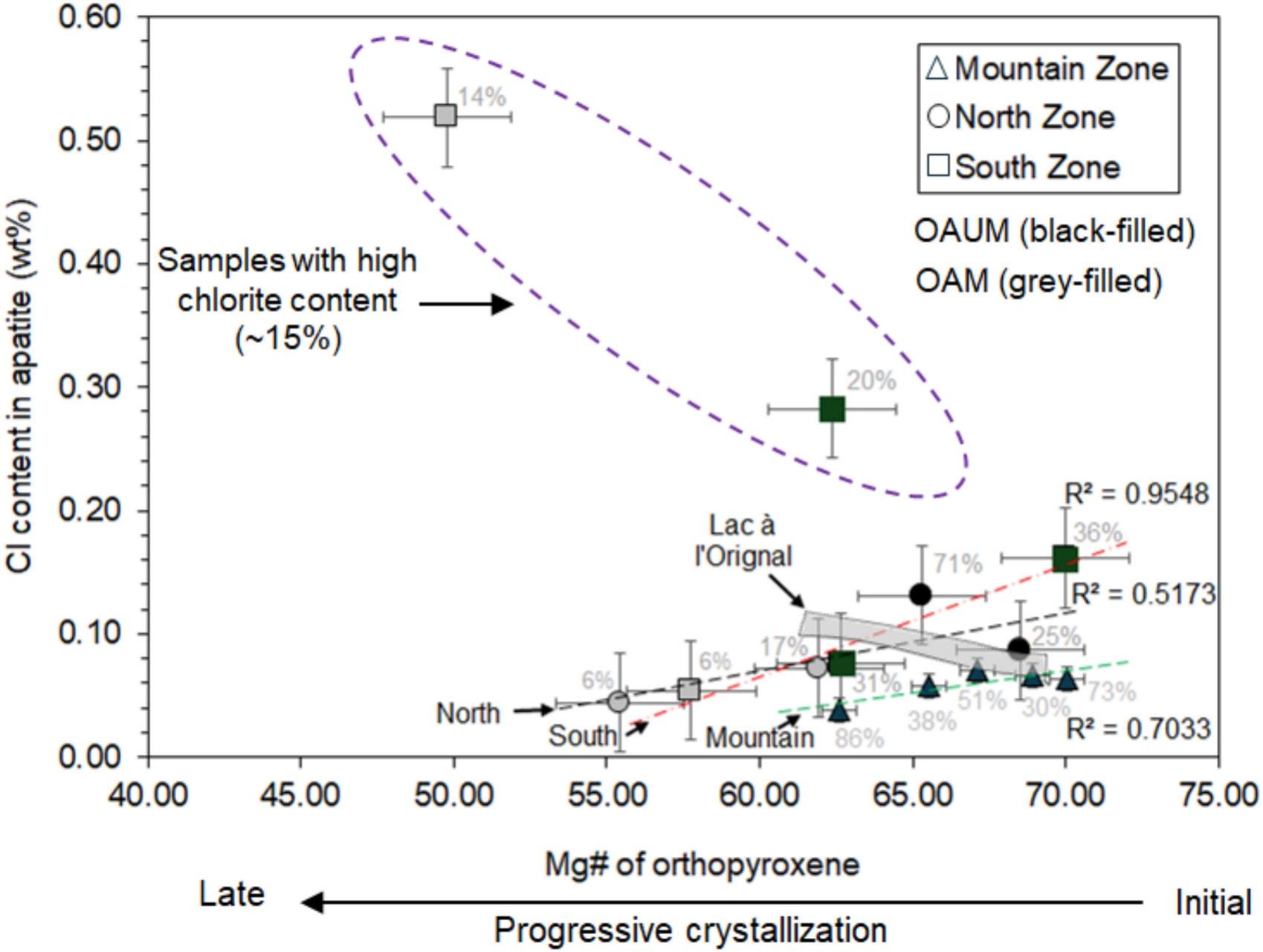
The authors therefore describe low-chlorine phosphate material as preferable for phosphoric acid manufacturing. They cite an upper chlorine limit of below 1,400 ppm for saleable phosphate material, while lower levels are preferred for phosphoric acid processing. At Bégin-Lamarche, ~81% of the analyzed apatite samples contained 1,000 ppm chlorine or less.
A small number of localized higher-chlorine samples were also identified, but these appear to reflect local geological variations rather than the broader character of the deposit. With ~81% of analyzed apatite samples at or below 1,000 ppm chlorine, the overall picture remains favourable. The fact that lower-chlorine zones can be distinguished geologically may ultimately be an advantage, allowing such material to be identified and preferentially directed through the mine plan and processing circuit.
What makes the research particularly interesting is that the scientists may have identified a way to recognize the lower-chlorine material geologically: They found a relationship between chlorine concentrations in apatite and the chemistry of another mineral occurring beside it: Orthopyroxene.
Orthopyroxene contains varying proportions of magnesium and iron. Geologists express this relationship through a measure called Mg#. As the magma evolved, the Mg# of orthopyroxene changed, and so did the chlorine content of the associated apatite.
For First Phosphate, the key practical implication is that this relationship could help guide further exploration and delineation of lower-chlorine phosphate zones: Orthopyroxene may function as a guide mineral, helping geologists identify particularly low-chlorine phosphate zones. That could potentially become useful both during further exploration and eventually during mine planning and selective extraction.
CLEANER CHEMISTRY STARTS IN THE GROUND
For battery-related phosphate applications, tonnes and grade are only part of the story. Chemistry matters.
Every unwanted element entering a processing plant can potentially add complexity, additional purification requirements, reagent consumption or waste streams. For a downstream process ultimately targeting battery-related applications, the quality of the mineral feedstock can therefore have consequences far beyond the mine site itself.
Bégin-Lamarche appears to begin from a very favourable mineralogical position: The peer-reviewed study reports less than 1% sulfide minerals, along with lead concentrations of no more than 11 ppm, thorium of no more than 2 ppm and uranium of no more than 2 ppm in the material studied.
The authors also compare anorthosite-hosted phosphate systems with other types of igneous phosphate deposits and conclude that apatite from these Grenville Province systems generally contains lower concentrations of several potentially problematic trace elements, particularly Pb, Th and U, than many carbonatite-hosted examples.
This distinction is important because the composition of the apatite itself largely determines which impurities accompany the phosphate into the beneficiation and acid-production stages. Starting with cleaner apatite therefore gives the downstream process a more favourable chemical foundation from the outset.
This is where ancient geology begins to connect directly with modern processing requirements: A cleaner starting material cannot eliminate the need for beneficiation, acid production and purification, but fewer unwanted elements entering the process can reduce the impurity burden further downstream.
That is particularly relevant to First Phosphate because the company’s strategy is focused on purified phosphoric acid for LFP batteries, rather than primarily on the conventional fertilizer market.
THE STRUCTURAL ADVANTAGE OF BÉGIN-LAMARCHE
The fourth conclusion highlighted in the company’s announcement concerns the physical geometry of Bégin-Lamarche. The scientific paper describes a mineralized system ~2.5 km long and 200-400 m thick. Thick phosphate-bearing zones located close to the surface can be advantageous because they may support large-scale open-pit extraction rather than underground mining.
The engineering and economic implications have already begun to be evaluated separately. The existing Bégin-Lamarche PEA envisages an open-pit operation producing ~900,000 tonnes per year of phosphate concentrate grading around 40% P₂O₅, together with magnetite production, over a 23-year mine life.
The peer-reviewed geological work therefore complements the engineering studies by explaining the natural architecture beneath the proposed development concept.
THE PROJECT IS ADVANCING ON SEVERAL FRONTS
Seen alongside First Phosphate’s developments over the past several months, a broader pattern is emerging:
- The resource question has advanced through intensive drilling and a substantially enlarged and upgraded mineral resource.
- The capital-market question has progressed through First Phosphate’s move onto Nasdaq and greater exposure to U.S. investors.
- The financing question is increasingly being addressed through Canadian government support, international export credit agencies and industrial partners, culminating most recently in the SERV Letter of Support related to a potential 250 million USD Swiss export contract.
- The feedstock-quality question is now gaining a deeper scientific foundation through peer-reviewed mineralogical research.
These are different pieces of the same development puzzle. A phosphate project targeting the LFP battery market needs more than tonnage. It needs a sufficiently large deposit, favourable physical geometry, a mineral that can be efficiently concentrated, manageable impurities, appropriate downstream processing, customers and ultimately a financeable construction plan. Bégin-Lamarche is increasingly being advanced against each of these requirements.
BOTTOM LINE
Perhaps the most compelling aspect of the study is the timescale involved. The geological processes that created Bégin-Lamarche took place more than a billion years before lithium iron phosphate batteries existed.
Yet the characteristics produced by those ancient magmas (abundant apatite, relatively low chlorine across most analyzed samples and very low concentrations of several unwanted elements) happen to align with many of the qualities sought in modern phosphate feedstock.
That convergence is striking because it suggests that the geological history of the deposit has effectively pre-conditioned the material in ways that could prove advantageous for a modern battery-material supply chain. Few mining stories illustrate quite so clearly how ancient geological processes can become relevant to highly advanced industrial applications.
That is what makes this scientific paper relevant beyond academia. It helps connect the geology beneath Bégin-Lamarche with the industrial strategy First Phosphate is attempting to build above it.
Previous Rockstone reports have focused on the increasing scale of the resource, the company’s expansion into U.S. capital markets and the international financing architecture gradually forming around the project.
The latest scientific work adds another layer to that story: The natural characteristics of the deposit increasingly appear to align with the downstream process around which First Phosphate’s mine-to-LFP strategy has been designed.
The next major step will be the feasibility study, where geology, metallurgy, mine planning, processing, infrastructure, capital costs and operating economics must ultimately converge into a single coherent and financeable development blueprint.
But long before engineers arrived at Bégin-Lamarche, nature had already done something unusual there. More than a billion years ago, a sequence of crystallizing magmas created phosphate-rich layers with a chemical signature that may now prove particularly relevant to one of the fastest-growing battery chemistries of the modern era.
Company Details

First Phosphate Corp.
1500 Royal Centre, 1055 West Georgia St.
Vancouver, B.C. V6E 4N7 Canada
www.firstphosphate.com
ISIN: CA33611D1033 / CUSIP: 33611D102
Shares Issued & Outstanding: 189,144,530
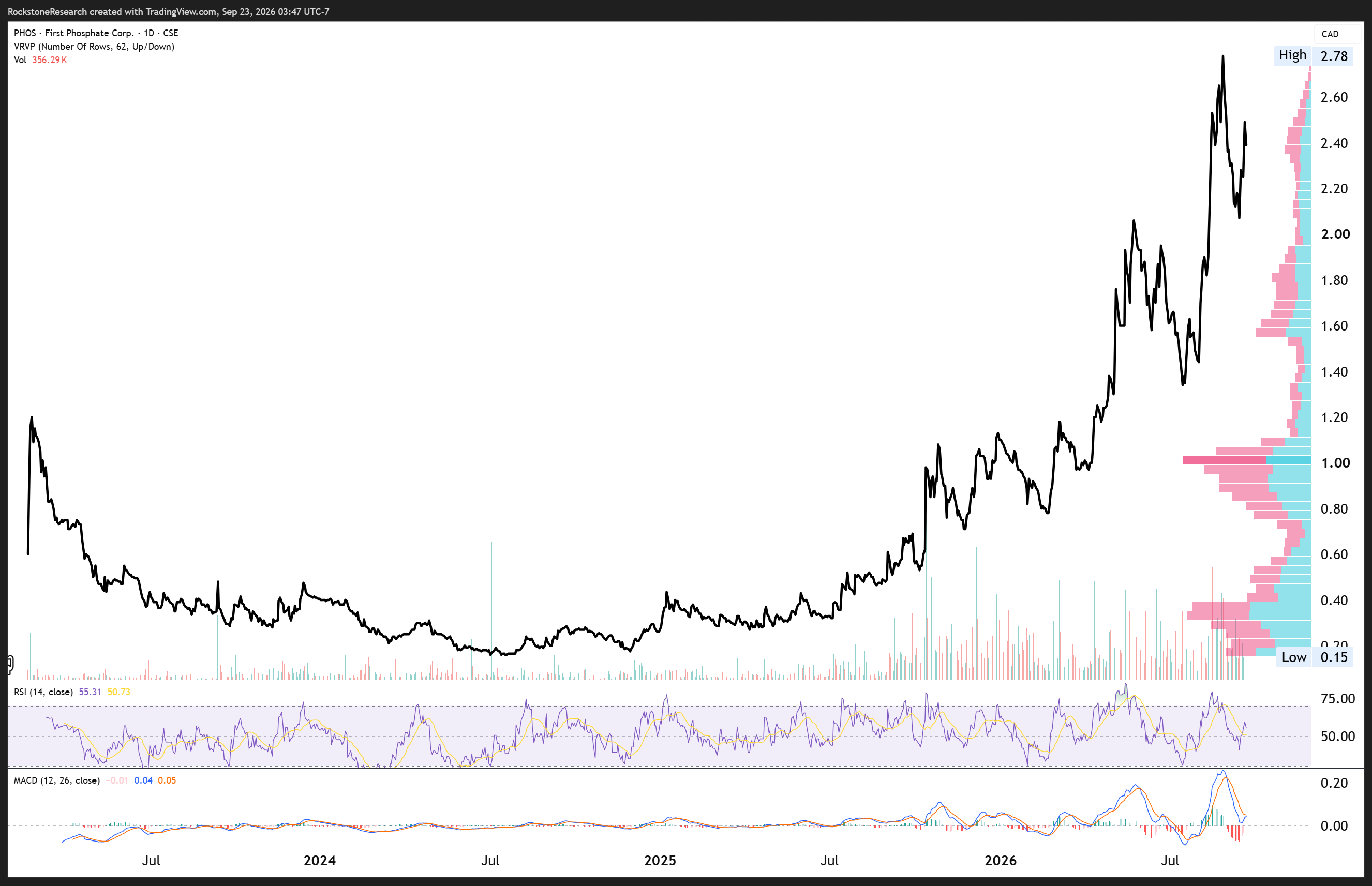
Canada Symbol (CSE): PHOS
Current Price: 2.29 CAD (09/22/2026)
Market Capitalization: 433 Million CAD
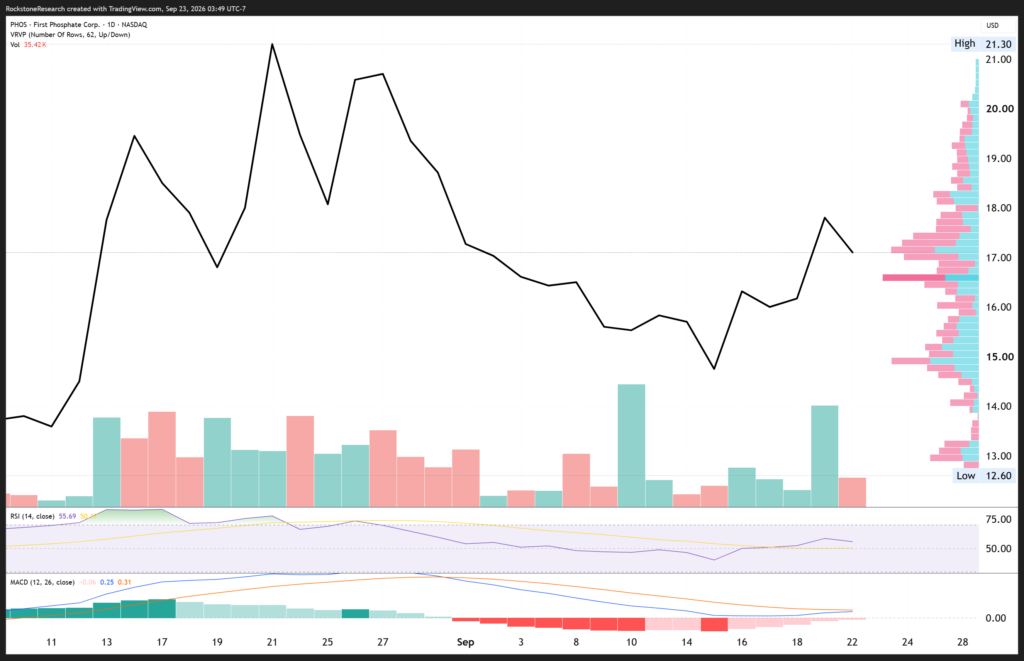
USA Symbol (Nasdaq): PHOS
Current Price: 16.57 USD (09/22/2026)
Market Capitalization: 313 Million USD
Note: 10 PHOS ADRs represent 1 First Phosphate common share.
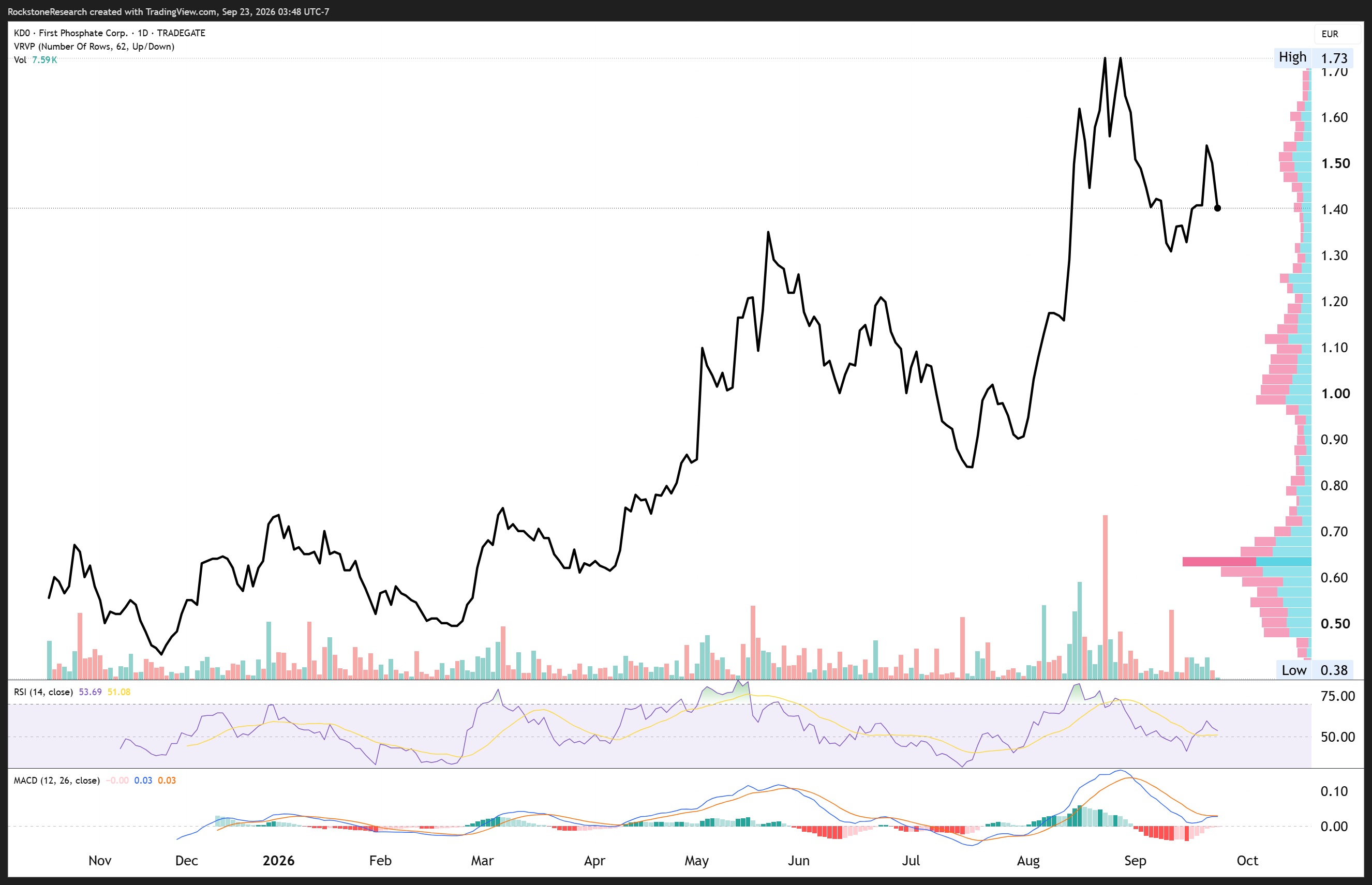
Germany Symbol / WKN (Tradegate): KD0 / A3DQCH
Current Price: 1.402 EUR (09/23/2026)
Market Capitalization: 265 Million EUR
Contact
Rockstone News & Research
Stephan Bogner (Dipl. Kfm., FH)
Müligässli 1, 8598 Bottighofen
Switzerland
Phone: +41-71-5896911
Email: info@rockstone-news.com
Disclaimer and Information on Forward Looking Statements: Rockstone and First Phosphate Corp. (“First Phosphate” or the “Company”) caution investors that any forward-looking information provided herein is not a guarantee of future results or performance, and that actual results may differ materially from those expressed or implied in forward-looking information as a result of various factors. Readers are referred to First Phosphate’s public filings for a more complete discussion of such risk factors and their potential effects, which may be accessed through the Company’s documents filed on SEDAR+ at www.sedarplus.ca. All statements in this report, other than statements of historical fact, should be considered forward-looking statements. Much of this report is comprised of statements of projection, interpretation, opinion and expectation. Such statements involve known and unknown risks, uncertainties and other factors that may cause actual results, events or developments to differ materially from those anticipated in these forward-looking statements. There can be no assurance that such statements will prove to be accurate, as actual results and future events could differ materially from those anticipated in such statements. Forward-looking statements in this report include statements, interpretations, conclusions, strategic observations and project-development commentary regarding First Phosphate Corp., the Bégin-Lamarche Phosphate Project, the Company’s strategy to develop a vertically integrated North American supply chain for lithium iron phosphate (LFP) battery materials and the potential financing and development of the project. Forward-looking statements include expectations regarding the advancement of Bégin-Lamarche through the ongoing Feasibility Study, permitting, engineering, infrastructure development, procurement, project financing, final investment decision, construction and potential commercial production. Forward-looking statements also include expectations regarding the Preliminary Economic Assessment (PEA), the ongoing Feasibility Study and subsequent engineering work, including assumptions regarding mine design, production rates, recoveries, capital expenditures, operating costs, mine life, infrastructure requirements and economic performance. The 2024 PEA estimate of approximately 675 million CAD in initial capital expenditures may differ materially from the capital estimate ultimately established through the Feasibility Study. Forward-looking statements in this report also include interpretations and expectations arising from the peer-reviewed scientific study of the Bégin-Lamarche deposit published in Ore Geology Reviews, including the geological processes responsible for apatite formation, the abundance and distribution of fluorapatite, chlorine concentrations, trace-element characteristics and the potential use of mineral chemistry as an exploration or mine-planning tool. Statements regarding the potential significance of relatively low chlorine concentrations, low levels of certain deleterious elements and high P₂O₅ concentrations in apatite for beneficiation, phosphoric acid production or the manufacture of LFP battery materials are forward-looking and interpretative in nature. Mineralogical characteristics observed in individual samples or zones may not necessarily be representative of all material that could ultimately be mined or processed. Forward-looking statements also include expectations regarding beneficiation and metallurgical performance, including the potential to produce phosphate concentrate at or near the approximately 40% P₂O₅ level previously demonstrated in testing. The 40.9% P₂O₅ concentrate result referenced in this report derives from earlier beneficiation work and was not generated by the peer-reviewed study itself. Future Feasibility Study work, pilot-scale testing and commercial operations may produce different results. Forward-looking statements include expectations regarding the potential use of orthopyroxene chemistry, including Mg#, as a geological indicator for identifying lower-chlorine phosphate mineralization. The practical effectiveness of such geochemical relationships during future exploration, grade control, selective mining or blending remains subject to further testing, geological interpretation and operational validation. Forward-looking statements include expectations regarding the Letter of Support received from Swiss Export Risk Insurance (SERV). SERV has indicated that it is prepared to consider insurance or guarantees supporting buyer-credit financing based on an assumed eligible Swiss export contract value of 250 million USD, corresponding to an indicative financed amount of approximately 212.5 million USD. Any ultimate SERV-supported financing remains subject to due diligence, eligibility requirements, procurement levels, project structure, applicable OECD guidelines, approvals and definitive documentation. The Letter of Support does not constitute a binding financing commitment. Forward-looking statements also include expectations regarding support from other export-credit agencies and governmental institutions, including Denmark’s Export and Investment Fund (EIFO), Italy’s SACE, Cassa Depositi e Prestiti (CDP), SIMEST and other potential financing participants. Letters of intent, letters of interest and other expressions of support are not equivalent to committed project financing and may not result in definitive guarantees, loans, insurance arrangements or other financing facilities. Forward-looking statements include expectations regarding Canadian government support for Bégin-Lamarche, including the previously announced 16.7 million CAD non-repayable contribution and the additional 4.84 million CAD of non-repayable contributions associated with power-transmission and road-infrastructure activities. Such contributions remain subject to applicable funding agreements, eligible expenditures, milestones, reporting requirements and other conditions. Forward-looking statements also include expectations regarding planned infrastructure associated with Bégin-Lamarche, including studies and potential development of a 161-kV transmission line, substations, access roads and transportation connections to existing regional infrastructure and the Port of Saguenay. Infrastructure routes, costs, schedules and configurations may change as engineering and permitting advance. Forward-looking statements include expectations regarding Québec’s Filon support status for Bégin-Lamarche and its potential to facilitate coordination with government departments and agencies involved in mining authorizations and permitting. Filon support does not guarantee the timing, issuance or outcome of any permit or regulatory approval. Forward-looking statements also include expectations regarding the Company’s mineral resource, mine planning, metallurgical performance, phosphate concentrate quality, impurity profile and ability to supply high-purity phosphate products suitable for the LFP battery industry. Mineral resources are not mineral reserves and do not have demonstrated economic viability. Forward-looking statements include expectations regarding commercial relationships, offtake arrangements, engineering partnerships, equipment procurement and the potential participation of multiple governments, export-credit agencies, banks and industrial partners in the eventual financing and development of Bégin-Lamarche. Development-Stage Risks: First Phosphate is a development-stage mineral company. Bégin-Lamarche has not reached commercial production and there can be no assurance that the project will ultimately be financed, constructed or developed into an operating mine. Substantial additional work remains necessary, including completion of feasibility-level studies, engineering, environmental assessment, permitting, consultation, infrastructure planning, procurement, financing and commercial arrangements. Preliminary Economic Assessment and Feasibility Study Risks: The PEA is preliminary in nature and includes inferred mineral resources that are considered too speculative geologically to have economic considerations applied to them that would enable classification as mineral reserves. There can be no assurance that the assumptions, economics, production profile, capital expenditures, operating costs or other results contained in the PEA will be realized. The ongoing Feasibility Study may result in materially different project parameters, including changes to capital costs, operating costs, mine design, production rates, infrastructure requirements, development schedule and economic performance. Scientific Study, Mineralogy and Sampling Risks: The peer-reviewed study discussed in this report is a scientific investigation of the geology, mineralogy, petrology and geochemistry of selected samples from the Mountain, North and South Zones of Bégin-Lamarche. Its findings should not be interpreted as demonstrating uniform mineralogical or chemical characteristics throughout the entire mineral resource or throughout material that may ultimately be included in a future mine plan. Apatite abundance, chlorine concentrations, trace-element concentrations and other mineralogical characteristics may vary spatially within the deposit. The study identified localized samples with higher chlorine concentrations, and there can be no assurance that future drilling, sampling, mining or metallurgical testing will produce results consistent with those discussed herein. Interpretations regarding magma evolution, apatite crystallization, plagioclase abundance, orthopyroxene chemistry and the genesis of the phosphate mineralization are scientific interpretations based on the available data and may be refined or revised as additional geological information becomes available. Peer review provides scientific scrutiny of the methodology, data and interpretations presented in the publication but does not constitute independent validation of the economic viability, mineability, metallurgical performance or commercial suitability of the Bégin-Lamarche Project. Metallurgical and Product-Quality Risks: Historical and current laboratory-scale beneficiation and mineralogical results may not be replicated at pilot, demonstration or commercial scale. There can be no assurance that phosphate concentrate grading approximately 40% P₂O₅ can be produced consistently throughout the life of a future operation or that recoveries, impurity levels and product specifications will meet the requirements of downstream customers. The suitability of Bégin-Lamarche phosphate concentrate for purified phosphoric acid and LFP battery applications will depend on numerous factors, including beneficiation performance, impurity removal, acid production, purification technology, process design, operating conditions, customer specifications and commercial-scale qualification. Low concentrations of chlorine, Pb, Th, U and other elements observed in tested samples may be advantageous, but do not eliminate the need for downstream purification or guarantee that future products will meet any particular battery-grade, technical-grade or customer specification. Exploration and Geochemical-Vector Risks: The potential use of orthopyroxene chemistry, including Mg#, as an indicator for lower-chlorine phosphate mineralization remains interpretative and subject to further validation. There can be no assurance that this relationship will prove sufficiently consistent or practical for future exploration targeting, grade control, selective mining, blending or operational decision-making across the deposit. Export-Credit and Project-Financing Risks: SERV support, EIFO support and other export-credit or governmental expressions of interest remain indicative and conditional. There can be no assurance that such support will result in definitive financing or that financing will be available in the amounts, currencies, structures or on the terms currently contemplated. Project financing may depend on numerous factors, including completion of the Feasibility Study, permitting, procurement decisions, eligible export content, lender due diligence, commodity-price assumptions, construction contracts, offtake arrangements, market conditions and the Company’s ability to satisfy conditions imposed by financing institutions. The existence of multiple potential government and export-credit participants does not eliminate financing risk, nor does it guarantee that the full capital requirements of the project will be funded without additional equity, debt or other sources of capital. Government Funding and Infrastructure Risks: Government contributions and support programs may be conditional, milestone-dependent and subject to eligible-expenditure, reporting and compliance requirements. Funding for infrastructure planning or engineering does not guarantee that transmission lines, substations, roads or other related infrastructure will ultimately be permitted, financed or constructed. Infrastructure requirements, routes, costs, ownership structures and schedules may change materially as engineering and permitting advance. Permitting and Regulatory Risks: The development of Bégin-Lamarche remains subject to federal, provincial and other regulatory approvals, environmental assessment requirements, Indigenous consultation and other permitting processes. Québec’s Filon support status may facilitate coordination but does not guarantee approval or accelerate any individual regulatory decision beyond applicable legal and administrative requirements. Commercial and Execution Risks: Offtake agreements, supplier relationships, engineering partnerships and other commercial arrangements remain subject to counterparty performance, contractual conditions, product specifications, qualification requirements, pricing mechanisms and other commercial factors. Development of Bégin-Lamarche will also be subject to construction risk, procurement risk, equipment availability, labour availability, inflation, supply-chain disruption, cost escalation, schedule delays and other risks typical of large-scale mining and industrial projects. Capital-Markets Risks: References to First Phosphate’s Nasdaq listing, share-price performance, trading volume, market capitalization or investor participation are historical observations only and are not indicative of future performance. The Company’s Nasdaq-traded ADRs do not guarantee sustained investor interest, greater liquidity, improved access to financing or higher securities prices. For clarity, 10 First Phosphate ADRs represent 1 First Phosphate common share. Technical Report and Information Risks: This report relies on publicly available information, First Phosphate news releases, technical reports, government announcements, the peer-reviewed scientific publication discussed herein and other information believed to be reliable. Rockstone and the author have not independently verified all geological, mineralogical, metallurgical, economic, engineering, infrastructure, financing or commercial information discussed herein. Readers should consult First Phosphate’s official public disclosure, applicable technical reports filed on SEDAR+ and the original peer-reviewed scientific publication for complete technical information. Peer-Review and Author-Relationship Risks: The peer-reviewed study was financially supported by First Phosphate Corp. and involved authors with disclosed relationships to First Phosphate and Laurentia Exploration. These relationships are disclosed in the publication. Peer review should not be interpreted as equivalent to an independent technical report prepared for securities-law purposes or as independent confirmation of the project’s economic viability. Forward-looking statements are based on current expectations, estimates, interpretations and assumptions that are inherently subject to uncertainty. Actual results may differ materially from those expressed or implied in the forward-looking statements contained in this report. Accordingly, readers should not place undue reliance on forward-looking information. Rockstone and the author of this report do not undertake any obligation to update any statement made herein except as required by applicable law. Past performance, metallurgical results, exploration success, mineral resource estimates, preliminary economic assessments, government support, export-credit interest, financing indications, comparisons to other companies or projects, capital-market events and industry developments are provided for illustrative purposes only and should not be considered indicative of future results.
Disclosure of Interest and Advisory Cautions: Nothing in this report should be construed as a solicitation, offer or recommendation to buy or sell any securities mentioned. Rockstone, its owners and the author of this report are not registered broker-dealers, investment advisors or financial advisors. Before making any investment decision, readers should consult with a qualified financial advisor, registered broker-dealer and, where appropriate, legal or tax professionals. Readers should never make an investment decision based solely on an online or printed report, including this Rockstone report, especially where the securities discussed involve small, thinly traded or early-stage public companies. The author of this report, Stephan Bogner, was paid 21,000 CAD by Connect 4 Marketing Ltd. on behalf of First Phosphate Corp. for services related to the preparation, publication and dissemination of this initiating report over a 3-month service period. This compensation represents a conflict of interest and may affect the objectivity of this report. As of the date of this report, the author does not own securities of First Phosphate Corp., but intends to initiate a position. If the author acquires securities of First Phosphate, he may benefit from increases in trading volume or share-price appreciation. The author may buy or sell securities of First Phosphate, or securities of comparable companies, at any time without notice, which may give rise to additional conflicts of interest. Accordingly, multiple conflicts of interest exist. The information contained in this report should not be construed as independent financial analysis, investment research or a recommendation. This report should be understood as a paid promotional publication and does not replace individual investment advice. The views and opinions expressed in this report are those of Rockstone and the author and are based on information received from the company, company representatives, publicly available disclosure and other public-domain sources believed to be reliable. Rockstone and the author have not undertaken independent due diligence or independent verification of all information contained in this report. Rockstone and the author do not guarantee the accuracy, completeness, timeliness, usefulness or fitness for any particular purpose of any information, data, statement, interpretation, estimate, projection, comparison, chart, table, image or other content contained herein. Rockstone and the author do not guarantee that any company mentioned in this report will perform as expected, that any exploration results will lead to mineral resources, economic deposits or mine development, or that any comparisons to other companies, projects, jurisdictions or market outcomes will prove valid or come into effect. For the avoidance of doubt, this report is not intended for distribution to, or use by, any person or entity in any jurisdiction where such distribution, publication or use would be contrary to applicable law or regulation. Readers are solely responsible for ensuring that their access to, review of and use of this report is lawful in their jurisdiction. Neither Rockstone nor the author accepts liability for any direct or indirect loss, damage, cost or expense arising from the use of this report or from any investment decision made in reliance on it. Please read the entire Disclaimer carefully. If you do not agree with the Disclaimer, do not access this website, this report or any related PDF or online publication. By accessing or using this website and/or report, whether or not you have actually read the Disclaimer, you are deemed to have accepted it. The information provided is educational and general in nature and should not be interpreted as personalized investment, financial, legal, tax or professional advice. Data, tables, figures and images, unless otherwise labeled, credited or hyperlinked, have been obtained from Stockwatch.com, TradingView.com, First Phosphate Corp. and public-domain sources. The cover picture has been obtained and licenced from 123rf.com.


