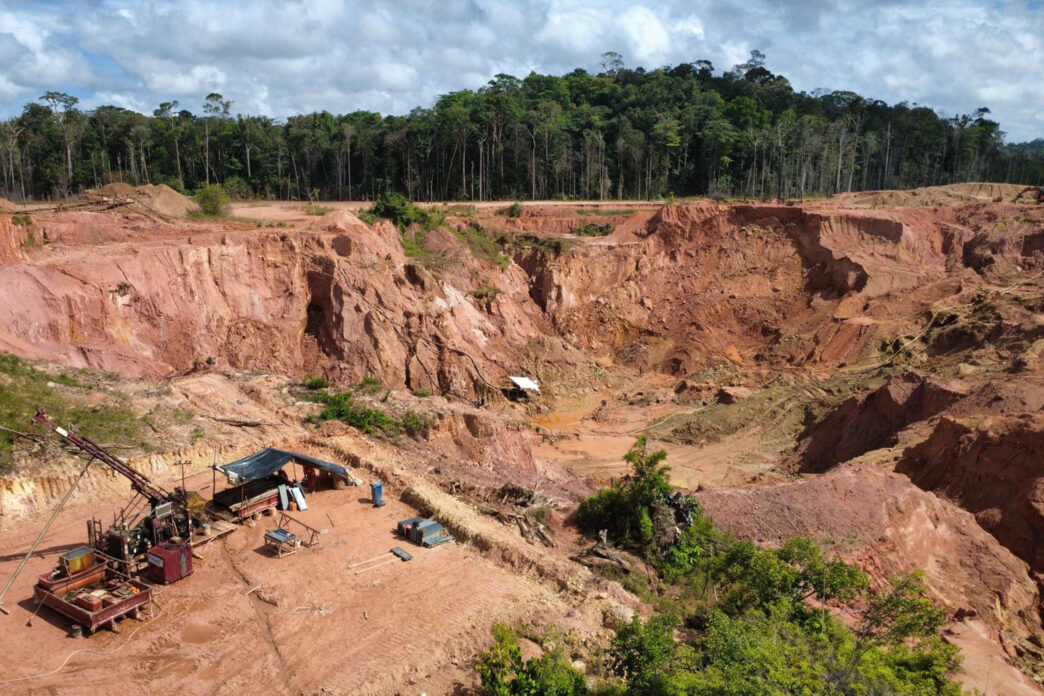
Gold districts rarely reveal themselves in a single moment. They emerge step by step: One successful drill program leads to the next, isolated targets begin to connect and the geology starts to show the early architecture of a much larger gold district. That is what makes Miata Metals Corp.’s latest discovery so important.
The company was already building momentum at Sela Creek, where modern drilling is transforming a historic artisanal gold field into a serious bedrock gold discovery story.
Now, with drilling confirming a substantial new gold discovery several kilometres from the main discovery area, the project enters a much larger phase.
Miata has added a new discovery front, strengthened the case for a multi-centre gold system and taken a major step toward outlining a broader gold district in Suriname’s proven yet still underexplored Guiana Shield.
Why Miata Metals Corp. is on our radar now: The company is advancing the Sela Creek Gold Project in Suriname, where 2 rigs are turning in an active 25,000 m drill program that is transforming a historically mined but underexplored gold field into a modern bedrock exploration story.
Today‘s announced Puma East drill results – including 17.19 m @ 3.14 g/t Au and 21.64 m @ 1.7 g/t Au – establish a new bedrock discovery ~3 km southeast of the Jons Trend-Big Berg Corridor.
The Jons Trend has already returned high-grade and broad intervals, including 23.75 m @ 5.73 g/t Au, while Big Berg delivered 96 m @ 1.41 g/t Au and supports the concept of a broader mineralized corridor.
Puma East now suggests that Sela Creek may host multiple mineralized centres across a much larger district-scale system.
Note all drill results of the Company including true widths and locations are available here.
THE DISCOVERY THAT CHANGES THE MAP
There are moments in gold exploration when a project starts to move from “interesting” to “important”. For Miata, today may be one of those moments.
The latest drill results from the Puma East target at its Sela Creek Gold Project in Suriname do more than add another batch of strong intercepts to the company’s growing list of discoveries. They change the map.
Puma East is located ~3 km southeast of the increasingly advanced Jons Trend-Big Berg Corridor.
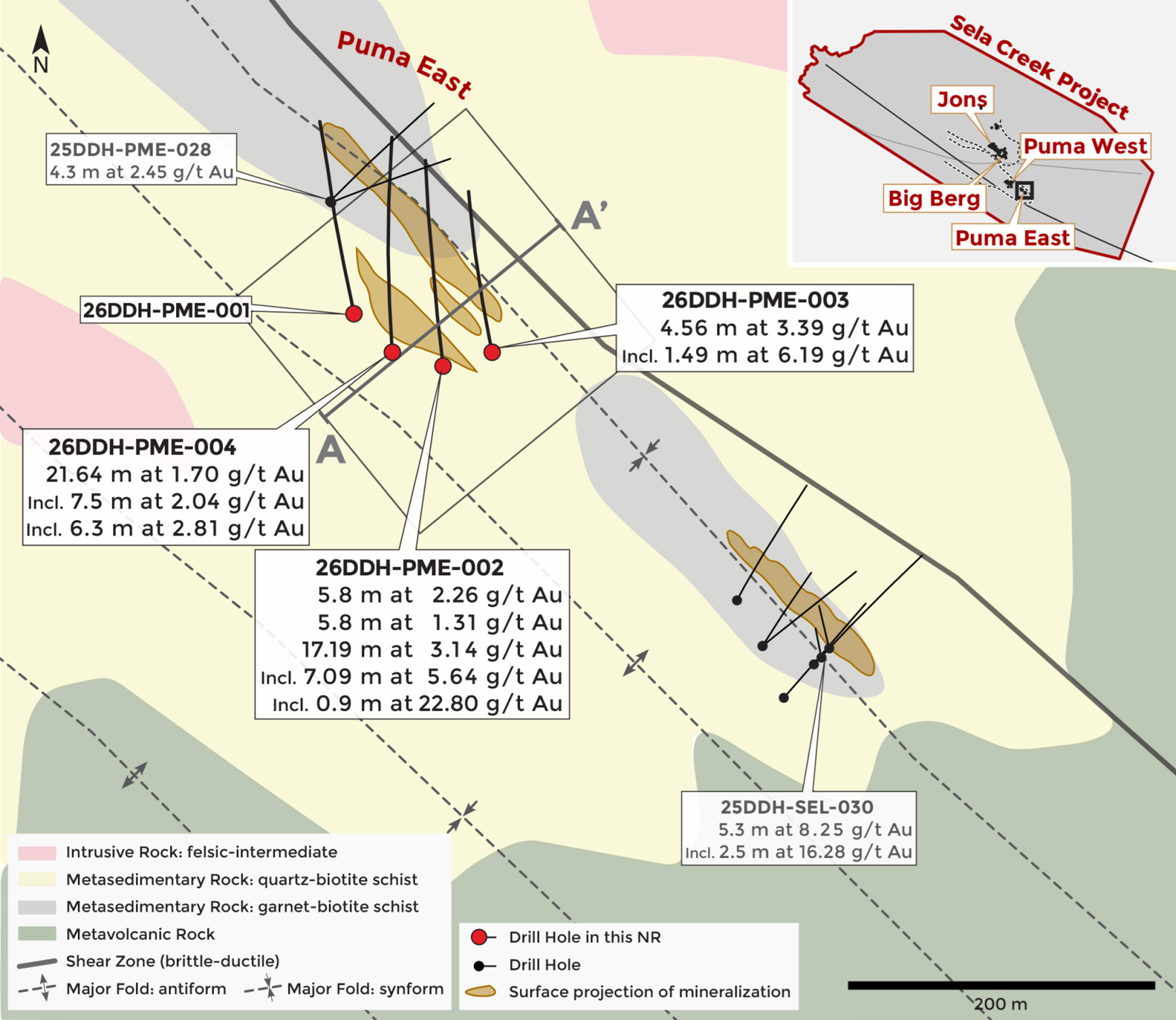
The first meaningful 2026 drilling there has now established a new bedrock gold discovery outside the main corridor that has captured most of the market’s attention so far.
The initial holes returned broad mineralized intervals and high-grade gold:
- 17.19 m @ 3.14 g/t Au, including
- 7.09 m @ 5.64 g/t Au and
- 0.9 m @ 22.8 g/t Au, as well as
- 21.64 m @ 1.7 g/t Au, including
- 7.5 m @ 2.04 g/t Au and
- 6.3 m @ 2.81 g/t Au
For investors who are new to Miata, the essential point is simple: The Sela Creek story is expanding from a single discovery area into a broader district-scale exploration story.
Until now, Jons Trend and Big Berg were the main proof points:
- Jons Trend demonstrated high-grade and broad mineralization over an increasingly well-understood corridor.
- Big Berg then showed that mineralization was not limited to Jons Trend and could be repeated along strike.
- Now Puma East has opened a new area roughly 3 km away, with geological similarities to Jons Trend, including structural controls, alteration, quartz-pyrite veining and visible gold.
This is why today‘s news is so important: A single discovery can become a deposit. Several related discoveries can become a district. Miata is now drilling toward the second possibility, with momentum accelerating across the project.
INVESTMENT THESIS: MIATA DESERVES ATTENTION NOW
Miata is still an exploration-stage company. It does not yet have a mineral resource estimate at Sela Creek, and investors should treat the story accordingly. But this is also what makes the current phase so exciting.
The company is still in the discovery-drilling stage: This is the stage of the exploration cycle where successful drilling can rapidly sharpen the geological picture, expand the target pipeline and lay the groundwork for future resource estimates.
At Sela Creek, Miata is now delivering exactly the kind of exploration sequence investors hope to see before a first resource is calculated: Repeated discoveries, multiple mineralized centres, broad intervals, local high grades, shallow drilling, visible gold, improving geological understanding, active rigs, a large underexplored land package and growing evidence of repeatability.
Each successful hole adds another piece to the puzzle. If the current drill program continues to demonstrate scale and geological continuity across Jons Trend, Big Berg, Puma East and other targets, the next major milestone would be the transition from discovery success toward resource definition — the stage when investors can begin comparing Sela Creek more clearly with other gold projects in the region and the broader exploration sector.
The investment thesis rests on 5 pillars:
- Puma East is a new bedrock discovery, not just another hole drilled into the already known Jons Trend-Big Berg area. The latest results show that Miata‘s exploration team can step away from the main corridor and still find significant gold mineralization in bedrock. That matters because district-scale systems are valuable precisely because they can host multiple deposits or mineralized centres.
- The grade-width profile is attractive for an early-stage discovery. Intervals such as 17.19 m @ 3.14 g/t Au and 21.64 m @ 1.7 g/t Au are meaningful in an orogenic gold setting, especially where the system is still at an early drill stage and remains open for follow-up. Importantly, the 17.19 m interval in hole 26DDH-PME-002 has an estimated true width of 14.9 m, while the 21.64 m interval in hole 26DDH-PME-004 has an estimated true width of 18.7 m, according to the drill table in today‘s news.
- Jons Trend and Big Berg already provide a strong foundation. At Jons Trend, Miata recently extended mineralization to a vertical depth of ~250 m and reported 63 m @ 1.44 g/t Au from hole 26DDH-JT-016. The same June 23 news-release reported that geological data continued to point toward a possible single mineralized corridor of ~1,300 m strike length connecting Jons Trend and Big Berg.
- Sela Creek is large and underexplored. The project covers ~215 km², and Miata holds a 70% interest with an option to acquire 100%. The project has a long history of artisanal mining, but only limited modern bedrock exploration. This is exactly the kind of setting where surface mining activity can act as a clue to a much larger system below.
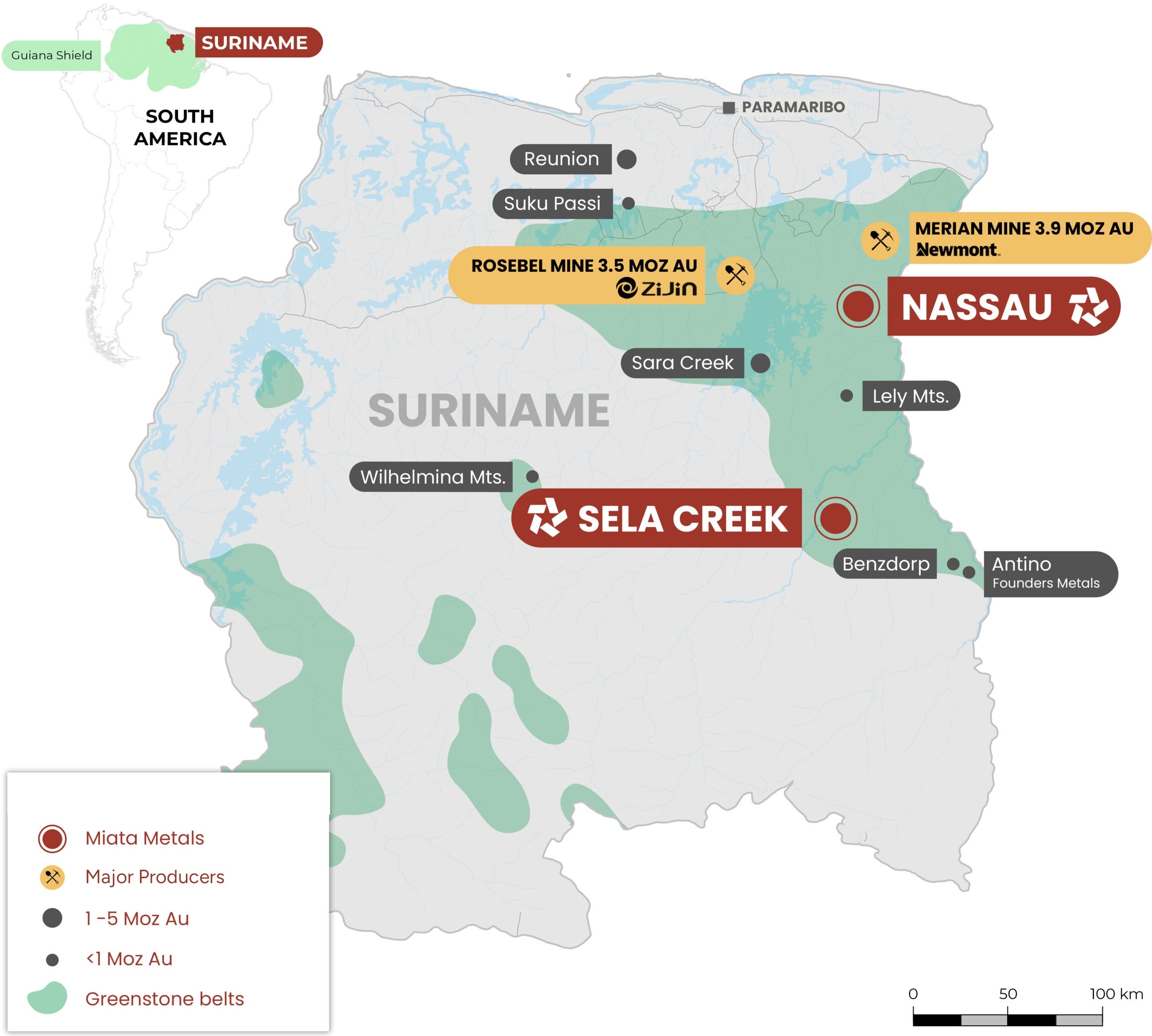
- Suriname is already a real gold country, not a speculative frontier. Newmont‘s Merian operation and Zijin‘s Rosebel Gold Mine validate Suriname as a gold-producing jurisdiction, while Founders Metals‘ Antino Gold District validates the modern junior exploration opportunity in the same broader Guiana Shield setting.
TODAY‘S NEWS: PUMA EAST OPENS A SECOND FRONT
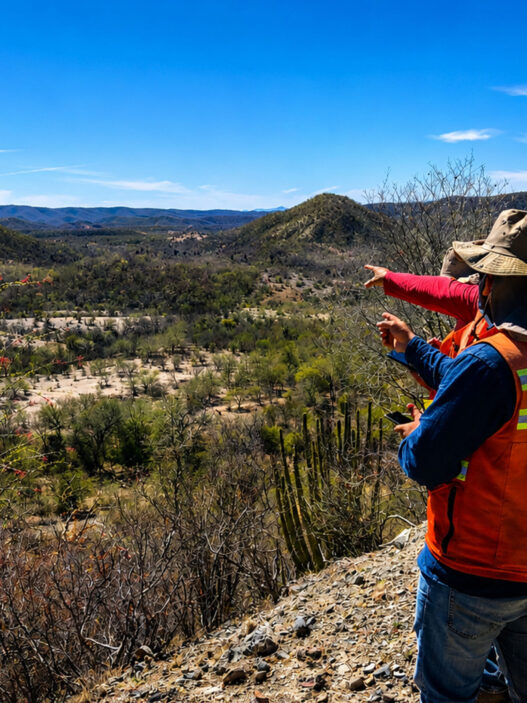
Today’s news shifts the spotlight to Puma East, where Miata has opened a new discovery front beyond the main Jons Trend-Big Berg Corridor. The company‘s latest drilling tested an area where Miata geologists had outlined a 100 m wide northwest-southeast trending zone of shearing with adjacent fold axes dipping steeply to the southwest.
This surface work was not just random sampling. It was part of a geological puzzle. In simple terms, Miata is looking for places where gold-bearing fluids moved through broken, folded and sheared rocks, leaving behind quartz veins, sulphides and gold.
At Puma East, the first 2025 drilling intersected mineralization but did not hit the zones at the preferred angle.
In 2026, Miata changed the drill orientation and successfully intersected steep shear veins as well as shallower fold-related extension veins.
That is an important technical detail, but it can be translated into plain investor language: The first pass did not fully test the target, the team learned from it, changed the drilling angle and the next program delivered the discovery.
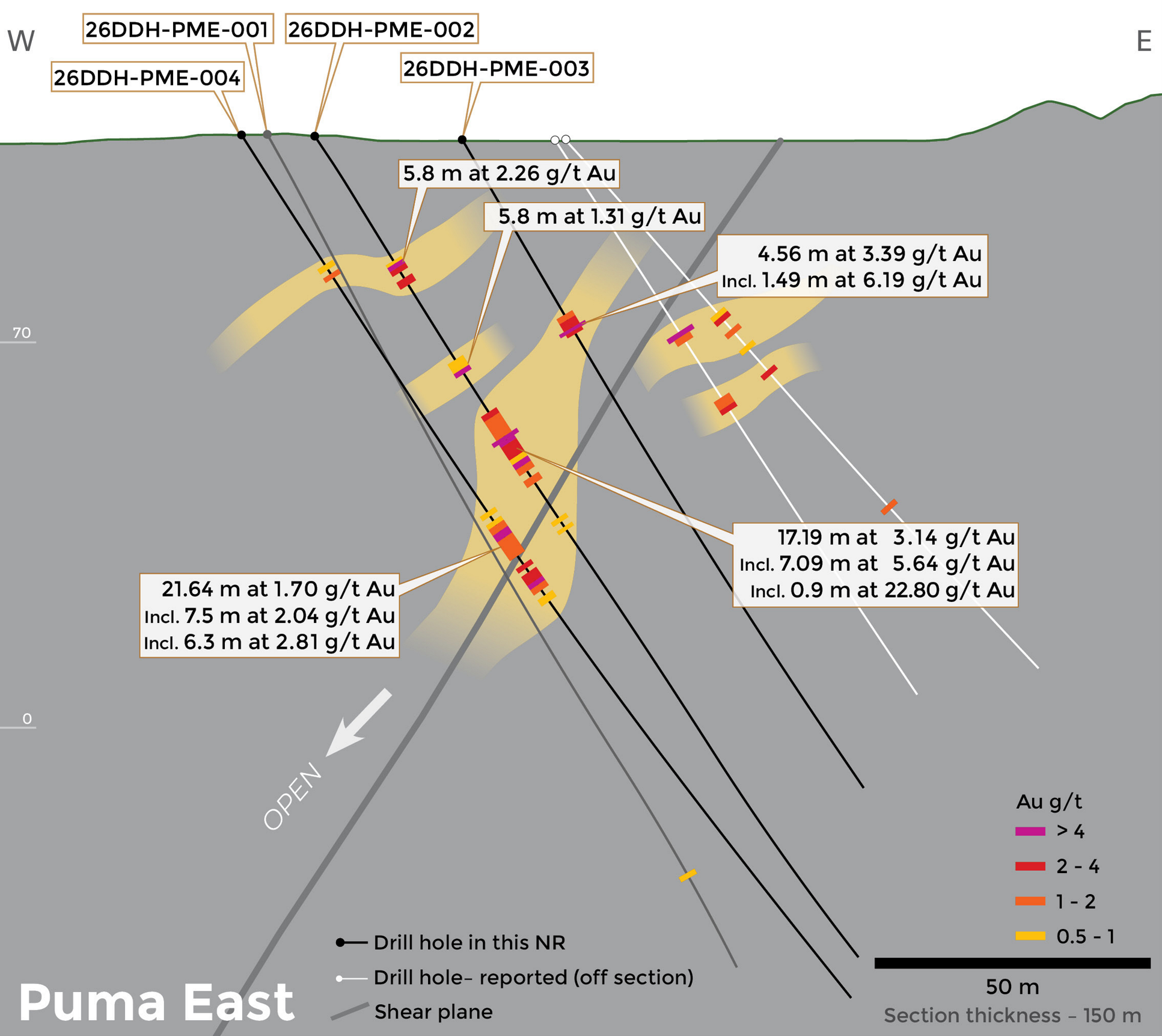
- The strongest Puma East hole so far is 26DDH-PME-002, which returned 17.19 m @ 3.14 g/t Au from 67.31 m, including 7.09 m @ 5.64 g/t Au and 0.9 m @ 22.8 g/t Au. The same hole also returned additional mineralized intervals of 5.8 m @ 2.26 g/t Au and 5.8 m @ 1.31 g/t Au, suggesting that gold mineralization is not limited to one narrow intercept.
- Hole 26DDH-PME-004 added another strong interval of 21.64 m @ 1.7 g/t Au, including 7.5 m @ 2.04 g/t Au and
6.3 m @ 2.81 g/t Au. - Hole 26DDH-PME-003 returned a higher-grade shear-hosted interval of 4.56 m @ 3.39 g/t Au, including 1.49 m @ 6.19 g/t Au.
The mineralized zones at Puma East are characterized by silica, biotite, chlorite and local white mica alteration, with quartz-pyrite veining and local pyrrhotite. The company notes that the host rocks, structural setting, alteration assemblage and vein styles are similar to those observed at Jons Trend.
Key take-away: Puma East looks geologically familiar. That matters because the first discovery in a district is often difficult. The second is more important than it may initially appear because it suggests the team may have a repeatable exploration model. In junior exploration, repeatability is everything.
Miata‘s CEO, Dr. Jacob “Jaap“ Verbaas, framed the significance clearly in today‘s news:
“Puma East is an exciting new discovery that demonstrates significant gold mineralization in bedrock exists well beyond the Jons Trend-Big Berg Corridor. Based on geological mapping and our drilling to date, we believe there is the potential to unlock a second major corridor of mineralization at the Puma Trend, similar to the Jons Trend-Big Berg corridor. Our drilling in this exciting second discovery area continues while several holes from the first discovery area are pending assays. Our operational momentum is building. Discovering another mineralized system 3 km away that shares many of the same geological characteristics as Jons Trend gives us increased confidence in our exploration model and its ability to identify additional high-priority drill targets across the 14 km artisanal mining trend that extends through the 215 km2 Sela Creek Gold Project. Several priority targets are still untested by drilling, and we believe Sela Creek remains in the early stages of demonstrating the full extent of its district-scale gold endowment.”
The most powerful part of today‘s news is therefore not only the grade. It is the distance. Puma East is about 3 km away from the more advanced Jons Trend-Big Berg Corridor. If the geological similarities continue to hold up with additional drilling, Sela Creek may be showing the early footprint of a broader gold district.
THIS DISCOVERY IS SIGNIFICANT
Most investors do not need a detailed lecture on shear zones, fold hinges and alteration assemblages. What they need to understand is why a single batch of drill results changes the story.
Puma East is significant for 4 reasons:
- Scale potential: A single zone can be valuable, but a project with several mineralized centres can attract a different kind of market attention. Exploration stories often become more compelling when the market starts to see that one discovery area may become several mineralized centres, or that one corridor may become a broader district. Today‘s news gives Miata a stronger argument that Sela Creek is moving in that direction.
- Proof of concept: Miata‘s team appears to be using surface mining footprints, mapping, structural interpretation and drilling to identify places where bedrock gold may be present. Puma East now suggests that this method can work outside the main discovery area.
- Grade and width together: Investors often focus only on high-grade numbers, but grade without width can be less meaningful. Puma East delivered both: Broad intervals over more than 17 m and 21 m, with high-grade sub-intervals up to 22.8 g/t Au.
- Timing: Miata is in the middle of an active 25,000 m drilling program at Sela Creek, with 2 rigs active and ongoing drilling at Jons Trend and Puma East. The company reported that, to date in 2026, it had completed ~12,000 m of drilling across several targets, including Jons Trend, Big Berg, Puma West, Puma East, Stranger, Cambior and Golden Hand, with results pending for several recently completed holes. This means Puma East is not an isolated event at the end of a program. It is a new discovery emerging while the drill program is still active.
JONS TREND-BIG BERG: THE FIRST PROOF OF SCALE
Before Puma East, the central story at Sela Creek was the Jons Trend-Big Berg Corridor. This remains the most advanced part of the project, the area with the strongest drill definition so far and the foundation of the investment case.
Jons Trend delivered the first major proof that Sela Creek could host broad and high-grade gold mineralization in bedrock. In April 2026, Miata reported 23.75 m @ 5.73 g/t Au from hole 26DDH-JT-008, drilled ~250 m southeast of the earlier discovery hole of 35.6 m @ 3.04 g/t Au. The company stated that the result strengthened confidence in a continuous mineralized corridor defined over at least 750 m long by 300 m wide.
Big Berg then became the next major proof point. In March 2026, Miata reported that initial drilling at Big Berg had returned the strongest intercepts to date at Sela Creek at that time, including 96 m @ 1.41 g/t Au from hole 26DDH-BB-003.
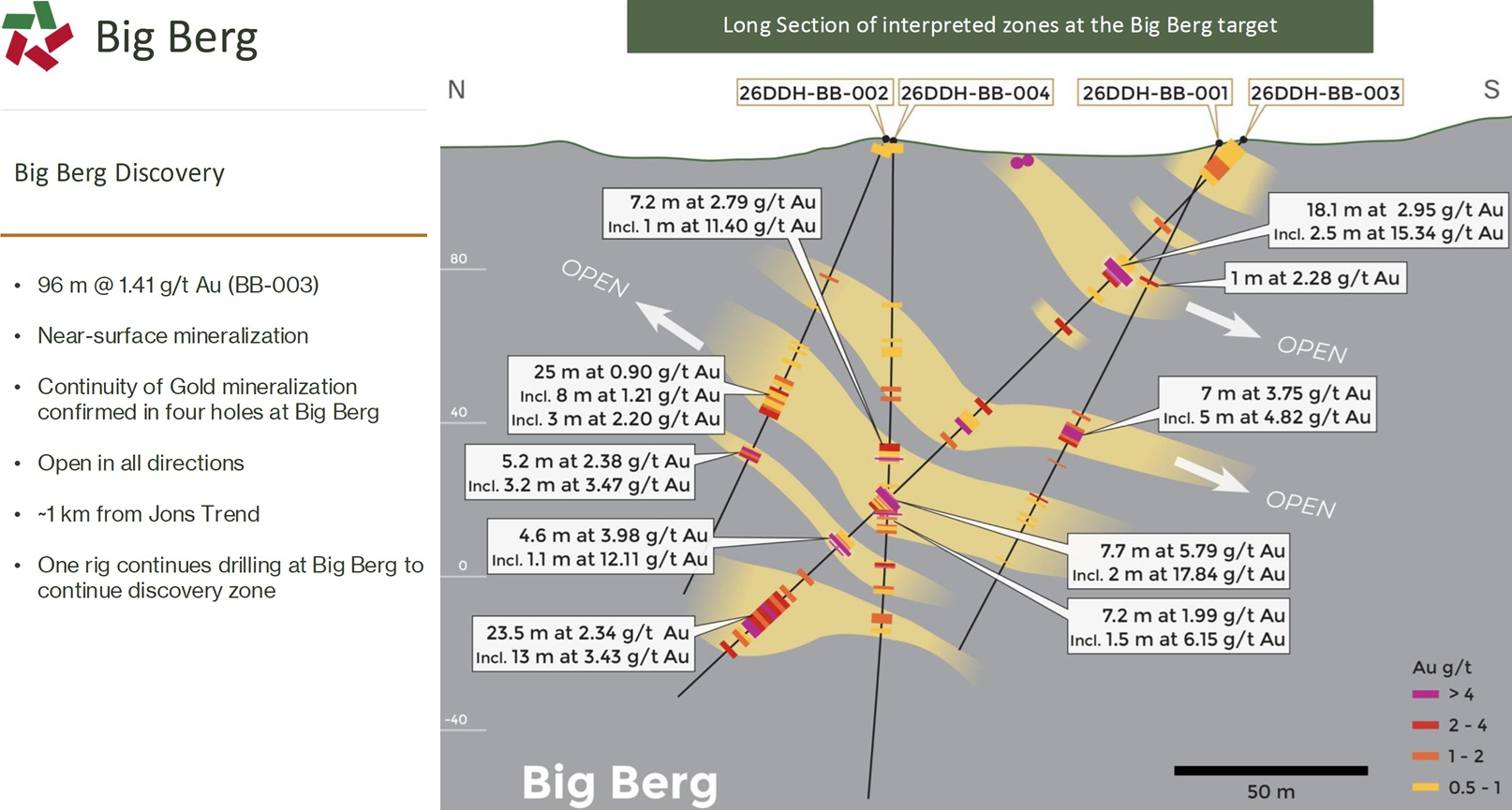
Miata described Big Berg as a new discovery located ~1 km southeast of Jons Trend and noted that the scale and geometry suggested it may form part of the same structural corridor as Jons Trend.
The progression matters: Jons Trend gave Miata scale, high grade and an emerging corridor. Big Berg showed that mineralization could repeat along that corridor. Puma East now raises the possibility that the same gold-forming system may repeat beyond it.
The June 23 drill results strengthened that concept. Miata reported that hole 26DDH-JT-016 extended Jons Trend to a vertical depth of 250 m, confirmed down-dip continuity across 5 known vein zones, discovered a deeper gold zone below the previous model and returned 63 m @ 1.44 g/t Au from 167 m.
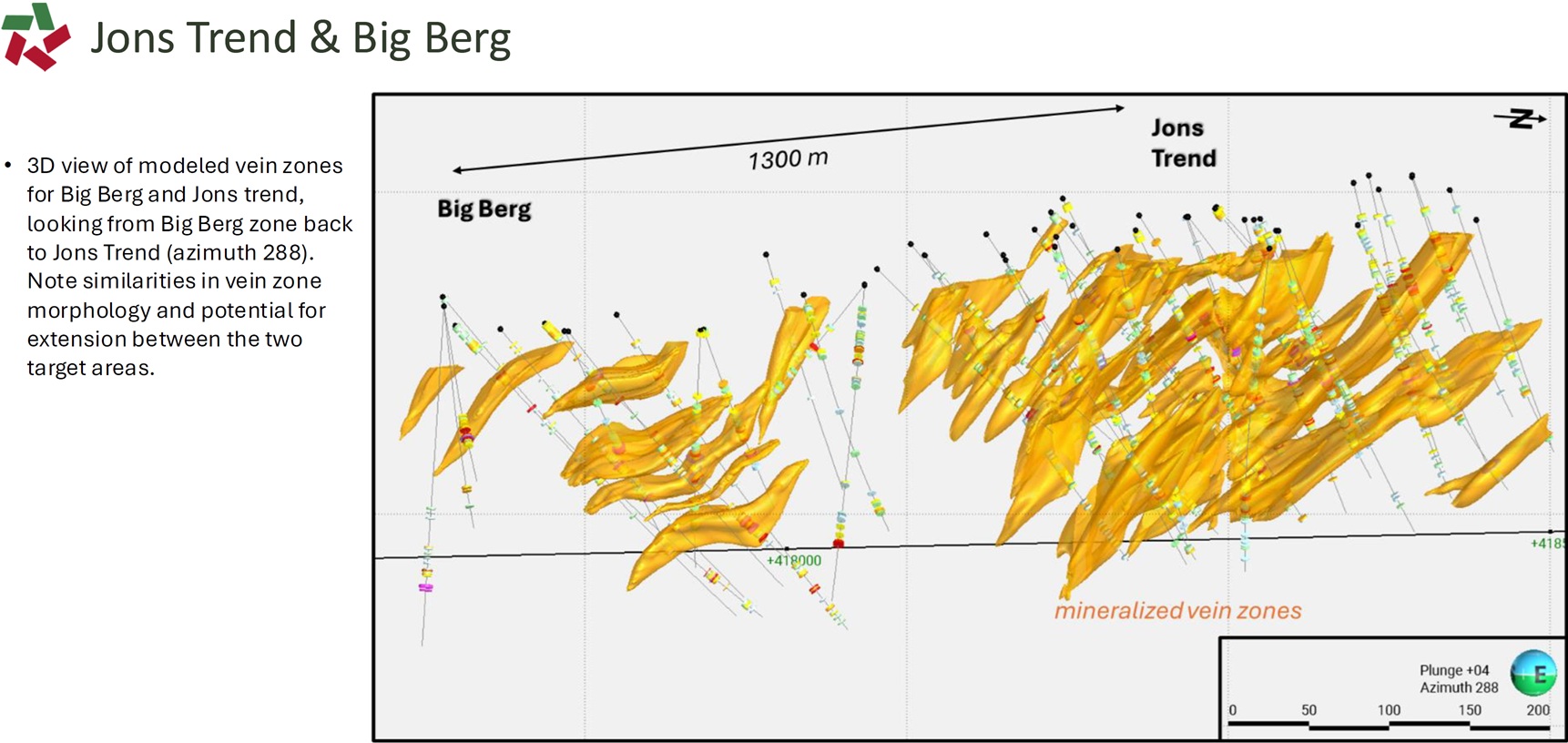
At Big Berg, holes 26DDH-BB-009 and 26DDH-BB-010 were drilled as ~20 m step-outs and extended the interpreted strike length and dip continuity of mineralized zones. Miata stated that the geological data increasingly supports the interpretation that Jons Trend and Big Berg may form part of a single mineralized corridor extending over ~1,300 m of strike length.
That sequence is now the core of the Miata story: Each new discovery is helping reveal whether Sela Creek is the early outline of a broader gold district, with multiple mineralized centres emerging across a large and still underexplored project area.
FROM ARTISANAL GOLD TO MODERN DISCOVERY
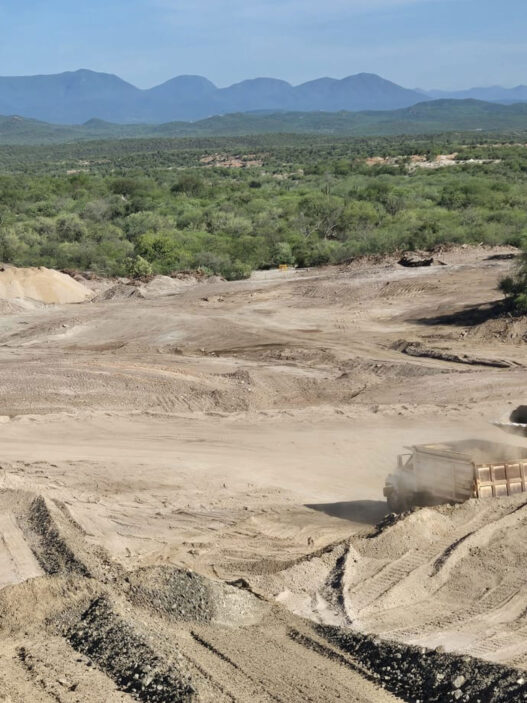
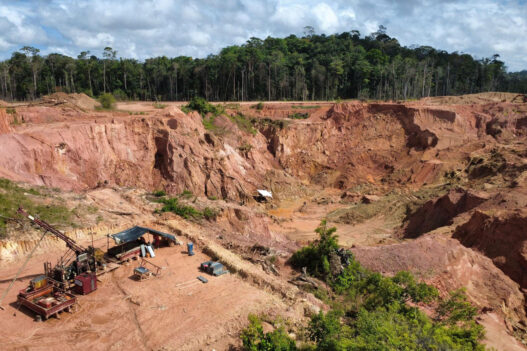
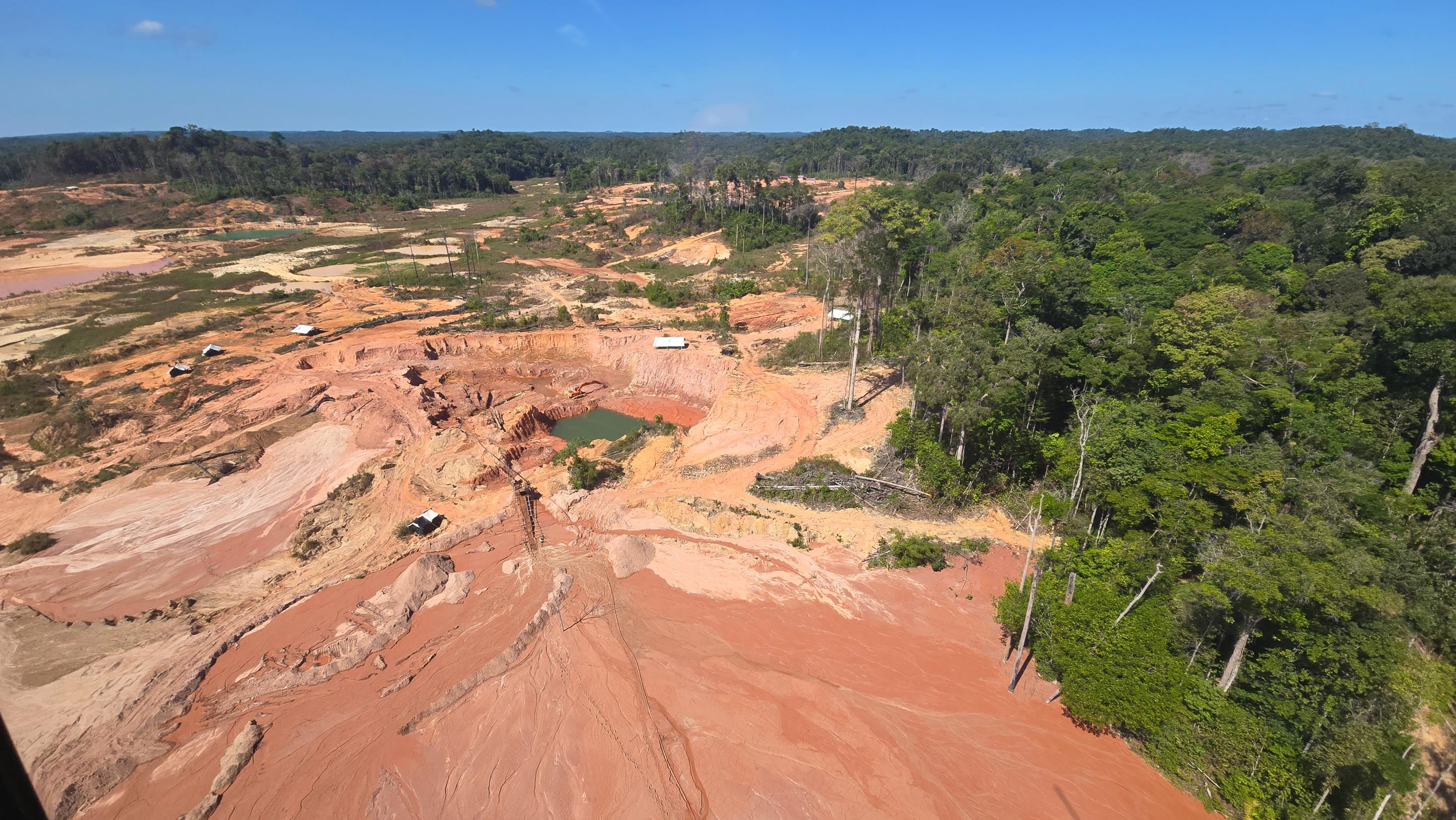
The story of Sela Creek begins long before Miata arrived. The project area has been mined for alluvial gold and is currently mined for gold in weathered bedrock known as saprolite. Local miners reportedly began small-scale mining at Sela Creek around 1920-1930, making it one of the earliest known gold occurrences in the Tapanahony River area. Past and current mining and production span an area of ~30 km², yet only limited exploration for gold in bedrock has taken place.
One of the most important investor take-aways: The artisanal miners did not create the gold system. They exposed it. In tropical gold terrains, artisanal workings can act as a surface map of where gold has been concentrated by weathering and erosion. For a modern exploration company, those workings can provide clues to where the bedrock source may be found.
Miata‘s corporate presentation summarizes the core geological argument clearly: Sela Creek sits near major structures that can act as conduits for gold-bearing fluids; secondary splays can focus gold deposition at the target scale and the large artisanal mining footprint is a classic vector toward a larger gold system in tropical regions.
In other words: Gold at surface is the starting clue; drilling is now testing whether that footprint connects to a much larger bedrock system underneath.
The Technical Report adds further context: It states that gold mineralization at Sela Creek is observed within a northwest-trending corridor with a strike length of over 7 km through the central part of the property. The report also notes that Miata has defined more than 30 target zones for systematic exploration and that mineralization is spatially associated with faulted contacts between different rock units.
This is why today‘s drill results from Puma East matter so much: Seen in the context of Sela Creek’s growing target pipeline, today‘s assays add another important piece of evidence that multiple targets across the property may be related expressions of a broader gold-forming environment.
RARE DISTRICT-SCALE UPSIDE
Many junior exploration companies tell investors they have “district-scale potential“. Fewer have early evidence that supports the claim.
Sela Creek has several characteristics that make the district-scale argument credible:
- A long history of surface mining over a large area. Past and current mining and production span approximately 30 km², yet despite this extensive production, only limited bedrock exploration has taken place.
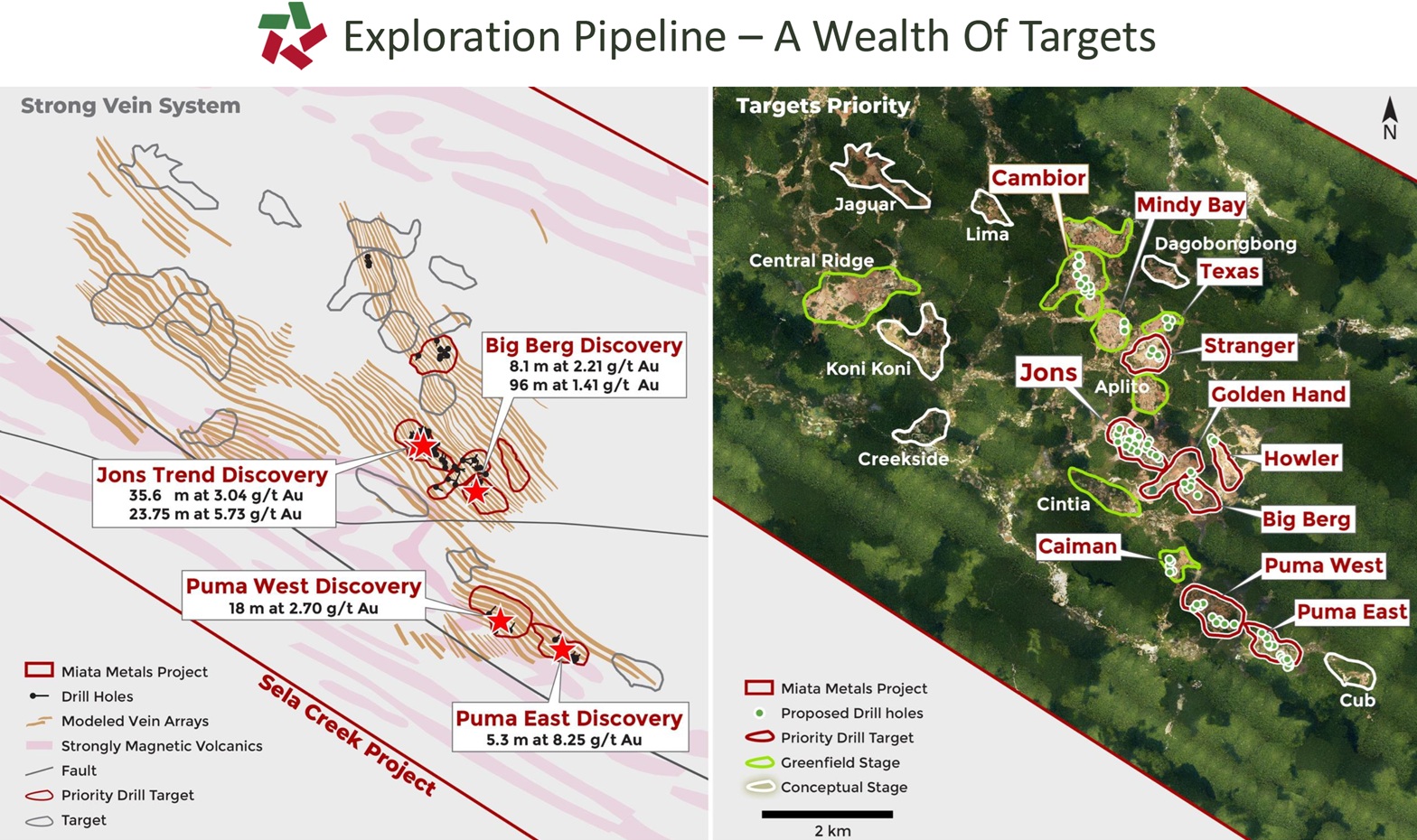
- A large and diverse target pipeline. The Technical Report notes that Miata has defined more than 30 target zones for systematic exploration. This gives the company a deep pipeline, which is important because district-scale discoveries rarely emerge from a single target. They emerge from repeated testing, interpretation and follow-up.
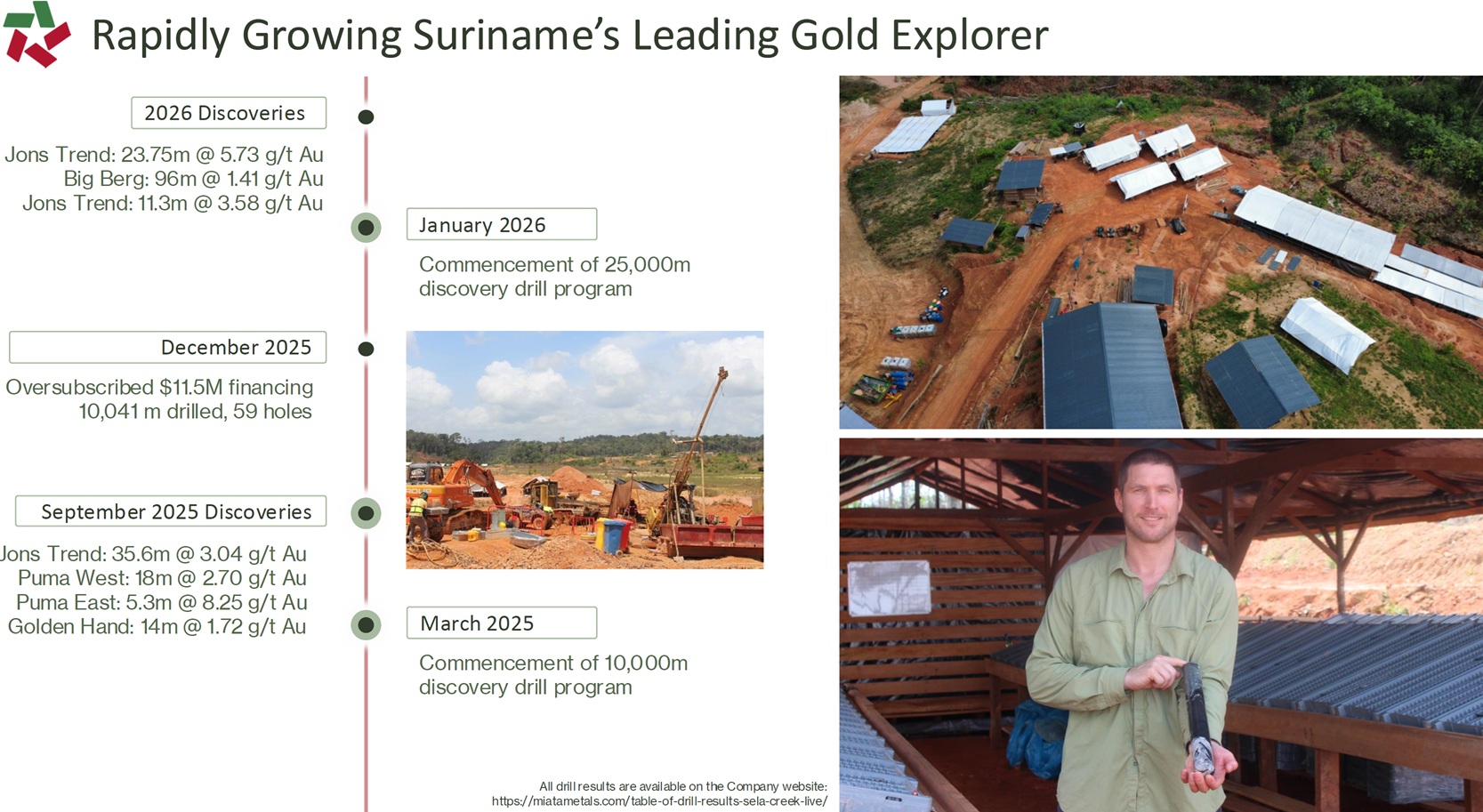
- Early drill success across several areas. Miata’s corporate presentation highlights discoveries and results across Jons Trend, Big Berg, Puma West, Puma East and Golden Hand, including Jons Trend at 35.6 m @ 3.04 g/t Au, Puma West at 18 m @ 2.7 g/t Au, Puma East at 5.3 m @ 8.25 g/t Au and Golden Hand at 14 m @ 1.72 g/t Au from the September 2025 discovery phase, followed by 2026 discoveries including Jons Trend at 23.75 m @ 5.73 g/t Au and Big Berg at 96 m @ 1.41 g/t Au.
- An improving technical model. Miata has repeatedly emphasized that it is refining its understanding of the geometry, scale and controls of the system. The May 28 news stated that ongoing drilling at Jons Trend and Big Berg had expanded the footprint of mineralization and that refined geological modeling confirmed continuity across a broad structural corridor with multiple growing zones of mineralization.
That is exactly what investors want to see in an early-stage gold story: Not only isolated hits, but an exploration team that is getting better at predicting where to drill next, refining its geological model and consistently converting new targets into meaningful drill success.
FROM DISCOVERY TO DISTRICT
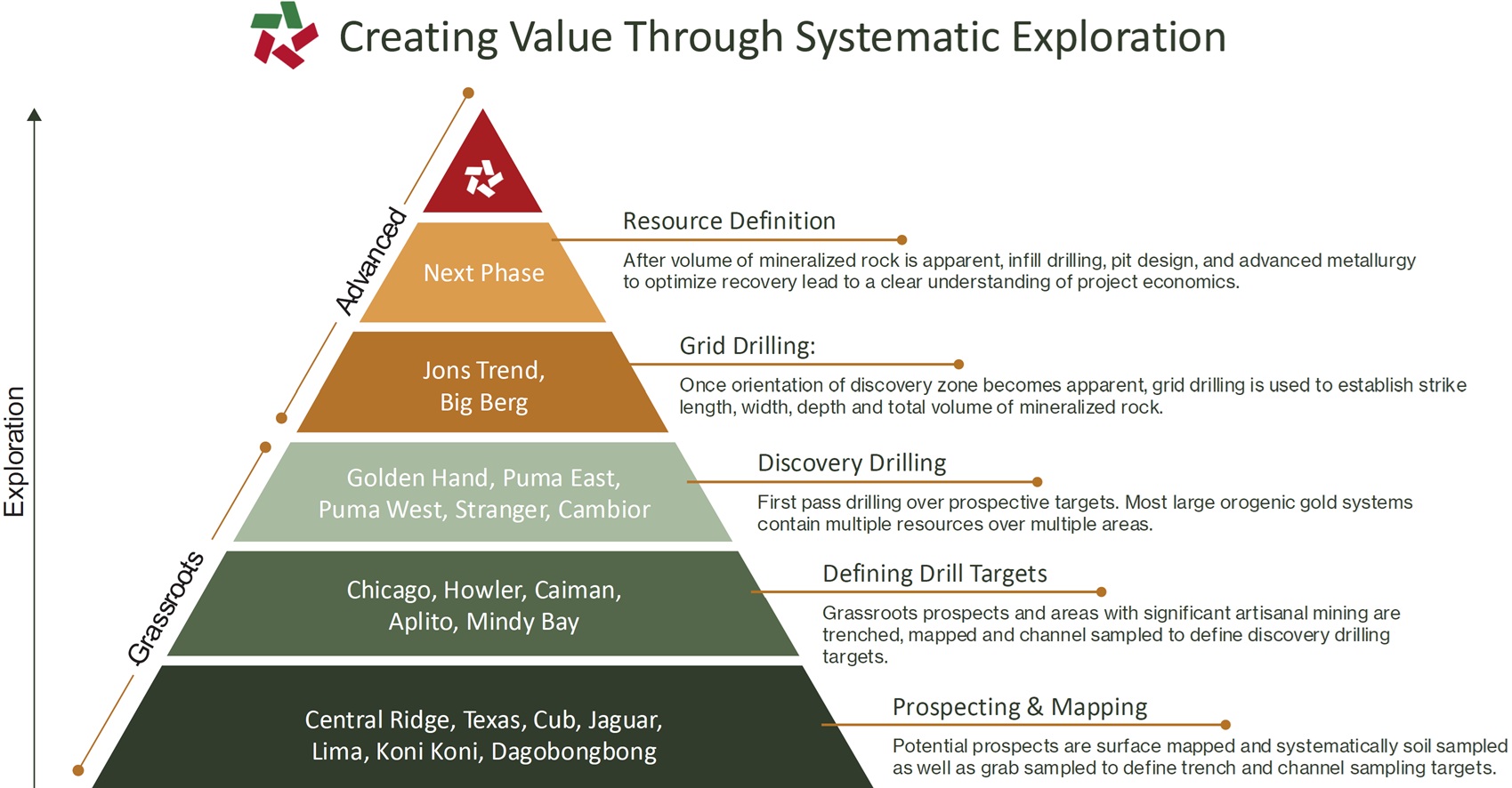
Rather than viewing Sela Creek as a single future mine, investors may find it more useful to think of it as an emerging gold camp. At this stage, the objective is not to define a single deposit, but to determine whether the geological system is capable of generating multiple mineralized centres across the property.
That is precisely the exploration thesis Miata is testing. Each new discovery helps determine whether Sela Creek represents a single mineralized trend or a much larger mineralizing system capable of generating multiple centres across the district, expanding the project‘s long-term potential.
It is still early days, but the growing number of discoveries across different parts of the property increasingly supports the latter interpretation. Whether every target evolves into a deposit remains to be seen. However, this is the progression investors typically look for in exploration projects with genuine district-scale potential.
THE SIGNIFICANCE OF BEING EARLY
Miata is not yet at the resource-definition stage. That is a risk, but it is also the opportunity. In the junior exploration cycle, the largest upside often occurs before a first resource estimate, when the market begins to recognize scale but before the system has been fully quantified.
At Sela Creek, the company is still moving through the discovery and expansion phase. The 2026 drilling is designed to advance Jons Trend, test continuity at Big Berg, follow up new zones such as Puma East and continue testing a broader pipeline of targets across the project.
Miata‘s February 2026 update described the 25,000 m drill program as designed to move the company from discovery success to scale and potential multi-zone growth. Today’s results are highly important because they fit that strategy directly. Puma East adds a new discovery front, expands the footprint of known bedrock gold mineralization and gives investors a fresh area to watch as Miata continues moving Sela Creek from early discovery success toward broader resource-definition potential.
From here, the key questions are straightforward:
- Will Puma East expand along strike and at depth?
- Will the Puma Trend become a second major corridor?
- Will additional targets across the 14 km artisanal trend deliver more bedrock discoveries?
- Will Jons Trend and Big Berg continue to grow into a coherent resource-scale system?
- Will Miata‘s structural model continue to improve drill targeting?
Only more drilling can answer those questions, but the evidence now emerging at Sela Creek makes the next chapter unusually compelling. Miata has moved beyond proving that gold exists on the property; it is now testing how far the system extends, how often it repeats and how many mineralized centres it may ultimately support.
If follow-up drilling continues to confirm scale, continuity and repeatability at Puma East, Jons Trend, Big Berg and other targets, today’s Puma East discovery may be remembered as the point when Sela Creek began to reveal its broader district-scale potential.
SURINAME: A PROVEN GOLD COUNTRY
For investors encountering Miata for the first time, Suriname may sound remote. It should not sound speculative. This is already a gold-producing country, already home to major international mining companies and already recognized as part of one of the world‘s great but still comparatively underexplored gold provinces: The Guiana Shield.
Miata is not entering a country with no mining history and asking investors to believe that gold might one day become relevant there. Gold is already central to Suriname’s economy. The World Gold Council’s Suriname country profile lists 2024 gold output at 0.5 million ounces, total revenue at 1.237 billion USD, total in-country payments at 849 million USD and gold export value at 75% of exports. It also lists 4,384 people in the total workforce in Suriname, including 3,137 employees and 1,247 contractors.
In other words, gold is not a side story in Suriname. It is a national industry. This matters for Miata because major discoveries are easier for the market to understand when they occur in a jurisdiction where large gold mines already operate. Suriname has producing mines, skilled labour, service providers, drilling experience, assay laboratories and a population familiar with mining.
THE GUIANA SHIELD DESERVES INVESTOR ATTENTION
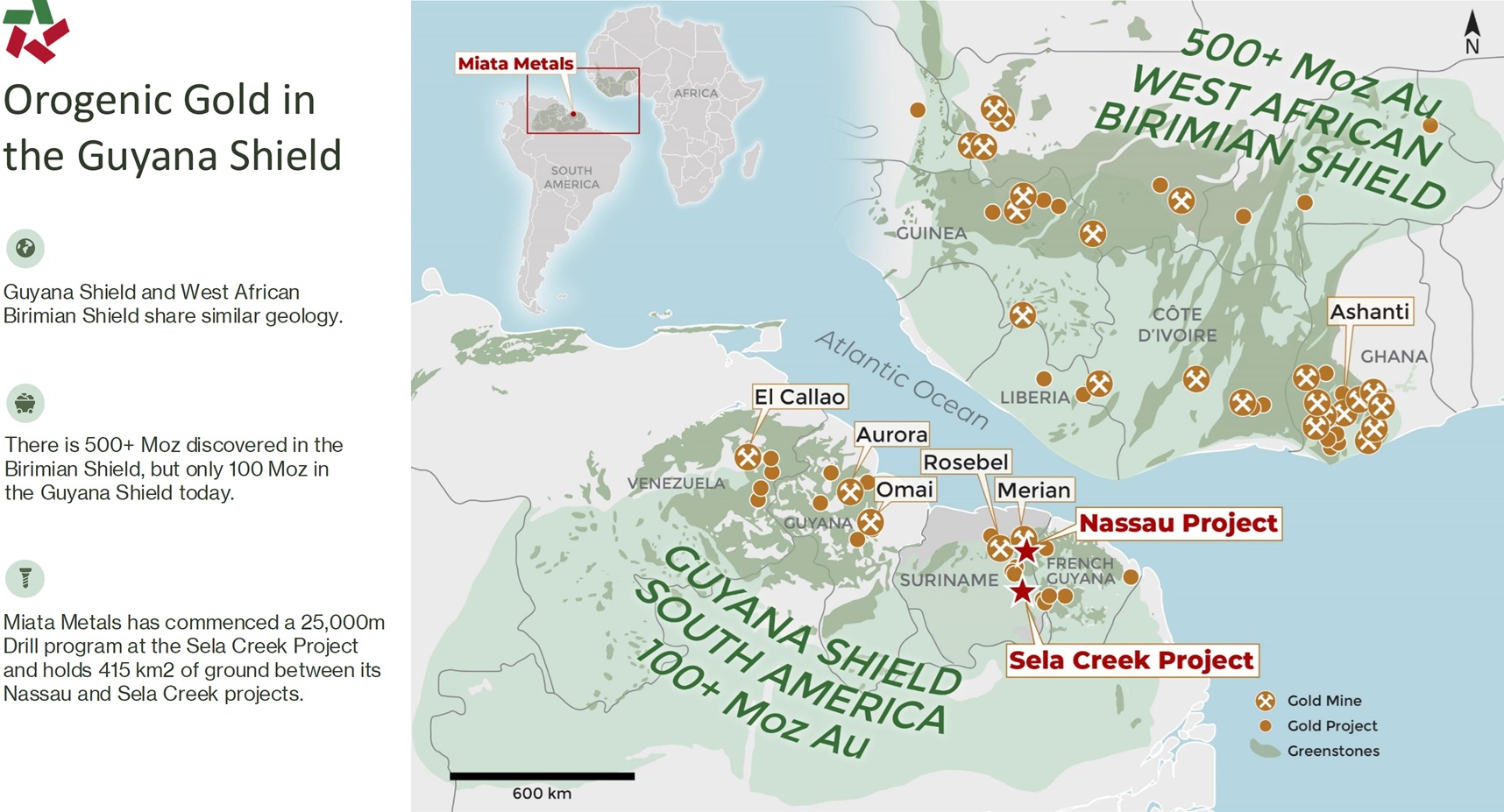
The Guiana Shield stretches across parts of Venezuela, Guyana, Suriname, French Guiana and northern Brazil. It is made up of ancient rocks that formed during major mountain-building events more than 2 billion years ago.
For gold investors, the key point is that these rocks are geologically related to the West African Birimian Shield, one of the world‘s most productive gold provinces.
This comparison should be handled carefully. It does not mean every project in the Guiana Shield will become a mine. It does not mean Sela Creek will host the same size or grade as famous West African gold camps. But it does mean the geological setting is capable of producing large orogenic gold systems. That is the reason major companies, successful juniors and local miners are all active in this region.
The Sela Creek Technical Report explains the same idea from a technical perspective: Rocks of the Guiana Shield correlate with terranes in the circum-South Atlantic continents that were connected before the Atlantic Ocean opened, and this age of rocks is a major source of gold production and resources in both eastern South America and West Africa.
Suriname sits on the underexplored side of a gold-bearing geological system that has already produced many major discoveries elsewhere. That is the larger geological opportunity Miata is chasing.
MAJOR GOLD OPERATORS ALREADY VALIDATE SURINAME
Suriname‘s most important gold mines are operated by global mining companies. This gives the jurisdiction a level of credibility that many frontier exploration stories lack.
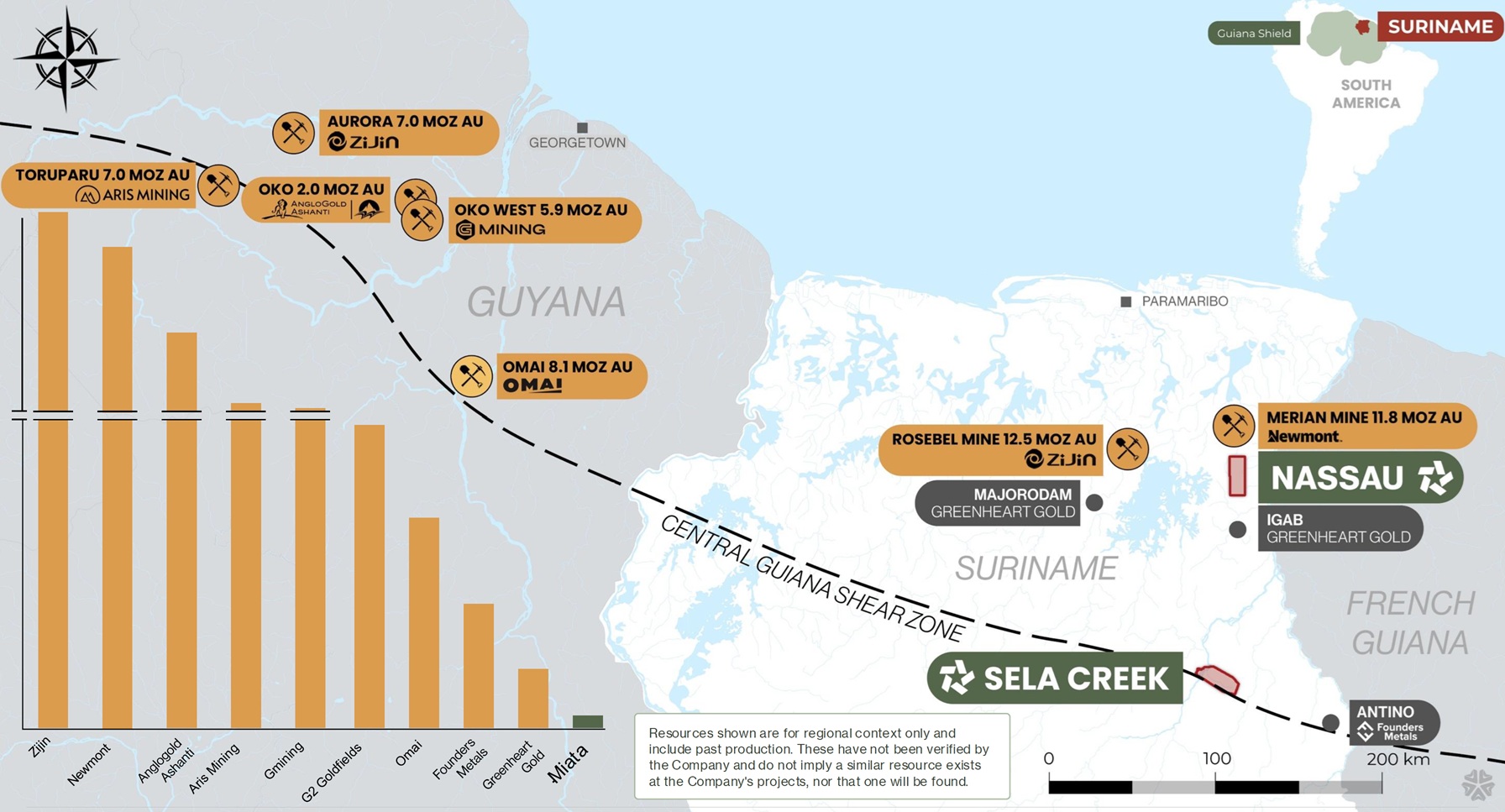
- Newmont‘s Merian operation in northeastern Suriname is an open-pit gold mine ~66 km south of Moengo and 30 km north of the Nassau Mountains. Newmont owns 75% of the limited partnership and Staatsolie, Suriname‘s state-owned oil company, owns the remaining 25%. Commercial production was achieved in October 2016. Newmont lists Merian‘s annual gold production at 178,000 ounces, with reserves of 4.5 million ounces of gold and resources of 3.9 million ounces of gold.
- Zijin Mining‘s Rosebel Gold Mine is another major Suriname operation. Zijin’s 2025 annual results state that Rosebel produced ~267,000 ounces of gold and that planned throughput expansion at the Rosebel processing plant and construction of a new processing plant in the Saramacca mining area are expected to increase annual ore processing capacity from 8 million tonnes to 18 million tonnes.
- Founders Metals‘ Antino Gold District provides a highly relevant benchmark for Miata: A fast-growing junior exploration success story in Suriname that has already reached a market capitalization of 484 million CAD as of July 2026. Founders describes Antino as its flagship project and a district-scale gold exploration opportunity in southeastern Suriname, within the Guiana Shield. The company controls a 1,024 km² contiguous land package, and states that historical surface and alluvial mining within the district has produced more than 500,000 ounces of gold.
The presence of Newmont, Zijin and Founders creates an important backdrop for Miata. Suriname is not a blank space on the gold map. It has producing mines, major companies, successful exploration districts and a growing investor audience for Guiana Shield gold stories.
THE NEIGHBOR EFFECT: ANTINO SETS THE BENCHMARK
Newmont and Zijin validate Suriname as a production jurisdiction. Founders validates the modern junior exploration opportunity. A major gold producer like Newmont or Zijin demonstrates that large mines can be built and operated in Suriname. A junior explorer like Founders demonstrates that the market is willing to reward new discoveries and district-scale exploration success in the country.
For Miata, this is an important precedent. Founders‘ Antino success has helped educate the market about Suriname, the Guiana Shield, artisanal mining footprints, greenstone belts and orogenic gold systems.
The Sela Creek Technical Report explicitly places Sela Creek and Antino in a similar regional structural context, noting that the Sela Creek and Antino gold districts occur on the Central Guiana Shield Shear Zone. It also includes a regional DEM figure showing the Central Guiana Shield Shear Zone relative to Sela Creek and Antino, with the interpretation that at Sela Creek 2 strike-slip fault strands may overlap to create an extensional or pull-apart basin suitable for gold-rich fluids.
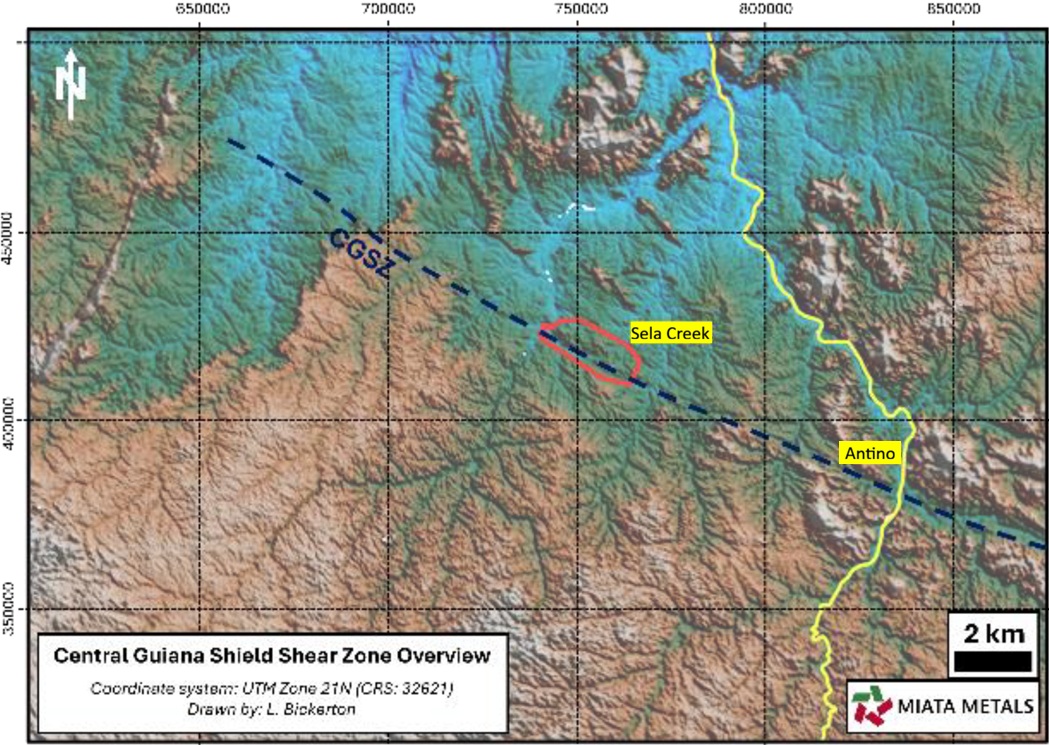
In gold exploration, structure is plumbing. Major faults and shear zones can act like deep fluid highways. Secondary splays, folds and pull-apart zones can become the traps where gold is deposited.
The Technical Report‘s interpretation of Sela Creek is therefore important: The project is not simply located in a gold country; it is positioned in a structural setting that may have focused gold-bearing fluids into multiple target areas.
SURINAME IS UNDEREXPLORED, BUT NOT UNDEVELOPED
One of the strongest arguments for Miata is that Suriname combines 2 features that rarely come together: A proven gold endowment and an underexplored modern discovery pipeline.
Miata‘s acquisition rationale emphasized that Suriname is home to multiple producing gold mines and mature development projects, but remains relatively underexplored compared with more intensively explored gold belts in the Guiana Shield and West Africa.
Suriname is not “frontier“ in the sense of being unproven. It is frontier in the sense that much of its greenstone belt potential has not yet been tested with the intensity seen in West Africa, Canada or Australia.
At Sela Creek, the setup is compelling: Decades of surface mining have revealed a large gold footprint, while modern drilling is only now beginning to test the bedrock system underneath. Local miners found the surface gold; Miata is now using modern exploration tools to test whether that footprint connects to a broader bedrock system.
That is also why Miata’s technical language matters: When investors see repeated references to shear zones, fold hinges, quartz-pyrite veining, visible gold, alteration and structurally controlled mineralization, these should not be dismissed as routine geological details. At Sela Creek, they are the clues that may show whether surface gold, drill results and multiple targets are part of one broader, repeatable gold system.
The key point from the Technical Report is simple: Sela Creek is best understood as a cluster-style orogenic gold system, where repeated structures may generate repeated targets across a large mineralized footprint – exactly the kind of model now being tested at Jons Trend, Big Berg, Puma East and beyond.
COMMUNITY RELATIONS: A CRITICAL PILLAR IN SURINAME
Suriname‘s interior is not only a geological landscape; it is a human landscape. Exploration companies need strong relationships with local and traditional communities. Miata has made this a visible part of its strategy.
In May 2026, Miata announced an MOU with the Okanisi People through the Okanisi Development Fund for the Sela Creek Project. The release states that the Okanisi, also known as the Ndyuka Maroon People, are one of Suriname’s major Maroon communities, live mainly along the Tapanahony River and assert traditional rights over an area encompassing Sela Creek. The MOU was approved by the Gaaman, the highest traditional authority among the Okanisi People, and establishes a framework for sustainable development, transparency and ongoing dialogue.
The same news states that since acquiring Sela Creek in 2024, Miata has maintained a collaborative relationship with Okanisi communities in the Upper Tapanahony River area, including preferential employment and contracting of Okanisi people and service providers, and that the majority of Miata‘s exploration field team is Okanisi.
Miata’s work with the Okanisi People should be viewed as a practical operating advantage and an important part of the Sela Creek story. The project sits in an area with traditional rights, active artisanal mining and local communities that understand gold. A company seeking to drill year-round, build trust and ultimately advance a project in this setting must pair exploration success with durable local relationships. Miata appears to have recognized that early.
THE STRATEGIC VALUE OF NASSAU
Sela Creek is the discovery engine driving Miata today, but Nassau gives the company a second strategic foothold in Suriname’s gold belts. Together, the 2 projects provide Miata with a broader national platform in a country where major gold systems have already been discovered, developed and mined.
Miata currently holds a 70% beneficial interest in the Nassau Gold Project with an option to acquire 100%, in addition to its 70% interest and 100% option at Sela Creek. Both projects are located within the greenstone belt of Suriname, giving the company exposure to 2 gold assets in the same broader geological setting.
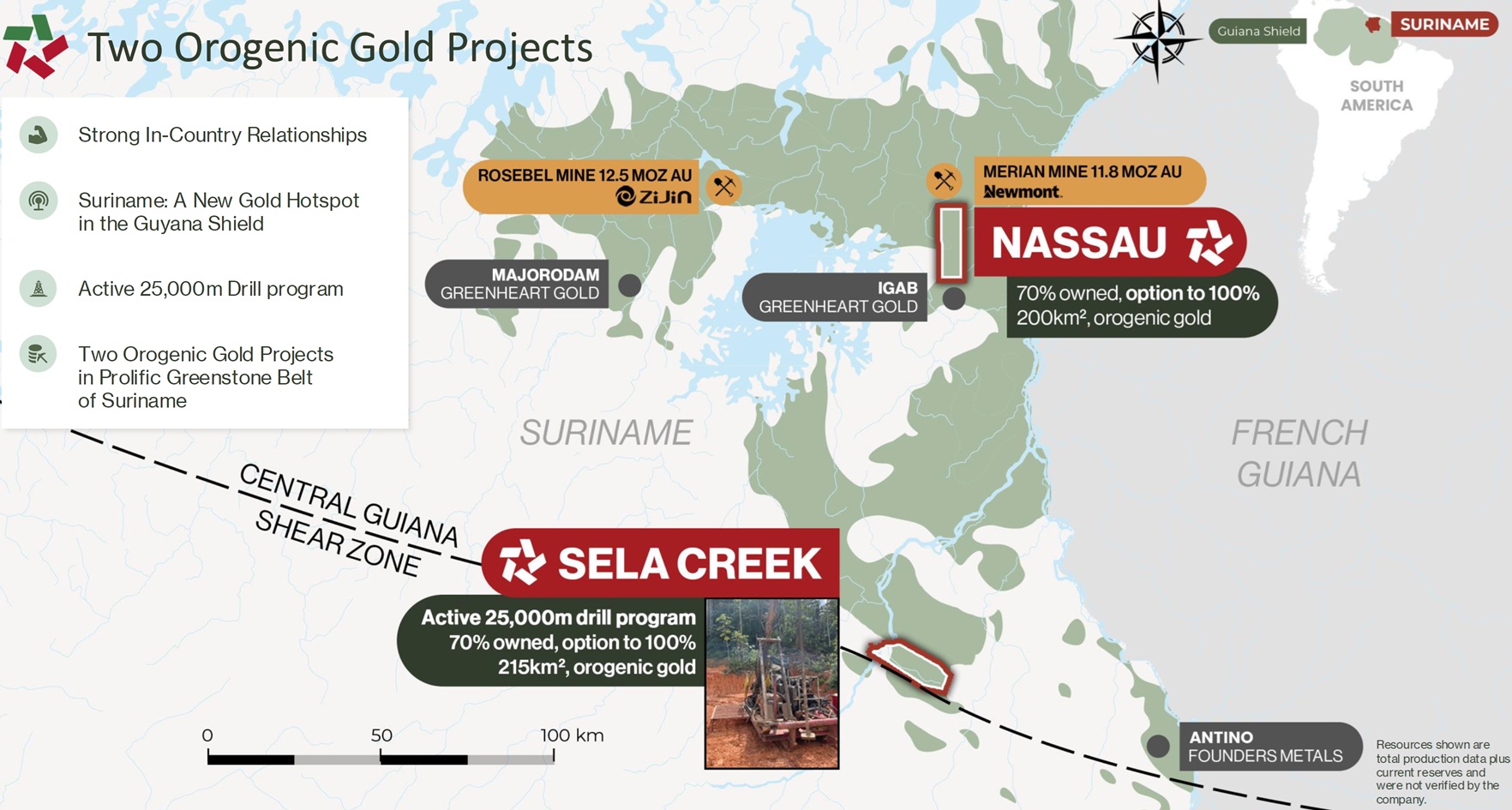
In June 2025, Miata announced an option agreement to increase its ownership of Nassau from 70% to 100%. At the time, CEO Dr. Jaap Verbaas said the transaction would give Miata potential 100% ownership of both Sela Creek and Nassau, providing greater strategic control over the company’s Suriname gold portfolio.
The same release described Nassau as being on trend with the producing Rosebel and Merian gold mines, road accessible and close to important infrastructure. Nassau also hosts widespread alluvial mining, exposed vein sets and selected historic high-grade drill intercepts, pointing to a prospective bedrock system that still requires modern, systematic follow-up exploration.
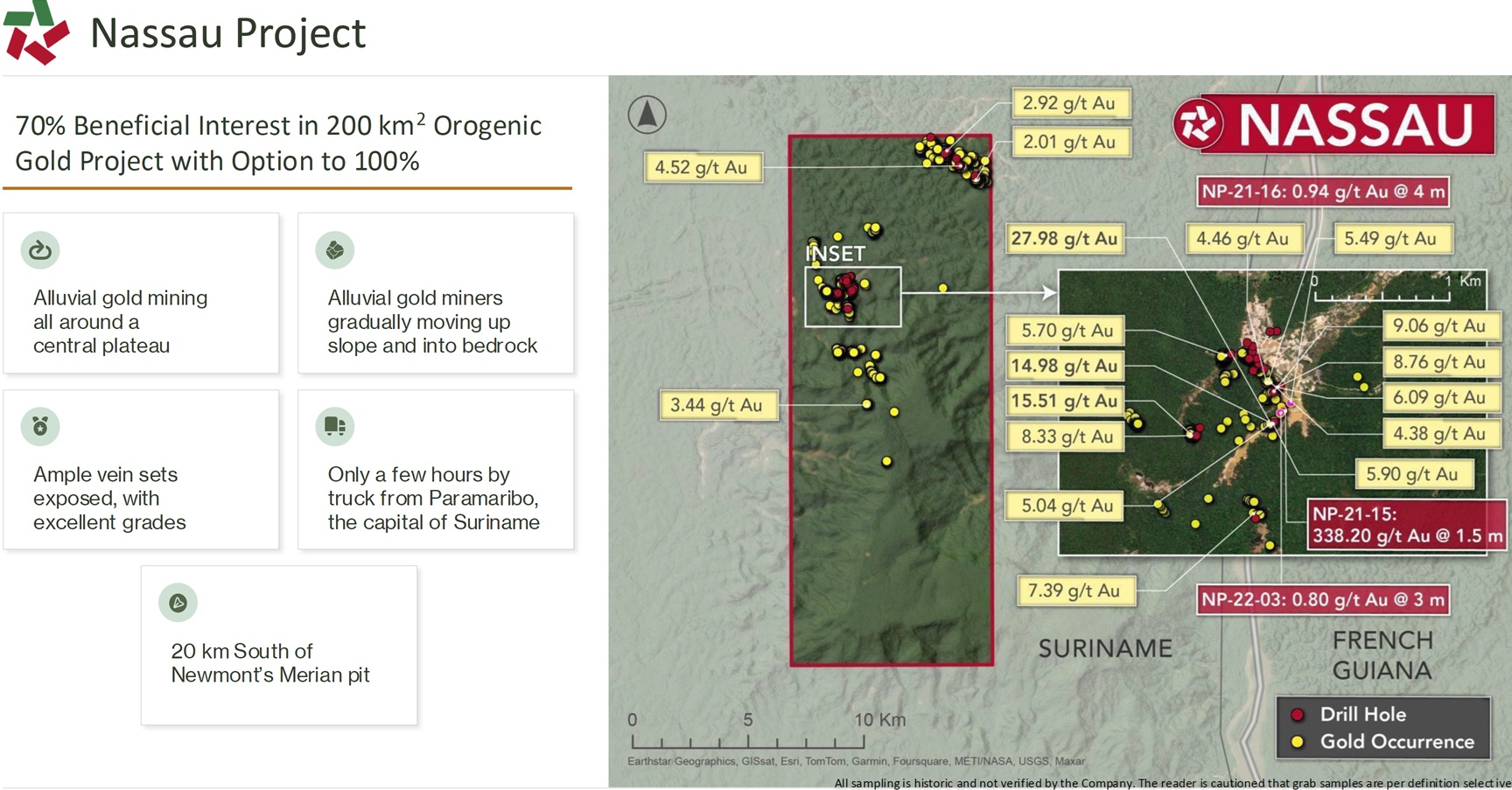
For now, Sela Creek remains the clear focus. That is where Miata is drilling, making discoveries and building the strongest near-term exploration story.
However, Nassau adds something different: Longer-term optionality, a second land position in a proven gold country, and a broader platform from which Miata can continue building its identity as an emerging Suriname-focused gold explorer.
If Sela Creek continues to deliver, Nassau may become increasingly important as part of a larger strategic picture. A company with one successful project can attract attention; a company with a broader portfolio in the same gold-endowed jurisdiction can begin to build a more durable exploration platform.
For Miata, Nassau strengthens that platform without distracting from the main event at Sela Creek.
EXPLORATION CATALYSTS: NEXT SIGNALS TO WATCH
The Miata story now enters a catalyst-rich phase. Puma East needs follow-up drilling. Jons Trend and Big Berg need continued expansion and eventual resource-style definition. Several targets across Sela Creek remain underdrilled or untested.
The company has already completed ~12,000 m of drilling in 2026 across Jons Trend, Big Berg, Puma West, Puma East, Stranger, Cambior and Golden Hand, with assays pending for recently completed holes.
The key question for investors is no longer whether Miata can find gold at Sela Creek. It can. The question now is whether continued drilling can demonstrate the scale, continuity and repeatability needed to move Sela Creek toward future resource estimates. That is the next major step in the project’s evolution — and the phase that may allow investors to compare Miata more directly with other discovery-stage and resource-stage gold companies in Suriname, the Guiana Shield and the broader junior gold sector.
Catalyst 1: Puma East follow-up drilling
The most immediate catalyst after today‘s announcement is more drilling at Puma East. The first 4 holes of 2026, announced today, established the discovery. The next holes must begin to answer the scale question. Investors should watch for step-outs along strike, deeper drilling below the initial intercepts and whether the same style of mineralization continues beyond the first tested area.
Puma East has now graduated from target to discovery. The next question is whether it can graduate from discovery to corridor. If follow-up drilling extends mineralization along strike and at depth, Puma East could become the most important new front at Sela Creek since Big Berg.
Catalyst 2: The Puma Trend as a possible second corridor
The most important language in today‘s news is not only “Puma East“, but the phrase “second major corridor“. Based on geological mapping and drilling to date, Miata believes there is potential to unlock a second major corridor of mineralization at the Puma Trend, similar to the Jons Trend-Big Berg Corridor.
A single corridor can support a deposit-scale story. 2 corridors can support a district-scale story. Puma East matters because it may represent the first drill-confirmed step toward that second corridor.
Catalyst 3: Continued growth at Jons Trend
Jons Trend remains Miata‘s foundation. It is the area most likely to form the backbone of a future initial resource if drilling continues to demonstrate continuity. Big Berg and Puma East add district upside, but Jons Trend remains the anchor that gives the story its centre of gravity. Investors should watch whether continued drilling converts Jons Trend from a discovery zone into a coherent resource-scale system.
Catalyst 4: Big Berg and the 1,300 m corridor concept
Big Berg is the discovery that turned Jons Trend from a standalone discovery into the first piece of a potential corridor. The next stage is to test whether the areas between and around Jons Trend and Big Berg can support the 1,300 m corridor concept. If drilling continues to fill in the geological picture, the market may begin to view the Jons Trend-Big Berg system not as 2 isolated discoveries, but as a growing mineralized corridor.
Catalyst 5: Golden Hand, Cambior, Puma West and the broader pipeline
The market will understandably focus on Jons Trend, Big Berg and Puma East. However, one of the hidden strengths of Sela Creek is the size of the broader target pipeline. A district is not built on a single target, but through repeated discovery, testing and refinement across multiple centres.
Catalyst 6: Pending assays and investor communication
Today‘s news notes that results remain pending for several recently completed holes and that Miata will host a live investor webinar on July 14, 2026.
Investors should listen for 3 things: How Miata prioritizes Puma East follow-up drilling, how management now views the relationship between Puma East and the Jons Trend-Big Berg Corridor and whether pending assays could further support the multi-centre thesis at Sela Creek.
THE MANAGEMENT TEAM: BUILT FOR THIS TYPE OF DISCOVERY
For early-stage exploration companies, management is often as important as the project. This is especially true in a country like Suriname and in a geological environment like Sela Creek, where tropical weathering, artisanal mining, structural complexity and logistics all require specialized experience.

Dr. Jacob “Jaap“ Verbaas
CEO and Director
Jaap is a geologist with expertise in field geology, orogenic gold and IOCG deposits, with experience across brownfields and grassroots exploration. For Sela Creek, this background is highly relevant. The project is structurally controlled, meaning success depends on understanding folds, shear zones, rock contacts and how gold-bearing fluids moved through the system. Miata does not need a CEO who is only a promoter. It needs a CEO who can help interpret the geology and make better drill decisions. Jaap appears to fit that role.
Dr. Luke Bickerton
VP Exploration
Luke holds a Ph.D. in Mineral Deposits and Precambrian Geology and brings more than 13 years of experience in geological research and mineral exploration. This is useful because a project like Sela Creek needs technical depth, but it also needs a team that can communicate the model clearly enough for the market to follow.
John Wenger
CFO
John brings capital markets and public-company financial experience. He was VP Strategy and CFO of Contact Gold from 2017 until its acquisition by Orla Mining in April 2024. He also served as CFO and Corporate Secretary of Liberty Gold, where he was part of a management team that raised more than 100 million CAD and completed multiple property transactions and acquisitions. For an exploration company that may need repeated financing as it grows, this matters.

Danae Voormeij
Director
Danae has more than 20 years of gold exploration experience across Africa, the South Pacific and the Americas. She led the geological team that discovered Tuzon, a multimillion-ounce greenstone belt gold deposit in Liberia, and has published a textbook on exploring for gold in tropical landscapes. Her background fits Sela Creek almost perfectly: Greenstone gold, tropical terrain, field execution and large-scale exploration management.
Derk Hartman
Director
Derk adds another important layer: Suriname knowledge, project development and capital markets experience. He has more than 25 years of experience in mining and banking, including investment banking at BMO Capital Markets in London, where he advised mining companies on project finance and M&A. He also helped introduce modern exploration to the Sela Creek and Nassau projects in 2013.
James Reid and Danny Matthews
Capital markets and transaction experience
Miata’s board also includes James Reid and Danny Matthews, both associated with Three Peaks Capital. James brings capital markets, valuation and fundraising expertise, while Danny brings experience in law, corporate strategy, transactions and governance. If drilling continues to work, Miata will need to communicate effectively, fund exploration, negotiate from strength and evaluate strategic opportunities.
Miata‘s management and board are not oversized, but they are unusually relevant. The company has technical leadership, tropical gold exploration experience, Suriname knowledge, public-company finance and capital markets depth. For an early-stage discovery story, this is exactly the mix investors should want.
BOTTOM LINE
July 7 may mark the moment investors begin to think about Sela Creek in a new way. Until now, the central question was how large the Jons Trend-Big Berg Corridor could become.
With Puma East, that question expands: How many mineralized centres could Sela Creek ultimately host? That is a much larger and more exciting question. A district-scale gold system can only be proven with continued drilling, and Miata remains early-stage. Sela Creek does not yet have a mineral resource estimate. Puma East requires follow-up drilling. Jons Trend and Big Berg still need systematic definition. Metallurgy, permitting, infrastructure, community relationships and future financing will all remain important.
But early is where the opportunity begins. The best discovery stories often unfold step by step. First, one zone works. Then another appears nearby. Then the geological model begins to repeat. At that point, the story moves beyond a single discovery and toward the early outline of a gold camp. Miata may now be reaching that stage at Sela Creek.
Jons Trend gave Miata its first major proof of broad and high-grade bedrock gold mineralization. Big Berg suggested that mineralization could repeat along the same emerging corridor. Puma East now adds a new discovery ~3 km away, with broad mineralized intervals, local high grades and geological similarities to Jons Trend.
That combination gives today’s news its importance: Puma East strengthens the case that Miata’s exploration model may be repeatable across a larger system.
For investors, the message is clear: Miata is testing whether one of Suriname’s largest underexplored artisanal gold fields can become a modern, multi-centre bedrock gold district.
Suriname provides the right backdrop: A proven gold country with major operators and growing investor recognition.
Sela Creek provides the right project ingredients: Scale, surface gold, multiple targets, limited historical bedrock drilling and now several drill-confirmed mineralized centres.
Management provides the right skill set: Structural geology, tropical gold experience, Suriname knowledge and capital markets depth.
The next phase may be the most exciting yet for shareholders: Discovery drilling is still underway, results are still pending and multiple targets remain open. If Miata continues to demonstrate scale, continuity and repeatability at Jons Trend, Big Berg, Puma East and other areas, the project can begin moving toward future resource estimates – the milestone that would allow investors to compare Sela Creek more clearly with other gold projects.
Today‘s Puma East discovery may therefore be remembered as more than another assay release. It may be remembered as the moment Miata’s Sela Creek story began to break open beyond its first discovery corridor – and the moment investors started to see the possibility of a much larger gold district taking shape.
Company Details

Miata Metals Corp.
#2133 – 1177 West Hastings Street
Vancouver, BC, V6E2K3 Canada
Phone: +1 778 486 1500
Email: info@miatametals.com
www.miatametals.com
ISIN: CA59403F1053 / CUSIP: 59403F105
Shares Issued & Outstanding: 105,967,741
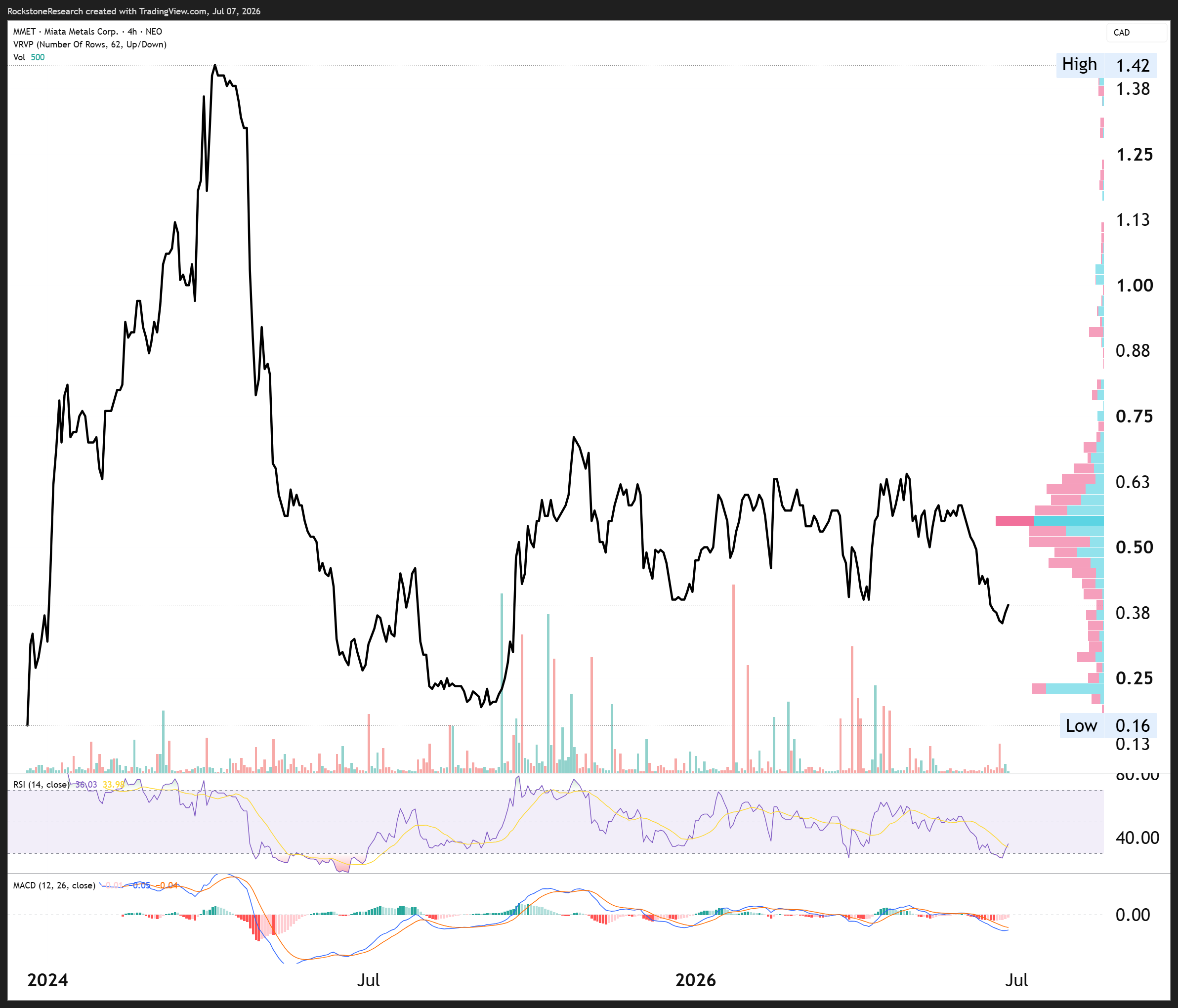
Canada Symbol (TSX.V): MMET
Current Price: 0.42 CAD (07/06/2026)
Market Capitalization: 45 Million CAD
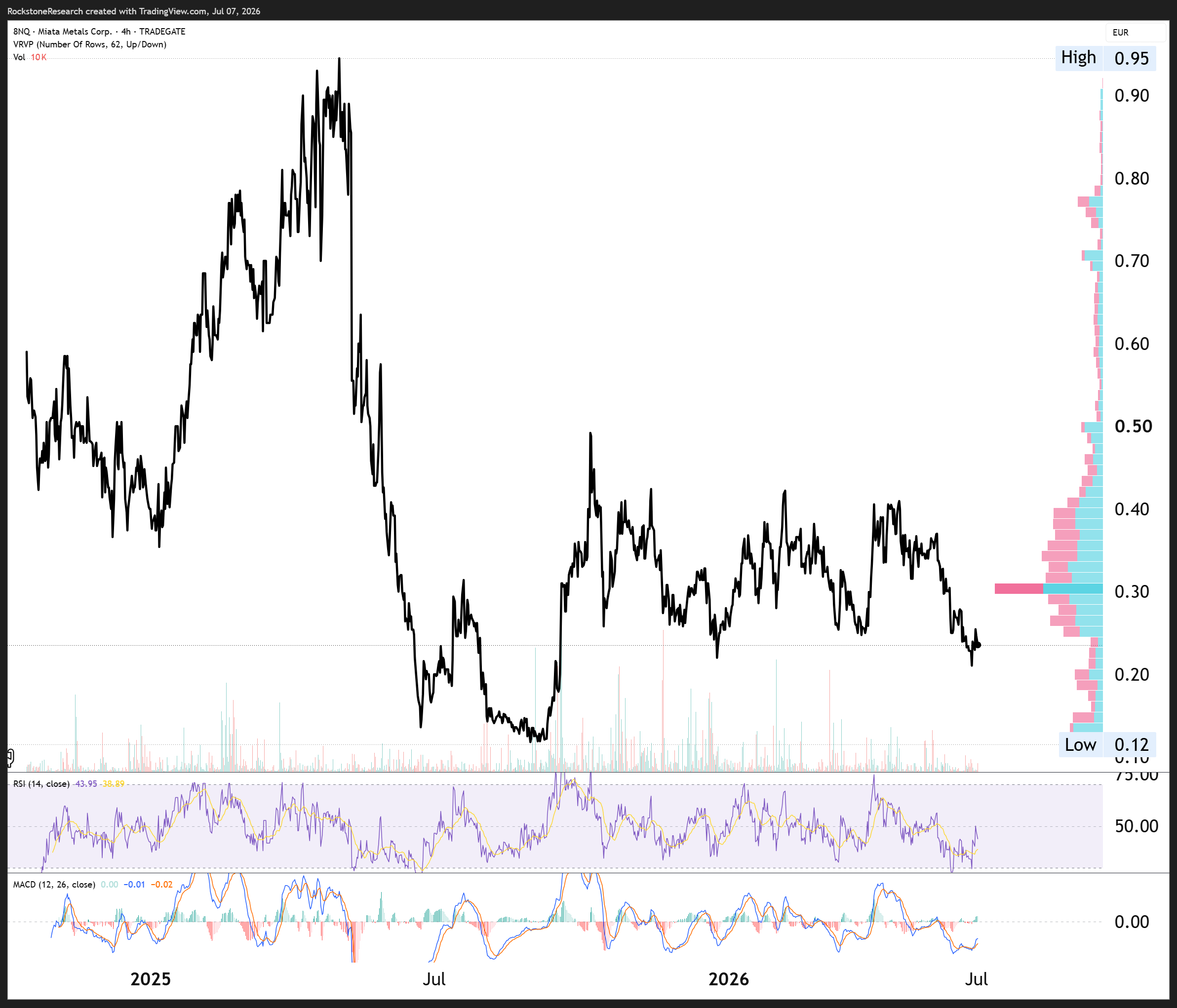
Germany Ticker / WKN: 8NQ / A3EHXQ
Current Price: 0.248 EUR (07/07/2026)
Market Capitalization: 26 Million EUR
Stephan Bogner
Contact
Rockstone News & Research
Stephan Bogner (Dipl. Kfm., FH)
Müligässli 1, 8598 Bottighofen
Switzerland
Phone: +41-71-5896911
Email: info@rockstone-news.com
Disclaimer and Information on Forward Looking Statements: Rockstone and Miata Metals Corp. (“Miata” or the “Company”) caution investors that any forward-looking information provided herein is not a guarantee of future results or performance, and that actual results may differ materially from those expressed or implied in forward-looking information as a result of various factors. Readers are referred to Miata’s public filings for a more complete discussion of such risk factors and their potential effects, which may be accessed through the Company’s documents filed on SEDAR+ at www.sedarplus.ca. All statements in this report, other than statements of historical fact, should be considered forward-looking statements. Much of this report is comprised of statements of projection, interpretation, opinion and expectation. Such statements involve known and unknown risks, uncertainties and other factors that may cause actual results, events or developments to differ materially from those anticipated in these forward-looking statements. There can be no assurance that such statements will prove to be accurate, as actual results and future events could differ materially from those anticipated in such statements. Forward-looking statements in this report include statements, interpretations, conclusions, geological comparisons, strategic observations, exploration commentary, project-development commentary and market commentary regarding Miata’s exploration strategy, the Sela Creek Project, the Nassau Project and the Company’s broader Suriname gold portfolio. Forward-looking statements include expectations regarding the Company’s ongoing and planned exploration activities at Sela Creek, including assumptions related to drilling, geological mapping, structural interpretation, geophysics, LiDAR, sampling, target generation, target ranking, follow-up drilling, pending assay results and the potential development of a district-scale exploration model across the project. Forward-looking statements further include expectations regarding the significance of the Puma East discovery, including assumptions that Puma East may represent a new bedrock gold discovery, a new discovery front, a second mineralized corridor, a repeatable exploration model, or part of a broader multi-centre gold system at Sela Creek. There can be no assurance that further drilling will confirm continuity, scale, grade, geometry or economic significance at Puma East. Forward-looking statements also include expectations regarding Jons Trend, Big Berg, Puma West, Puma East, Golden Hand, Stranger, Cambior and other target areas at Sela Creek, including assumptions that these targets may host gold mineralization, may be related to one another, may form part of a broader corridor, cluster or district-scale system, or may ultimately support future mineral resource estimates. Forward-looking statements include expectations regarding the Company’s 25,000 m drill program, including assumptions related to the successful completion of drilling, drill productivity, assay turnaround times, geological interpretation, step-out drilling, infill drilling, target testing, discovery potential and the advancement of Sela Creek from early discovery success toward potential resource definition. Forward-looking statements also include expectations regarding the Nassau Gold Project, including assumptions related to Miata’s ownership interest, option rights, strategic value, exploration potential, historic gold occurrences, historic drill intercepts, alluvial mining activity, bedrock potential, infrastructure access and the Company’s ability to advance Nassau as part of a broader Suriname-focused gold portfolio. Forward-looking statements further include comparisons to other gold projects, mines, companies, districts and geological settings in Suriname, the Guiana Shield and West Africa, including Newmont’s Merian operation, Zijin Mining’s Rosebel Gold Mine, Founders Metals’ Antino Gold District and the West African Birimian Shield. Such comparisons are provided for context only. They are not guarantees that Miata’s projects will host similar mineralization, resources, grades, scale, economics, development outcomes or market valuations. Exploration Stage Risks: Miata is an exploration-stage company. Sela Creek does not currently have a mineral resource estimate. Mineralization identified in drilling, sampling or historical work may not be continuous, economic, mineable or sufficient to support future resource estimates. Additional drilling, geological modelling, metallurgical test work, environmental studies, engineering studies, permitting, community engagement and financing would be required before any development decision could be considered. Drilling and Assay Risks: Statements regarding drill results, mineralized intervals, estimated true widths, grade, continuity, geometry, depth extensions, strike length, step-outs, pending assays or future drill targets are subject to uncertainty. Drill results may not be representative of broader mineralization. Additional drilling may fail to confirm previous results, extend mineralization, demonstrate continuity or support the interpretations discussed in this report. Geological Interpretation Risks: Statements regarding structural controls, shear zones, fold hinges, quartz-pyrite veining, visible gold, alteration, mineralized corridors, cluster-style orogenic gold systems, repeated structures, district-scale potential, pull-apart settings, fluid pathways or geological similarities between target areas are interpretive in nature. Geological models may change materially as new drilling, mapping, sampling, geophysical data and assay results become available. District-Scale Exploration Risks: Statements suggesting that Sela Creek may represent an emerging gold camp, a district-scale system, a multi-centre bedrock gold district or a broader gold-forming environment are forward-looking and speculative. There can be no assurance that multiple mineralized centres will be discovered, that discovered centres will be connected, that they will support future resources, or that the project will develop into a district-scale gold system. Puma East Risks: Statements regarding Puma East as a new discovery, a second front, a potential second corridor or a meaningful extension of the Sela Creek exploration story are based on early-stage drilling. Puma East requires substantial follow-up drilling. There can be no assurance that mineralization at Puma East will extend along strike or at depth, that additional holes will return similar grades or widths, or that Puma East will become a resource-scale target. Jons Trend and Big Berg Risks: Statements regarding Jons Trend and Big Berg, including potential continuity, corridor-scale interpretation, possible connection, 1,300 m strike concept, depth extension or future resource potential, are forward-looking. Additional drilling may not confirm continuity between zones, may change the geological model or may fail to define mineralization of sufficient scale, grade or continuity to support a future mineral resource estimate. Historical and Artisanal Mining Risks: Statements regarding historical mining, artisanal mining, alluvial gold, saprolite mining, surface workings, historical sampling, historical drilling, historical production or historical exploration data are subject to uncertainty. Historical information may be incomplete, unverifiable, non-compliant with current reporting standards or not representative of current exploration potential. Artisanal mining activity does not guarantee the presence of economic bedrock mineralization. Nassau Project Risks: Statements regarding Nassau’s strategic value, ownership structure, option rights, historic gold occurrences, historic drill intercepts, alluvial mining, exposed vein sets, infrastructure access, regional trend or future exploration potential are forward-looking. Nassau is not the current primary drill focus of the Company. There can be no assurance that Miata will acquire 100% ownership of Nassau, conduct significant exploration there, confirm historical results, define resources, or demonstrate economic potential. Suriname and Jurisdictional Risks: Statements regarding Suriname as a proven gold country, a gold-producing jurisdiction, a favourable exploration setting, an underexplored gold province, or a jurisdiction validated by major operators are subject to political, legal, regulatory, fiscal, environmental, social, infrastructure and permitting risks. Mining laws, tax regimes, permitting processes, community requirements, government policies, security conditions and operating conditions may change. Community and Social Licence Risks: Statements regarding Miata’s relationship with the Okanisi People, the Okanisi Development Fund, local communities, preferential employment, contracting, field-team composition, traditional rights, sustainable development, transparency or ongoing dialogue are forward-looking and subject to social, cultural, legal and operational uncertainty. Community relationships may change over time, agreements may require further implementation and social licence is not guaranteed. Environmental and Permitting Risks: Exploration and any potential future development activities are subject to environmental regulation, permitting requirements, land access, water management, reclamation obligations, biodiversity considerations and stakeholder consultation. There can be no assurance that the Company will obtain or maintain all permits, approvals, agreements or authorizations required for continued exploration or any future development. Infrastructure and Logistics Risks: Statements regarding road access, infrastructure, drill access, exploration logistics, field operations, year-round work, assay logistics, camp operations, supply chains, equipment availability or service-provider capacity are forward-looking. Suriname’s interior can present logistical, weather-related, seasonal, access, transportation, labour and cost challenges that may affect exploration timelines and budgets. Financing and Capital Markets Risks: Statements regarding Miata’s ability to fund exploration, continue drilling, advance multiple targets, negotiate from strength, pursue strategic opportunities or benefit from investor recognition are subject to capital-market conditions, commodity prices, investor sentiment, financing availability, dilution, liquidity, cost inflation and broader macroeconomic conditions. There can be no assurance that financing will be available on acceptable terms or at all. Gold Price and Market Risks: Miata’s business and securities may be affected by changes in the gold price, currency exchange rates, interest rates, equity-market conditions, risk appetite for junior exploration companies, geopolitical developments and broader economic conditions. A decline in gold prices or investor interest in exploration-stage companies could negatively affect the Company’s ability to raise capital and advance its projects. Comparative Analysis Risks: Statements comparing Miata, Sela Creek or Nassau to other companies, mines, projects, districts, jurisdictions, geological settings or market outcomes are based on the author’s opinions, assumptions and analytical judgments. Such comparisons are inherently subjective and should not be interpreted as guarantees of exploration success, resource definition, mine development, valuation outcomes, financing outcomes or share-price performance. Resource and Economic Risks: Sela Creek and Nassau do not currently have mineral resource estimates disclosed in this report. Exploration results are not mineral resources or mineral reserves. Even if future resources are defined, there can be no assurance that such resources will be economically viable, technically mineable, legally permitted, financeable or capable of being advanced to production. Technical Report and Data Risks: This report relies on publicly available information, Miata news releases, Miata corporate presentation materials, technical report information and other public sources believed to be reliable. Rockstone and the author have not independently verified all technical data, historical data, geological interpretations, ownership details, mineral rights, permitting status, metallurgical assumptions or economic assumptions. Readers should consult Miata’s official public disclosure and qualified technical reports. Forward-looking statements are based on current expectations, estimates and assumptions that are inherently subject to uncertainty. Actual results may differ materially from those expressed or implied in the forward-looking statements contained in this report. Accordingly, readers should not place undue reliance on forward-looking information. Rockstone and the author of this report do not undertake any obligation to update any statements made herein except as required by applicable law. Past performance, exploration success, comparisons to other companies, projects, mines, jurisdictions, geological belts, capital-market events or industry trends are provided for illustrative purposes only and should not be considered indicative of future results.
Disclosure of Interest and Advisory Cautions: Nothing in this report should be construed as a solicitation, offer or recommendation to buy or sell any securities mentioned. Rockstone, its owners and the author of this report are not registered broker-dealers, investment advisors or financial advisors. Before making any investment decision, readers should consult with a qualified financial advisor, registered broker-dealer and, where appropriate, legal or tax professionals. Readers should never make an investment decision based solely on an online or printed report, including this Rockstone report, especially where the securities discussed involve small, thinly traded or early-stage public companies. The author of this report, Stephan Bogner, was paid 3,000 CAD by Connect 4 Marketing Ltd. on behalf of Miata Metals Corp. for services related to the preparation, publication and dissemination of this initiating report. This engagement ends with the publication and dissemination of this report. This compensation represents a conflict of interest and may affect the objectivity of this report. As of the date of this report, the author does not own securities of Miata Metals Corp., but intends to initiate a position. If the author acquires securities of Miata, he may benefit from increases in trading volume or share-price appreciation. The author may buy or sell securities of Miata, or securities of comparable companies, at any time without notice, which may give rise to additional conflicts of interest. Accordingly, multiple conflicts of interest exist. The information contained in this report should not be construed as independent financial analysis, investment research or a recommendation. This report should be understood as a paid promotional publication and does not replace individual investment advice. The views and opinions expressed in this report are those of Rockstone and the author and are based on information received from the company, company representatives, publicly available disclosure and other public-domain sources believed to be reliable. Rockstone and the author have not undertaken independent due diligence or independent verification of all information contained in this report. Rockstone and the author do not guarantee the accuracy, completeness, timeliness, usefulness or fitness for any particular purpose of any information, data, statement, interpretation, estimate, projection, comparison, chart, table, image or other content contained herein. Rockstone and the author do not guarantee that any company mentioned in this report will perform as expected, that any exploration results will lead to mineral resources, economic deposits or mine development, or that any comparisons to other companies, projects, jurisdictions or market outcomes will prove valid or come into effect. For the avoidance of doubt, this report is not intended for distribution to, or use by, any person or entity in any jurisdiction where such distribution, publication or use would be contrary to applicable law or regulation. Readers are solely responsible for ensuring that their access to, review of and use of this report is lawful in their jurisdiction. Neither Rockstone nor the author accepts liability for any direct or indirect loss, damage, cost or expense arising from the use of this report or from any investment decision made in reliance on it. Please read the entire Disclaimer carefully. If you do not agree with the Disclaimer, do not access this website, this report or any related PDF or online publication. By accessing or using this website and/or report, whether or not you have actually read the Disclaimer, you are deemed to have accepted it. The information provided is educational and general in nature and should not be interpreted as personalized investment, financial, legal, tax or professional advice. Data, tables, figures and images, unless otherwise labeled, credited or hyperlinked, have been obtained from Stockwatch.com, TradingView.com, Miata Metals Corp. and public-domain sources.